Hegseth warns Cuba against weapons threats during Guantánamo visit
Pete Hegseth’s Guantánamo stop paired a troop visit with a warning to Havana, signaling a tougher U.S. Cuba posture that reaches from sanctions to migration.

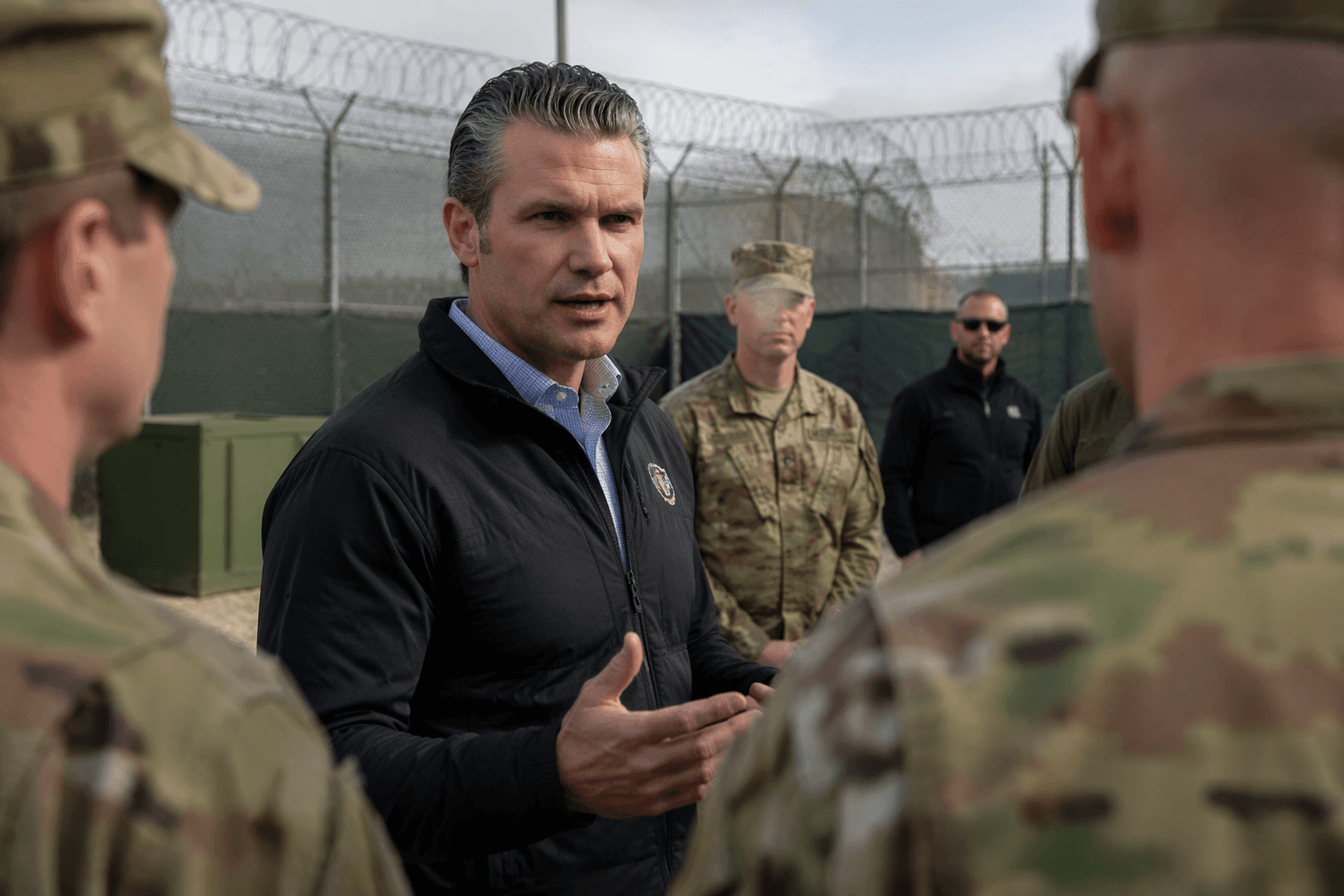
Pete Hegseth’s stop at Guantánamo Bay turned the U.S. naval base into more than a backdrop for a troop visit. During the trip, the defense secretary warned Cuba against seeking weapons that could strike the U.S. homeland or the base itself, sharpening a pressure campaign that now blends military signaling, sanctions and economic coercion.
The Pentagon said Hegseth traveled to Guantánamo Bay and Tampa to engage with troops, but the symbolism of the base was hard to miss. Guantánamo sits inside Cuba and remains one of the most visible reminders of the long-running standoff between Washington and Havana, with its proximity to Cuban territory giving every high-level visit added diplomatic weight.
The administration has been tightening the screws for months. On January 29, 2026, the White House said Cuba’s policies, practices and actions constituted an unusual and extraordinary threat to U.S. national security and foreign policy. On May 1, President Donald Trump issued an executive order imposing sanctions tied to repression in Cuba and threats to U.S. national security and foreign policy, and the State Department followed with more measures on May 18 against 11 Cuban regime-aligned actors and three entities. Additional sanctions announced on June 4 designated five Cuban entities and five individuals.
Hegseth’s visit also landed after a rare exchange in early June between the head of U.S. Southern Command and top Cuban military officials near Guantánamo Bay, a reminder that even as Washington hardens its public line, military-to-military contact has not disappeared entirely. The administration’s approach suggests it is trying to reset Cuba policy through forceful symbolism as much as formal policy, using the base to underscore that any escalation will be met from a position of strength.
For Cuba, the stakes go beyond rhetoric. The U.S. embargo, rooted in John F. Kennedy’s February 1962 proclamation, remains in place, while the island is already under severe strain from fuel shortages, blackouts and broader economic hardship. Reports from Havana have described daily shortages of electricity, water, fuel and medicine, alongside rising protest activity and social unrest. Any further tightening from Washington could deepen migration pressures, complicate regional diplomacy and make the future of the Guantánamo base itself an even sharper point of dispute between the two countries.
This article was produced by Prism’s automated news system from verified source data, official records, and press releases, then run through automated quality and moderation checks before publishing. The system is built and supervised by the people who set the standards it runs under. Read our full AI policy.
Know something we missed? Have a correction or additional information?
Submit a Tip