Hegseth’s D-day immigration remarks draw backlash in France
Hegseth turned a D-Day commemoration into an immigration warning, provoking anger in Normandy and rebukes from both French residents and a Republican lawmaker.
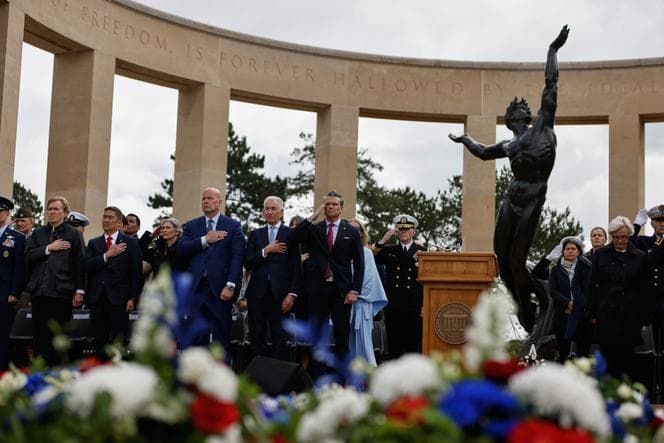
Pete Hegseth’s D-Day remarks in Normandy turned a solemn memorial into a culture-war flashpoint, drawing sharp criticism in France for folding today’s immigration debate into the language of wartime invasion. At the Normandy American Cemetery in Colleville-sur-Mer, he warned that Europe’s beaches were being stormed by “different dangerous ideologies” and asked when capitals would act against what he called an “invasion” arriving by sea.
The speech came during commemorations for the 82nd anniversary of the Allied landings in Normandy, at a site marked by 9,387 white crosses for American war dead from the Battle of Normandy. Hegseth named beaches in Spain, Italy, Greece and Bulgaria as part of his warning, arguing that the freedom secured by Allied troops could prove temporary if leaders failed to defend it. To critics, that language recast a memorial to sacrifice as a platform for contemporary political agitation.
The backlash was immediate in Langrune-sur-Mer, where part of the D-Day commemorations took place. Residents said Hegseth was not welcome there because he held “warlike views,” and the local association Langrune en commun said he espoused values contrary to democracy, human rights and peace. Franck Jouy, the village mayor, tried to keep the occasion focused on remembrance, saying, “We are here for a commemoration and I don’t want to make it political.”
Hegseth also skipped the afternoon’s main international ceremony in Langrune-sur-Mer after speaking at the American cemetery, adding to the criticism. That ceremony brought together veterans from the United States, British Defence Secretary John Healey and French Prime Minister Sébastien Lecornu, who paid tribute to the “3,000 men, barely 20 years old,” who died on D-Day. The contrast between that tribute and Hegseth’s warning about immigration by sea sharpened the sense, in France, that a day of shared mourning had been pulled into domestic political combat.
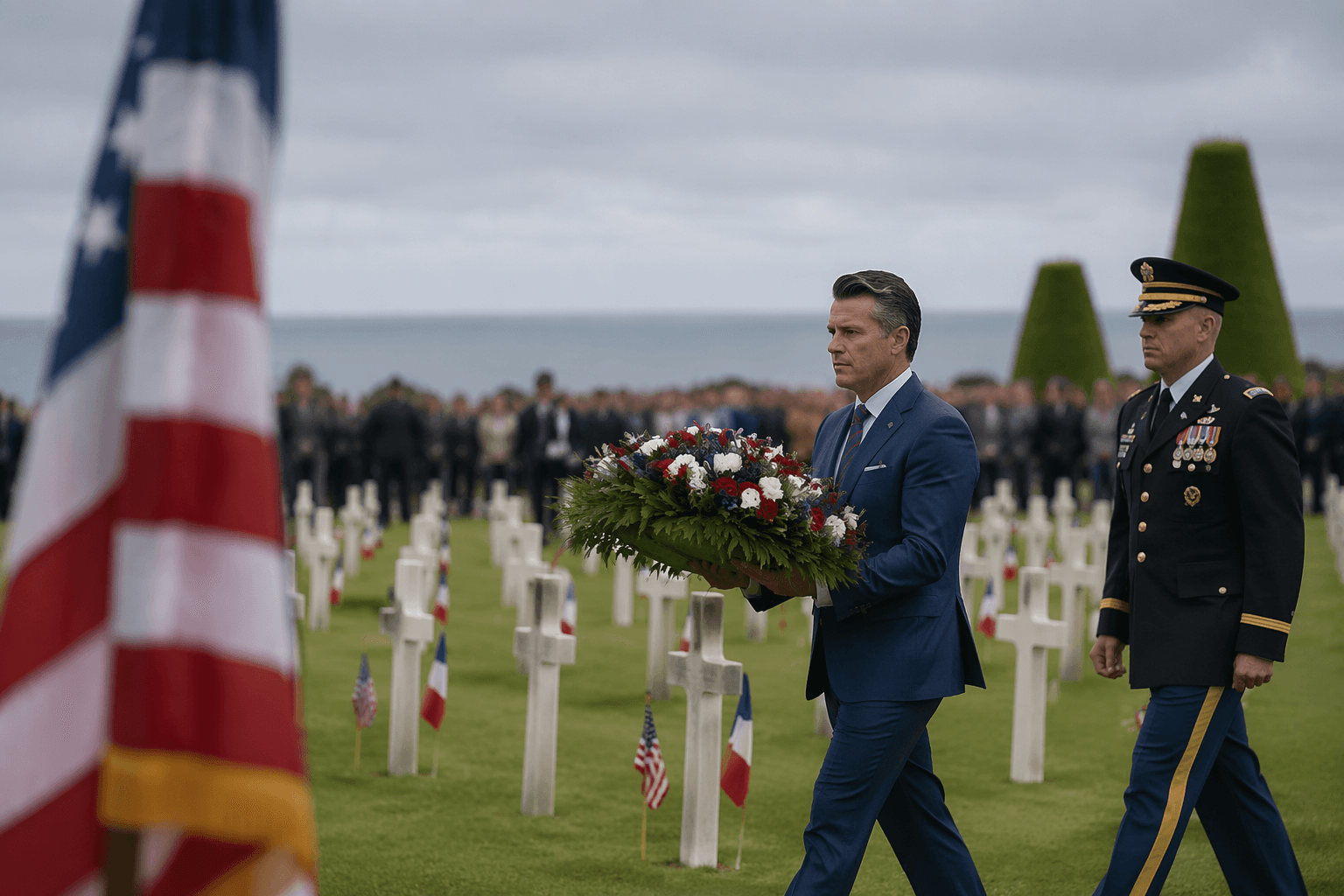
The criticism was not limited to local residents or French officials. House Republican Michael McCaul, a former chair of the House Foreign Affairs Committee, called the remarks “inappropriate” and said there was “a time and a place” for immigration debates, adding that D-Day was not it. The rebuke from within Hegseth’s own party underscored how far the remarks had strayed from the commemorative tone expected at a site where French and American leaders gathered to honor the dead, including Catherine Vautrin, Charles Kushner and Gen. Dan Caine.
In France, the reaction reflected a broader unease about the use of patriotic history as a political weapon. At a cemetery built to preserve the memory of liberation, Hegseth’s invocation of invasion and ideology landed as something critics saw not as tribute, but as a line crossed.
This article was produced by Prism’s automated news system from verified source data, official records, and press releases, then run through automated quality and moderation checks before publishing. The system is built and supervised by the people who set the standards it runs under. Read our full AI policy.
Know something we missed? Have a correction or additional information?
Submit a Tip