Hezbollah leader demands long-standing concessions as Israel-Lebanon talks begin in Washington
Hezbollah says any lasting peace hinges on old demands, even as Washington hosted the first direct Israel-Lebanon talks in decades.
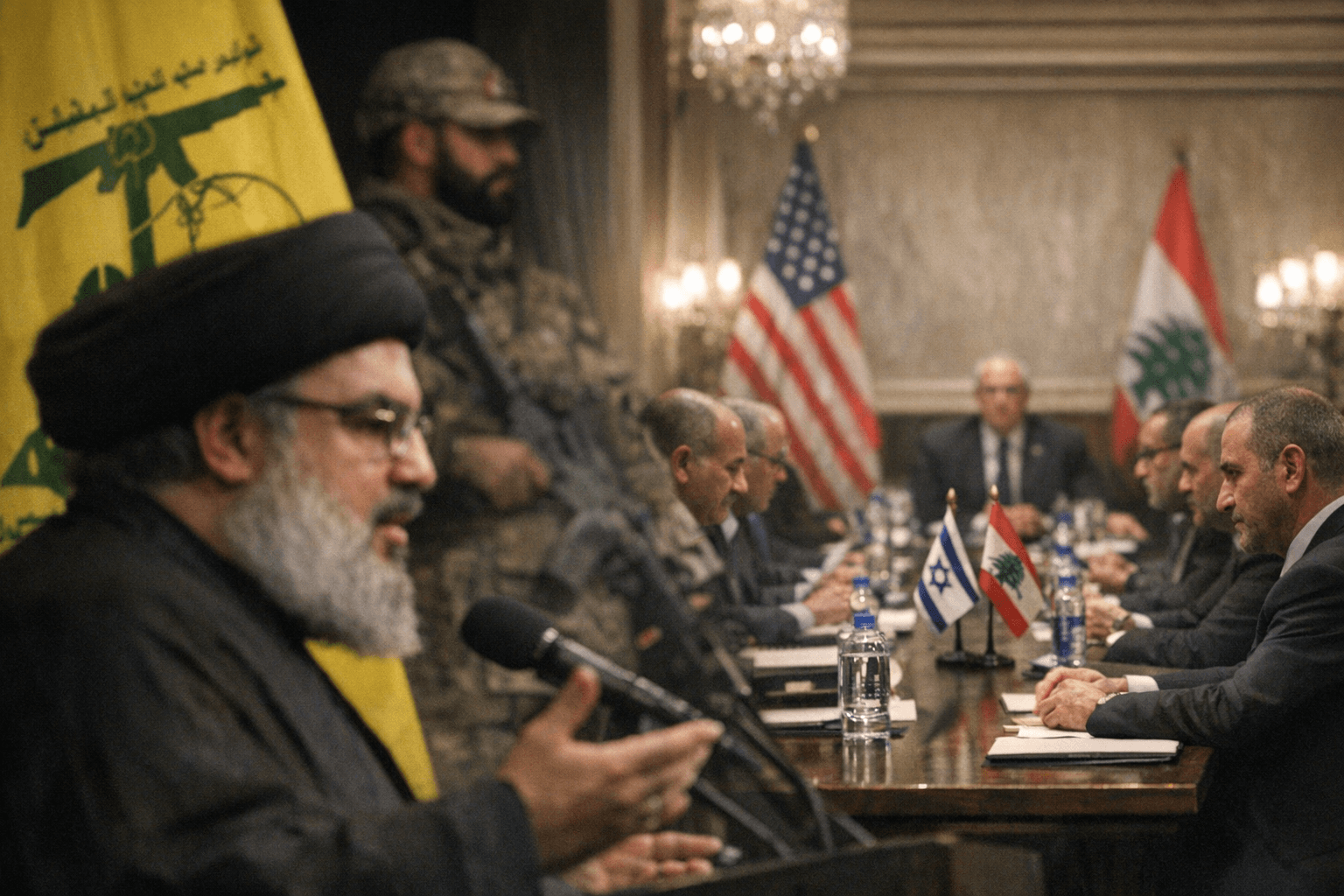
Washington became the venue for the first direct Israel-Lebanon talks in decades, with U.S. Secretary of State Marco Rubio chairing a meeting he called a “historic gathering.” The State Department said the Lebanese and Israeli ambassadors to the United States agreed to launch direct negotiations at a mutually agreed time and venue, a rare diplomatic opening after years of frozen contact.
Hezbollah leader Naim Qassem was already working to narrow the scope of that opening. On April 13, he urged Lebanon’s government to cancel the Washington meeting, calling it pointless and saying the group would continue to confront Israeli attacks on Lebanon. His message underscored Hezbollah’s conditional posture: cooperation may be tolerated for now, but only if it does not harden into concessions that strip the group of leverage or force a final settlement on Israel’s terms.
The talks began against the most violent backdrop Lebanon has faced in years. On April 8, Israel carried out more than 100 strikes across Lebanon, including in Beirut, killing at least 303 people and injuring 1,150, according to United Nations and Lebanese reporting. Lebanon declared April 9 a national day of mourning. The bombardment also severed a major bridge linking south Lebanon, deepening civilian hardship and complicating movement in areas already strained by repeated rounds of fighting.
At the center of the Washington negotiations is Hezbollah’s disarmament, a demand Israel has made central to any longer-term settlement and one that several outside analysts say is the main obstacle to durable peace. That issue is inseparable from Hezbollah’s long-standing demands for any broader arrangement with Israel, which the militia’s leader says must be met before peace can last. For now, the talks look more like a confidence-building step than a breakthrough, a narrow channel opened by exhaustion and battlefield pressure rather than agreement on the core questions.
The politics are especially delicate because Lebanon and Israel have no formal diplomatic relations, and a 1955 Lebanese law restricts contact with Israelis. That history has made even limited engagement controversial inside Lebanon and helps explain why the current diplomacy evokes the failed May 17, 1983, Israel-Lebanon accord, a previous attempt at direct peace that quickly collapsed under regional and domestic opposition. The Washington meeting may have opened the door, but the gap between a tactical cease-fire and a lasting peace remains wide.
This article was produced by Prism’s automated news system from verified source data, official records, and press releases, then run through automated quality and moderation checks before publishing. The system is built and supervised by the people who set the standards it runs under. Read our full AI policy.
Did this article answer your question?


