North Korea launches multiple ballistic missiles toward east coast waters
North Korea fired multiple missiles from Sinpo as Seoul, Tokyo and Washington tracked the launch and moved to coordinate an emergency response.
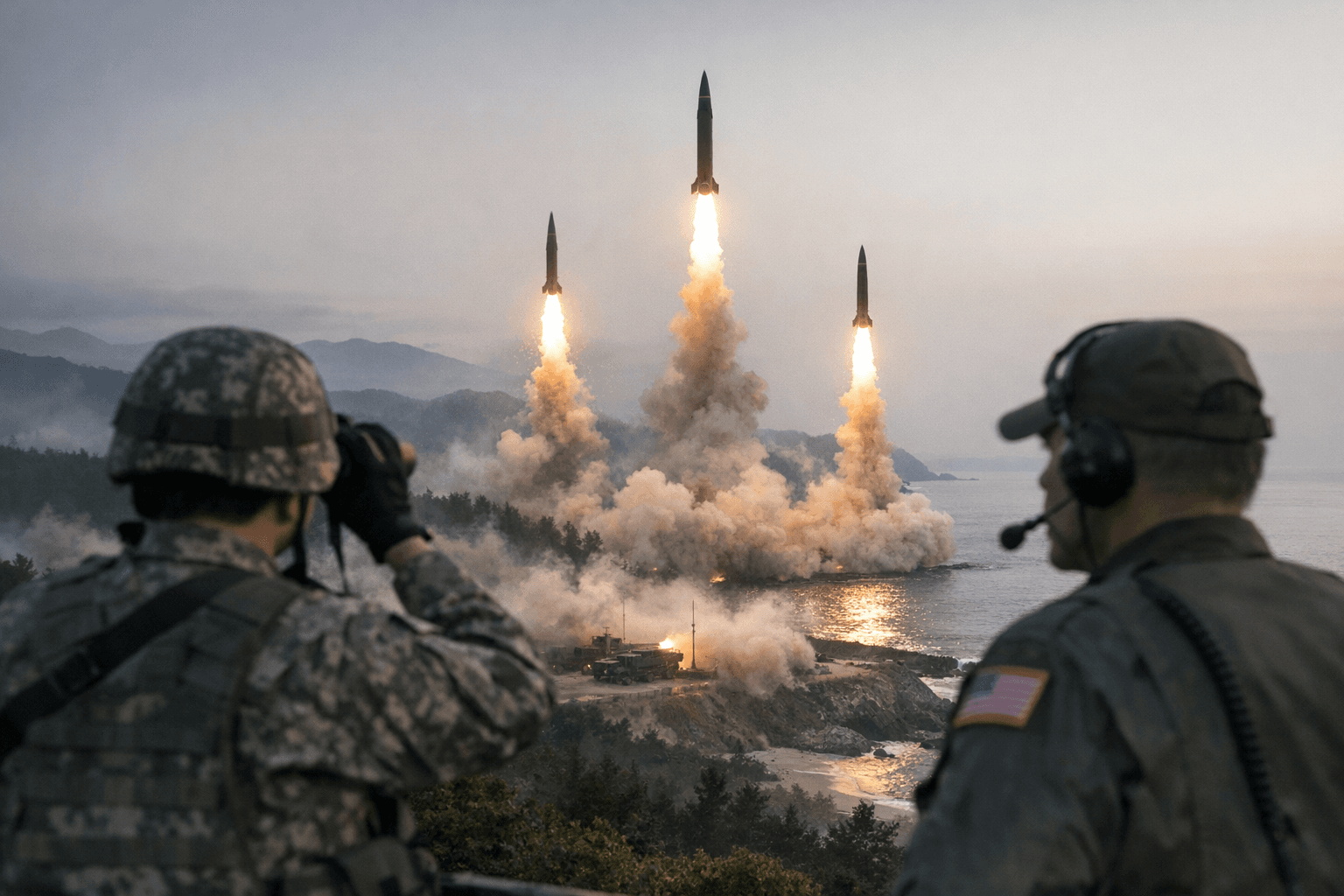
North Korea sent multiple ballistic missiles toward the sea from its eastern Sinpo area, a launch that immediately set off alarm in Seoul and Tokyo and underscored how tightly Pyongyang is tying missile tests to its broader nuclear message.
South Korea’s Joint Chiefs of Staff said the launches came Sunday morning from Sinpo, and South Korea’s presidential office said its National Security Council planned an emergency meeting in response. Seoul said it was closely exchanging information with the United States and Japan as military monitors tracked the missiles over North Korea’s east coast waters.
Japan’s Defense Ministry said the weapons were believed to have landed in waters off North Korea’s east coast, and Tokyo strongly protested to Pyongyang, saying the launches threatened regional and international peace and violated United Nations Security Council resolutions that ban ballistic activity by North Korea. No incursion into Japan’s exclusive economic zone was confirmed.
The timing mattered as much as the launch itself. The missiles were fired at about 6:10 a.m. Sunday local time in South Korea, and the strike came as North Korea continued an unusually active pace of testing. Al Jazeera reported the Sunday launch was North Korea’s seventh ballistic missile launch of 2026 and its fourth in April, a tempo that suggests Pyongyang is not simply firing hardware but sending a political signal to Seoul, Washington and regional allies.
That signal appears aimed at deterrence and leverage. Last week, North Korea said Kim Jong Un supervised missile tests from the country’s destroyer and ordered work on the “limitless expansion” of its nuclear forces, along with new tasks to sharpen nuclear attack and rapid-response capabilities. At the same time, International Atomic Energy Agency Director General Rafael Grossi said the agency had confirmed a rapid increase in activity at North Korean nuclear facilities, and that North Korea had made “very serious” advances in nuclear-weapons production, possibly including a new uranium enrichment facility.
The launches also landed in a crowded diplomatic calendar. China and the United States are preparing for a mid-May summit, where Xi Jinping and Donald Trump are expected to discuss North Korea. In that setting, Kim’s latest missile fire looks calibrated to remind both capitals that Pyongyang intends to remain central to any regional security discussion.
North Korea’s recent pattern has been consistent. On April 7, it fired several short-range ballistic missiles from the Wonsan area toward its eastern waters. On Jan. 3, it launched multiple ballistic missiles toward the sea, just hours before South Korean President Lee Jae Myung’s planned trip to China. Each launch has carried the same message: North Korea is keeping pressure on its rivals while advancing the nuclear and missile program that underpins Kim’s strategy.
This article was produced by Prism’s automated news system from verified source data, official records, and press releases, then run through automated quality and moderation checks before publishing. The system is built and supervised by the people who set the standards it runs under. Read our full AI policy.
Did this article answer your question?


