Hidden cave beneath Pembroke Castle reveals prehistoric life in Britain
Hippo bones and intact ancient sediments beneath Pembroke Castle are pushing Britain’s prehistory deeper into the past, with evidence stretching back more than 100,000 years.
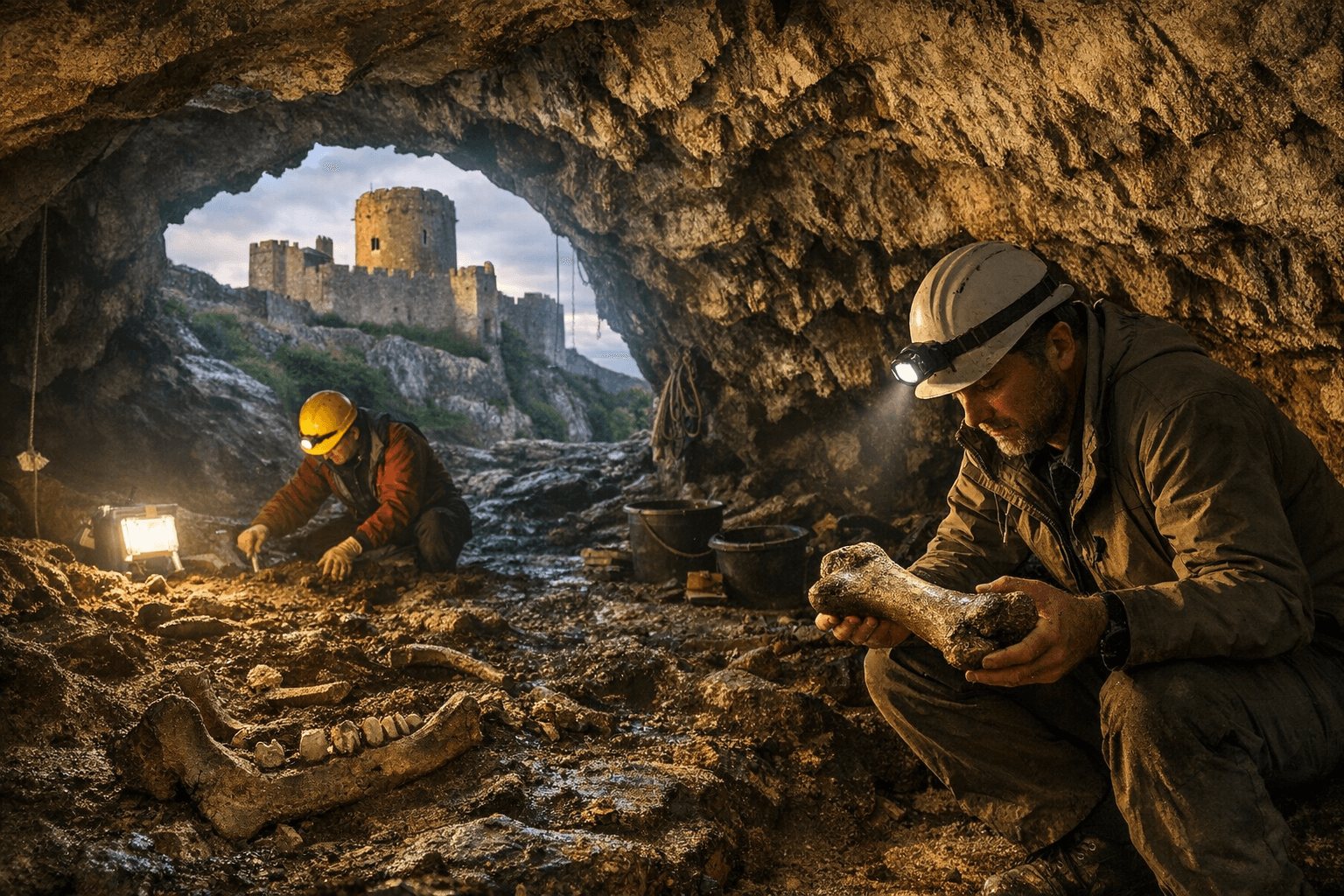
A hidden limestone cavern beneath Pembroke Castle has yielded hippo bones, ancient sediments and traces of human visitors that could rewrite what historians thought they knew about prehistoric Britain. Wogan Cavern, reached by a spiral staircase inside the castle in Pembrokeshire, Wales, is emerging as a rare archive of climate, wildlife and human movement stretching far beyond the medieval walls above it.
The University of Aberdeen has now received Calleva Foundation funding to lead a five-year excavation project at the site, with support from the Pembroke Castle Trust. The trust said it is expanding its team and developing space so finds from Wogan Cavern can be curated and kept in Pembroke, keeping the material close to the place where it was discovered. Dr Rob Dinnis, who directed the first excavations and will lead the new project, said there is “no other site like it in Britain” and called it a “once-in-a-lifetime discovery.”
Small-scale excavations carried out between 2021 and 2024 uncovered abundant evidence of human and animal visits spanning more than 100,000 years, despite the long-held assumption that Victorian digging had removed most of the archaeological material. Researchers now say much of the cavern’s ancient sediment remains intact, giving archaeologists a chance to read the site layer by layer. The sequence could reach from hunter-gatherers who used the cave after the last Ice Age, about 11,500 years ago, back to some of Britain’s earliest Homo sapiens between 45,000 and 35,000 years ago, and possibly even earlier Neanderthal activity.
The most striking finds include hippo bones believed to date to the last interglacial period, around 120,000 years ago, when a hippopotamus roamed Wales. For Professor Kate Britton, a science-based archaeology specialist at the University of Aberdeen, the value of the cave lies in what modern methods can now extract from it: high-resolution dating, environmental evidence and a clearer picture of extinct species and changing habitats across a vast span of time.
Pembroke Castle already carries national significance as the birthplace of Henry VII, founder of the Tudor dynasty. Wogan Cavern now adds a prehistoric layer to that landmark, placing one of Wales’s most familiar castles over what may be one of Britain’s most important records of deep human and environmental history.
This article was produced by Prism’s automated news system from verified source data, official records, and press releases, then run through automated quality and moderation checks before publishing. The system is built and supervised by the people who set the standards it runs under. Read our full AI policy.
Did this article answer your question?