Highly Pathogenic H5N1 Confirmed in Wisconsin Dairy Herd, Wildlife Spillover Identified
Federal and state laboratories confirmed highly pathogenic avian influenza H5 in a Dodge County dairy herd, marking Wisconsin’s first known cattle case. Authorities say the detection appears to be a wildlife to cattle spillover, sequencing is ongoing, and public health officials maintain the risk to consumers is low.
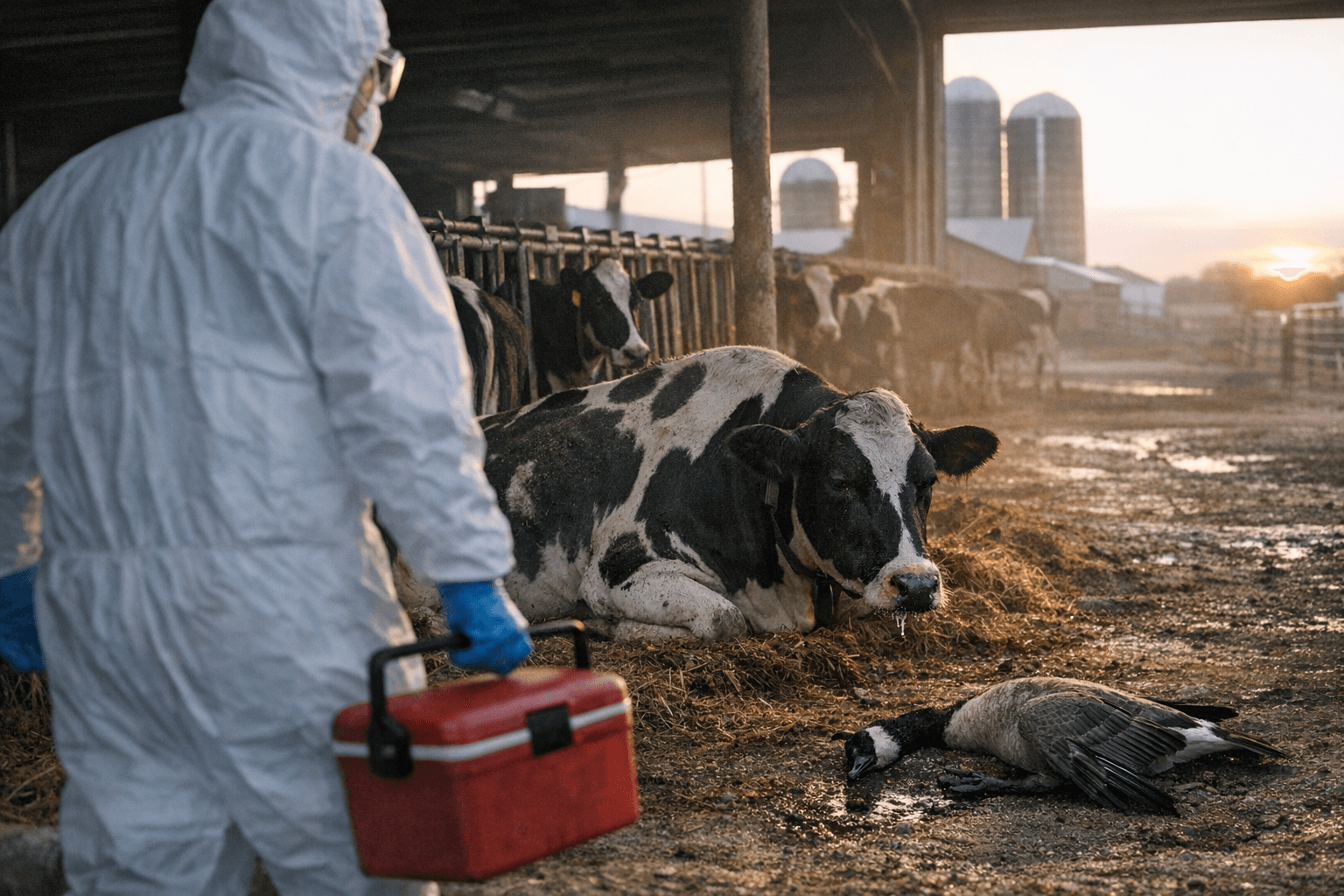
The U.S. Department of Agriculture’s National Veterinary Services Laboratories confirmed on December 14 that a dairy cattle herd in Dodge County, Wisconsin tested positive for highly pathogenic avian influenza H5 clade 2.3.4.4b using PCR and ELISA assays. The Wisconsin Department of Agriculture, Trade and Consumer Protection identified the farm as the first known HPAI detection in Wisconsin dairy cattle and said the premises was quarantined while sick animals were being separated for additional care.
Federal officials said sequencing would be completed and final results announced when available. Subsequent federal genetic analysis identified the virus as H5N1 clade 2.3.4.4b genotype D1.1 and characterized the event as a new wildlife to cattle spillover distinct from earlier farm linked outbreaks, placing the detection in a different epidemiological category than prior on farm transmissions linked to infected poultry. Initial diagnostic testing was performed by the Wisconsin Veterinary Diagnostic Laboratory and later confirmed by the National Veterinary Services Laboratories, reflecting the routine state and federal confirmation pathway.
The case prompted coordination among APHIS, the Wisconsin Veterinary Diagnostic Laboratory, DATCP, the Food and Drug Administration, the Centers for Disease Control and Prevention and other state partners. APHIS posted notices of the detection and follow up investigative activities and said on farm epidemiological investigations, diagnostic testing and data collection were underway with Wisconsin partners to determine animal movements, biosecurity practices and any likely wildlife exposure pathways that could explain the spillover.
DATCP said that the affected farm remained under quarantine and that federal rules require testing for interstate movement of cattle and mandatory reporting of positive Influenza A tests under the current Federal Order. Agency guidance cited by DATCP stressed there is no current concern about the safety of the commercial milk supply for consumers because pasteurization inactivates the virus. Wisconsin health authorities reiterated that the Centers for Disease Control and Prevention assesses the human health risk from this virus as low. Wisconsin Department of Health Services materials also noted that the CDC has confirmed humans in the United States have tested positive for highly pathogenic avian influenza A H5N1 and described an expansion of wastewater monitoring at selected sites to include influenza A H5 surveillance as an additional tool.
Since the broader outbreak began in March 2024, APHIS said dairy cattle in a total of 18 states have been infected, though the agency has seen cases in only a small number of states this year. The characterization of the Dodge County detection as a wildlife to cattle spillover underscores the persistent potential for cross species transmission and highlights the value of integrated animal and environmental surveillance.
DATCP provided a public contact for inquiries, Molly Mueller, Public Information Officer, at (608) 910 1929 or molly.mueller@wisconsin.gov. Federal and state officials said they would release sequencing details and any additional epidemiological findings as they become available.
This article was produced by Prism’s automated news system from verified source data, official records, and press releases, then run through automated quality and moderation checks before publishing. The system is built and supervised by the people who set the standards it runs under. Read our full AI policy.
Did this article answer your question?