Honda reports first loss since 1957 after EV retreat and tariffs
Honda sank to its first annual loss since 1957 as it walked back EV plans, took tariff hits and wrote down its China business.
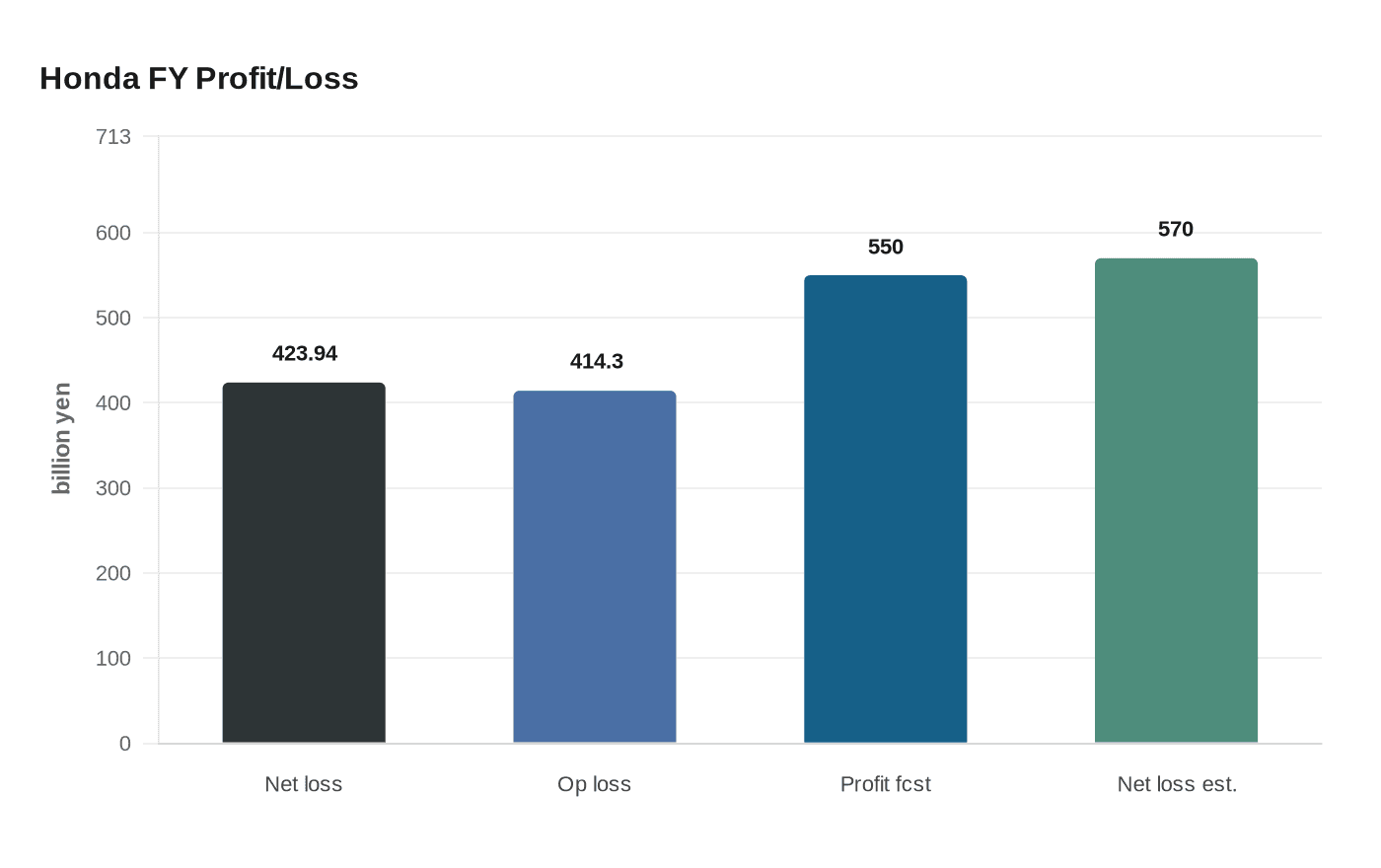
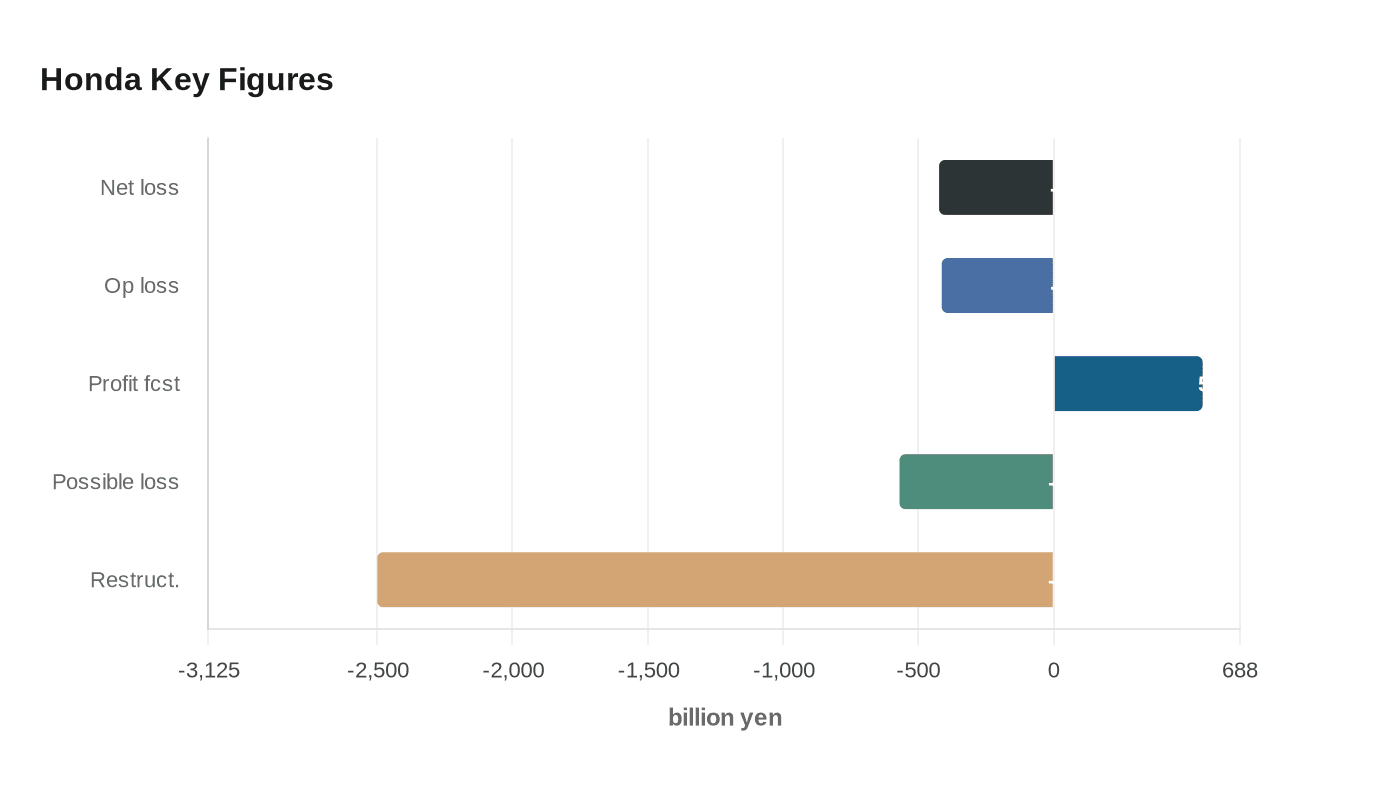
Honda Motor Co. has landed in a rare and costly reset: a 423.94 billion yen, or $2.68 billion, net loss for the fiscal year ended March, its first annual loss since the company listed in 1957. The operating loss reached 414.3 billion yen, or $2.63 billion, after Honda had initially forecast a 550 billion yen profit and then swung to a possible 570 billion yen net loss.
The blow was tied in large part to Honda’s retreat from electric vehicles. On March 12, 2026, the company canceled development and market launch of three EV models planned for North America as part of a reassessment of its electrification strategy. Honda later said the restructuring costs connected to that shift could reach as much as 2.5 trillion yen, or $15.7 billion, a scale that underscored how expensive a strategic reversal can be for a legacy automaker that had leaned heavily into the transition.
Honda said weak EV demand made profitability in its electric business difficult to sustain, while U.S. tariff policy also hurt its gasoline and hybrid vehicle business. CEO Toshihiro Mibe said EV demand had fallen sharply, and Honda also pointed to declining competitiveness in Asia after diverting more resources toward EV development. The company said it would write down the value of its China business as it faces software-driven rivals such as BYD.
The loss puts Honda in the same broad reckoning now confronting General Motors, Stellantis and Ford, all of which have also booked large EV-related write-downs as demand has proved less durable than many executives expected. But Honda’s decision cuts especially deep because it was not only a cost issue. Julie Boote of Pelham Smithers Associates said the main surprise was Honda canceling the U.S. production program rather than simply scaling it back, a sign that the company is pulling farther away from a plan once sold as central to its future.
Honda said it would strengthen its model lineup and cost competitiveness in India, where it sees room to expand, even as it recalibrates in North America, China and the broader Asian market. Mibe and Executive Vice President Noriya Kaihara said they would voluntarily forgo part of their compensation, a gesture that matched the size of the setback but did little to disguise the larger question facing Honda and its peers: whether retreating from EVs is prudent discipline, or a costly concession in a global transition that is still moving away from combustion engines.
This article was produced by Prism’s automated news system from verified source data, official records, and press releases, then run through automated quality and moderation checks before publishing. The system is built and supervised by the people who set the standards it runs under. Read our full AI policy.
Did this article answer your question?
%3Amax_bytes(150000)%3Astrip_icc()%2FCertificate-of-deposit-2301f2164ceb4e91b100cb92aa6f868a.jpg&w=1920&q=75)