Hormuz closure strains oil, gas markets, and global trade already
A fragile truce has not eased the squeeze at Hormuz, where three supertankers moved through but traffic stayed throttled. Oil, LNG, and trade are already paying the price.
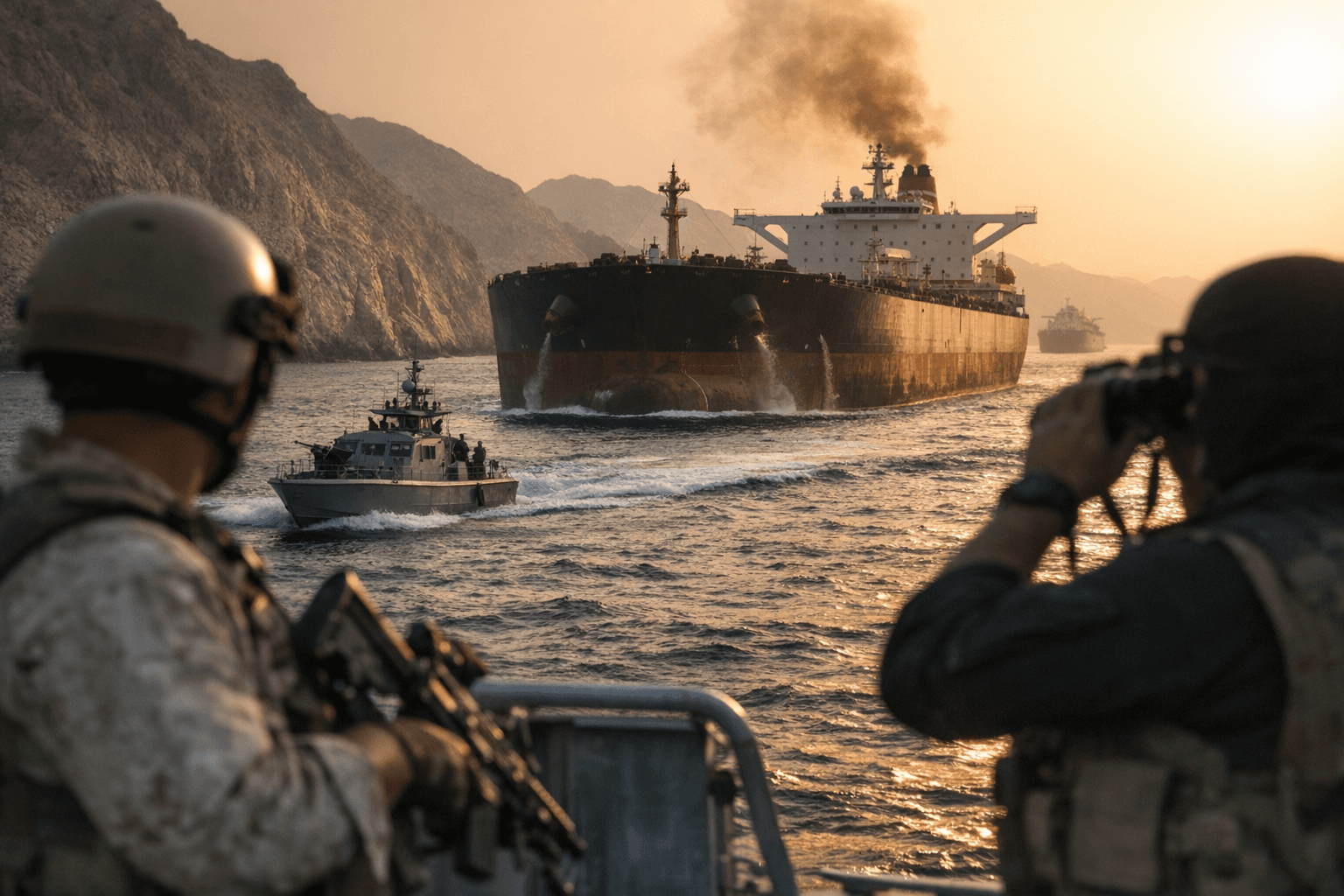
The fight over the Strait of Hormuz has become a test of wills with immediate market costs: even a partial closure is tightening storage, lifting fuel prices, and keeping shipowners away from one of the world’s most important energy corridors.
In 2024, about 20 million barrels a day of oil moved through the strait, equal to roughly one-fifth of global petroleum liquids consumption. In the first half of 2025, flows averaged 20.9 million barrels a day, still about 20% of world consumption and more than one-quarter of global maritime-traded oil. The waterway also carried about one-fifth of global liquefied natural gas trade, with Qatar and the United Arab Emirates accounting for nearly all LNG exports that pass through it.
That is why Washington and Tehran are confronting each other over a chokepoint with few practical substitutes. The Strait of Hormuz connects the Persian Gulf to the Gulf of Oman and the Arabian Sea, and the Energy Information Administration has long warned that alternative routes can offset only part of any lost volume. The current standoff raises the same strategic dilemma in harsher form: Iran can try to impose costs, but it cannot easily rewrite the underlying balance of power, while the United States faces the risk of oil shocks and deeper military entanglement if the pressure campaign escalates.
The Energy Information Administration said in an April 7 release that global oil markets were in a period of heightened volatility and uncertainty because of the de facto closure of the strait. It also said the closure was already causing oil storage to fill quickly in countries that rely on the waterway for exports. Diesel prices peaked above $5.80 a gallon in April and averaged $4.80 in 2026, a sign that the disruption is reaching consumers as well as traders.
The gas market has been hit too. Reduced LNG flows have sharply widened the gap between U.S. Henry Hub prices and import prices in Europe and Asia, exposing how quickly a maritime disruption can ripple through regional energy systems. UNCTAD said last week that Hormuz disruption was deepening global economic strain and warned that merchandise trade growth could slow to 1.5% to 2.5% in 2026 as inflation pressures rise.
The shipping picture remains fragile. Three supertankers passed through the strait amid a tenuous truce, but traffic stayed heavily throttled and owners remained reluctant to send vessels through the route. Maritime experts said reopening the waterway would not instantly normalize flows or prices because insurers, charterers and crews would still treat it as high risk.
Iran’s Revolutionary Guard said the strait remained under Iran’s full control after Donald Trump’s blockade announcement, underscoring how little the basic strategic picture has changed. The dispute has moved beyond nuclear limits to a broader question of who can move ships, who can extract concessions, and how much damage the world economy can absorb before the pressure turns into a lasting shock.
This article was produced by Prism’s automated news system from verified source data, official records, and press releases, then run through automated quality and moderation checks before publishing. The system is built and supervised by the people who set the standards it runs under. Read our full AI policy.
Did this article answer your question?


