Hormuz crisis raises fears of precedent for Taiwan and South China Sea
Hormuz’s shipping fight is now being read in Beijing and Taipei as a test case for Taiwan. Even tolls, not just blockades, could reshape the rules of maritime coercion.
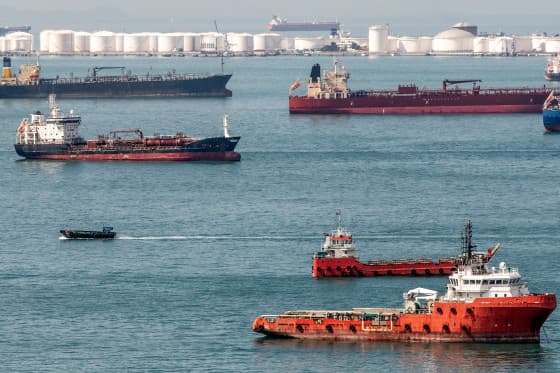
The fight over the Strait of Hormuz has become more than a Middle East shipping crisis. It is now being watched in East Asia as a possible template for how a future confrontation in the Taiwan Strait or the South China Sea might unfold, and whether military brinkmanship can be translated into a legal or political claim.
That concern rests on a basic rule of maritime order: under the United Nations Convention on the Law of the Sea, transit passage through straits used for international navigation is supposed to be continuous and expeditious. The International Maritime Organization said it was closely monitoring the Hormuz situation to protect more than 20,000 seafarers in the region, including crew stranded on vessels unable to leave the strait. The navigation risks have not been theoretical. Advisories from JMIC and UKMTO in April reported heavy GNSS interference, AIS anomalies, congestion and mine-risk concerns around the waterway, turning a narrow chokepoint into a live stress test for commercial shipping.
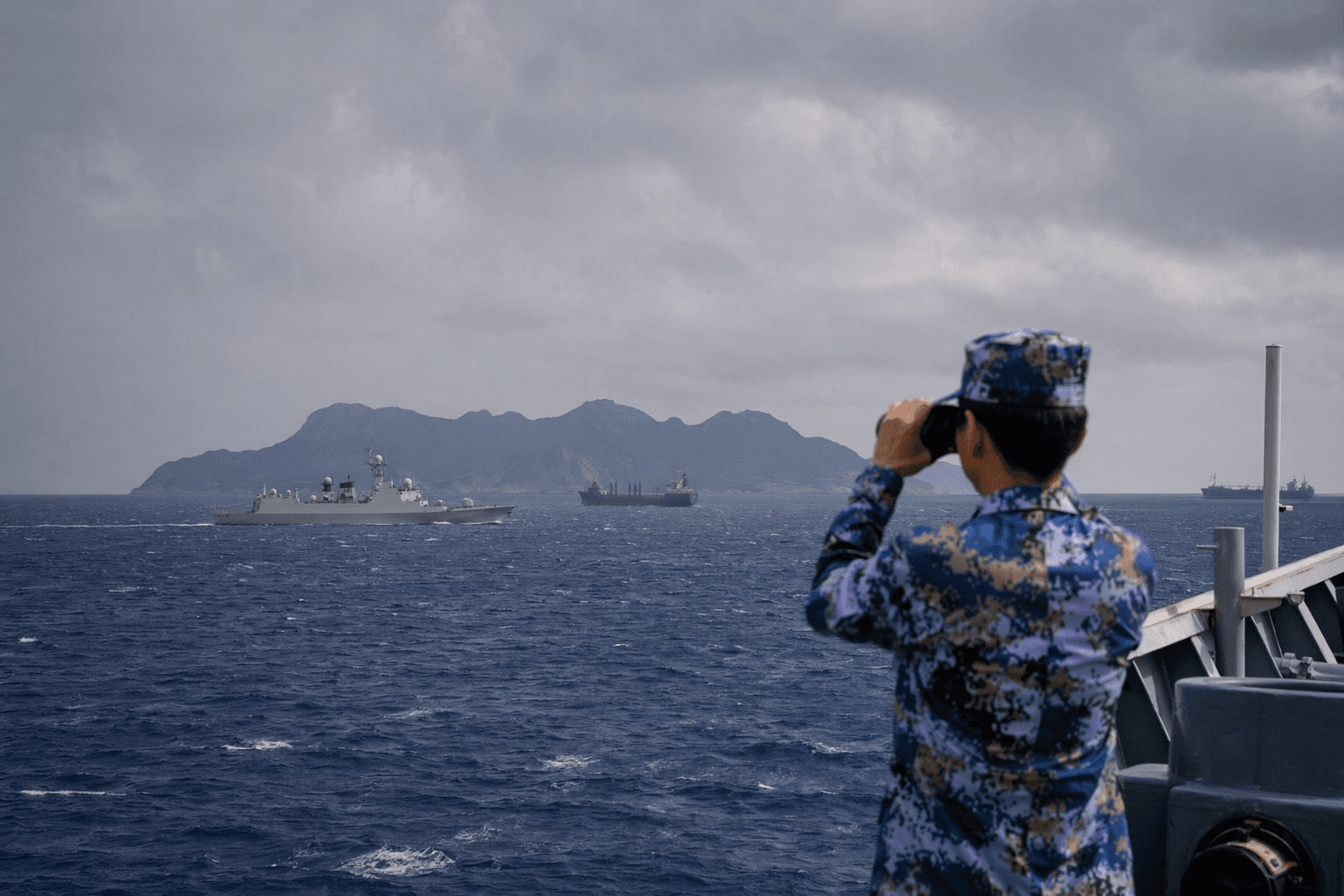
The diplomatic stakes widened further when senior U.S. and Chinese officials agreed that no country should be allowed to exact shipping tolls in the Strait of Hormuz. That position matters because a toll regime, even if short of a full blockade, would amount to a new kind of coercion on one of the world’s most important maritime arteries. A Chatham House analysis said President Donald Trump announced a blockade against shipping trying to enter or leave the Strait of Hormuz, while TIME warned that such a move could hand China a precedent it might invoke in a future dispute over Taiwan.
The economic exposure is enormous. A Baker Institute Center for Energy Studies working paper dated May 6 estimated that China faced a deficit of roughly 4 million to 5 million barrels a day on Gulf-origin crude because of the Hormuz closure and the U.S. counter-blockade. IFRI said in April that East Asian economies including Japan, South Korea and Taiwan were highly exposed to the disruption. For Beijing, that means Hormuz is not only a supply shock, but a warning about how concentrated energy dependence can become strategic vulnerability.
The larger lesson extends beyond oil. Hormuz sits between the Persian Gulf and the Gulf of Oman, feeding routes into the Arabian Sea and onward to global markets. If transit conditions there can be contested, even temporarily, then the same logic can be projected onto Taiwan and the South China Sea, where control of sea lanes would affect trade, energy security and U.S. strategy all at once. In that sense, Hormuz has become a preview of the hidden architecture of globalization under pressure.
This article was produced by Prism’s automated news system from verified source data, official records, and press releases, then run through automated quality and moderation checks before publishing. The system is built and supervised by the people who set the standards it runs under. Read our full AI policy.
Did this article answer your question?


