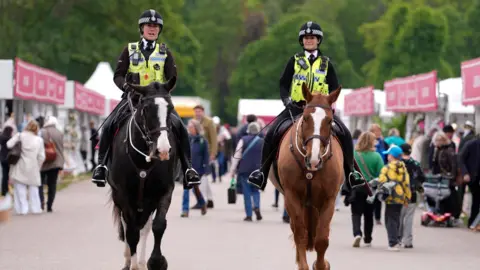
Met police deploy 4,000 officers for rival London marches today
4,000 officers sealed central London as Tommy Robinson supporters and a pro-Palestinian march converged, with the FA Cup final adding to fears of disorder.
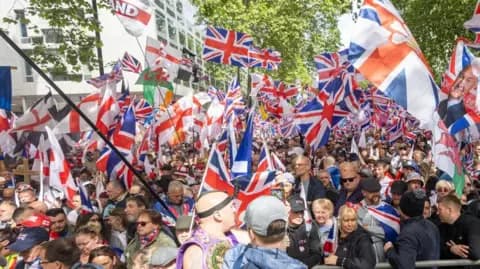
Central London was ringed with 4,000 officers as the Metropolitan Police tried to keep Tommy Robinson supporters and a pro-Palestinian march apart and prevent clashes on one of the force’s biggest public-order days in years. The operation used armoured vehicles, police horses, dogs, drones and helicopters, underlining the strain of managing rival demonstrations in the capital.
Police said the heavy deployment reflected lessons from Robinson’s Unite the Kingdom protest in September 2025, when violence broke out in multiple locations, officers were attacked and arrests were made during and after the event. More than 50 suspects from that day remained outstanding and unidentified, a fact that sharpened concern over another mass gathering linked to the same movement.
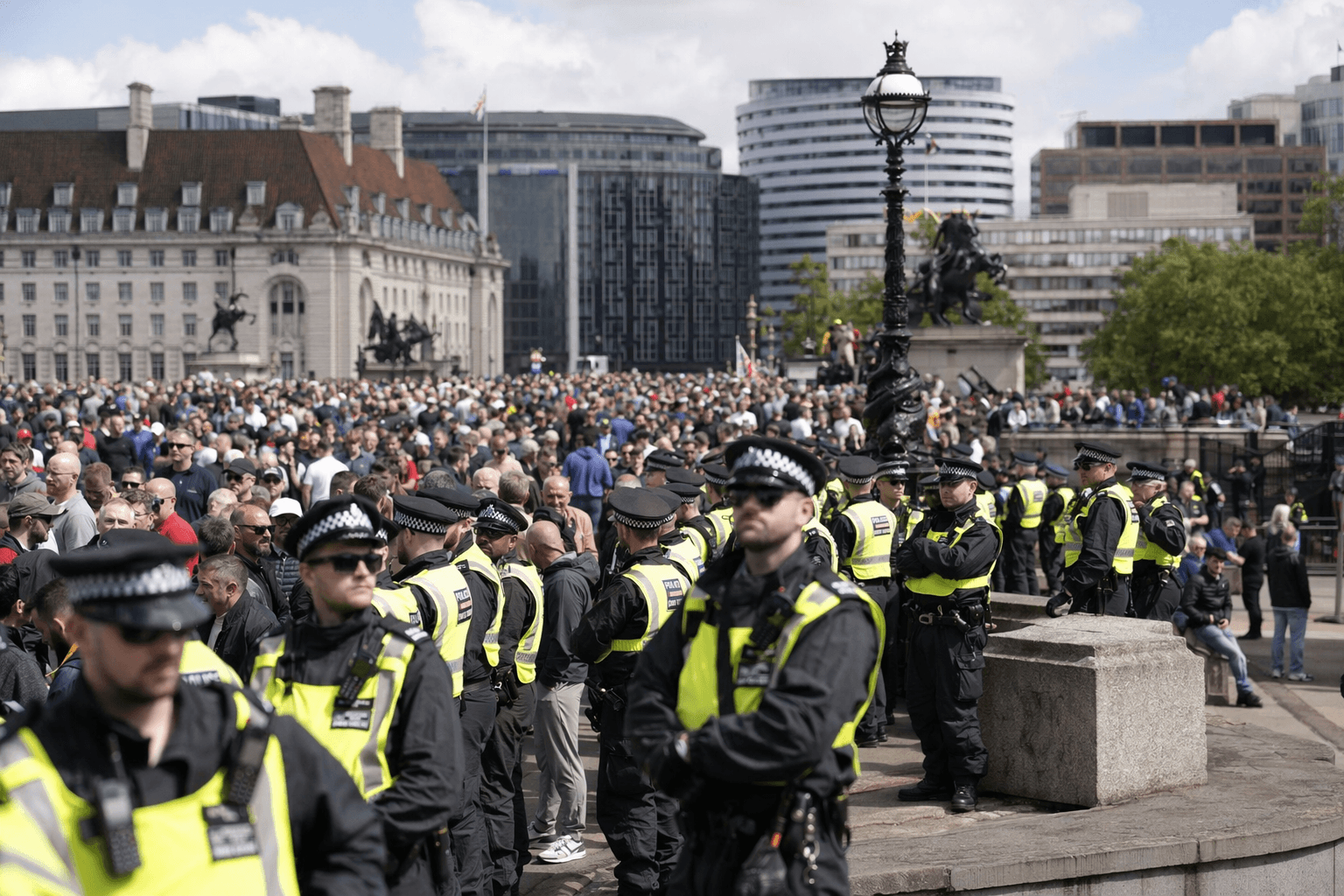
The counter-march was the annual Nakba Day rally, organised by a coalition including the Palestine Solidarity Campaign and Stop the War, with Stand Up To Racism joining this year. Police said the march was due to form up in Exhibition Road in Kensington before heading along Brompton Road and Piccadilly to Waterloo Place, where speeches were due to be delivered at a rally.
The policing challenge was amplified by the 2026 FA Cup final at Wembley Stadium, where Chelsea faced Manchester City with kick-off at 3pm BST on 16 May 2026. Officers were worried that football supporters could spill into central London after the match, adding another volatile crowd movement to a day already defined by competing political gatherings and a large security footprint.
The government also moved to curb the risk of unrest before the rallies, blocking 11 foreign nationals described by Sir Keir Starmer as far-right agitators from entering the UK ahead of the Unite the Kingdom event. One of those refused entry was US-based anti-Islam influencer Valentina Gomez.
Early estimates put attendance across the two marches at about 80,000, a figure that placed pressure not only on police planning but on the wider public order system in London. Reports put the cost of the operation at about £4.5 million, a reflection of how deeply polarised the day had become: far-right activism, anti-racism mobilisation and pro-Palestinian protest all converged under the watch of a force trying to hold the city’s streets apart.
Know something we missed? Have a correction or additional information?
Submit a Tip