Israel says it killed Hamas commander who helped plan Oct. 7 attacks
Israel said it killed Izz al-Din al-Haddad, the Hamas commander tied to Oct. 7 and hostages, in a Gaza City strike that could reshape command, or just the optics.

Israel said it killed Izz al-Din al-Haddad, the Hamas commander who helped plan the Oct. 7 attacks and rose to lead the group’s military wing after replacing Mohammed Sinwar. The strike hit Gaza City, and Israeli officials said Haddad had also been involved in holding Israeli hostages and in efforts to rebuild Hamas’ military capabilities.
Haddad’s death, if fully borne out across Hamas’ ranks, would remove one of the last men closely linked to the Oct. 7 assault that killed more than 1,200 people in Israel and led to the seizure of 251 hostages, according to the Israel Defense Forces. The war that followed has dragged on for more than two years, and Israeli military chief Lt. Gen. Eyal Zamir called the killing “an important closing of a circle.” He said Haddad’s name came up repeatedly in conversations with returned hostages, underscoring how closely the commander was tied to both the attack and the captivity that followed.
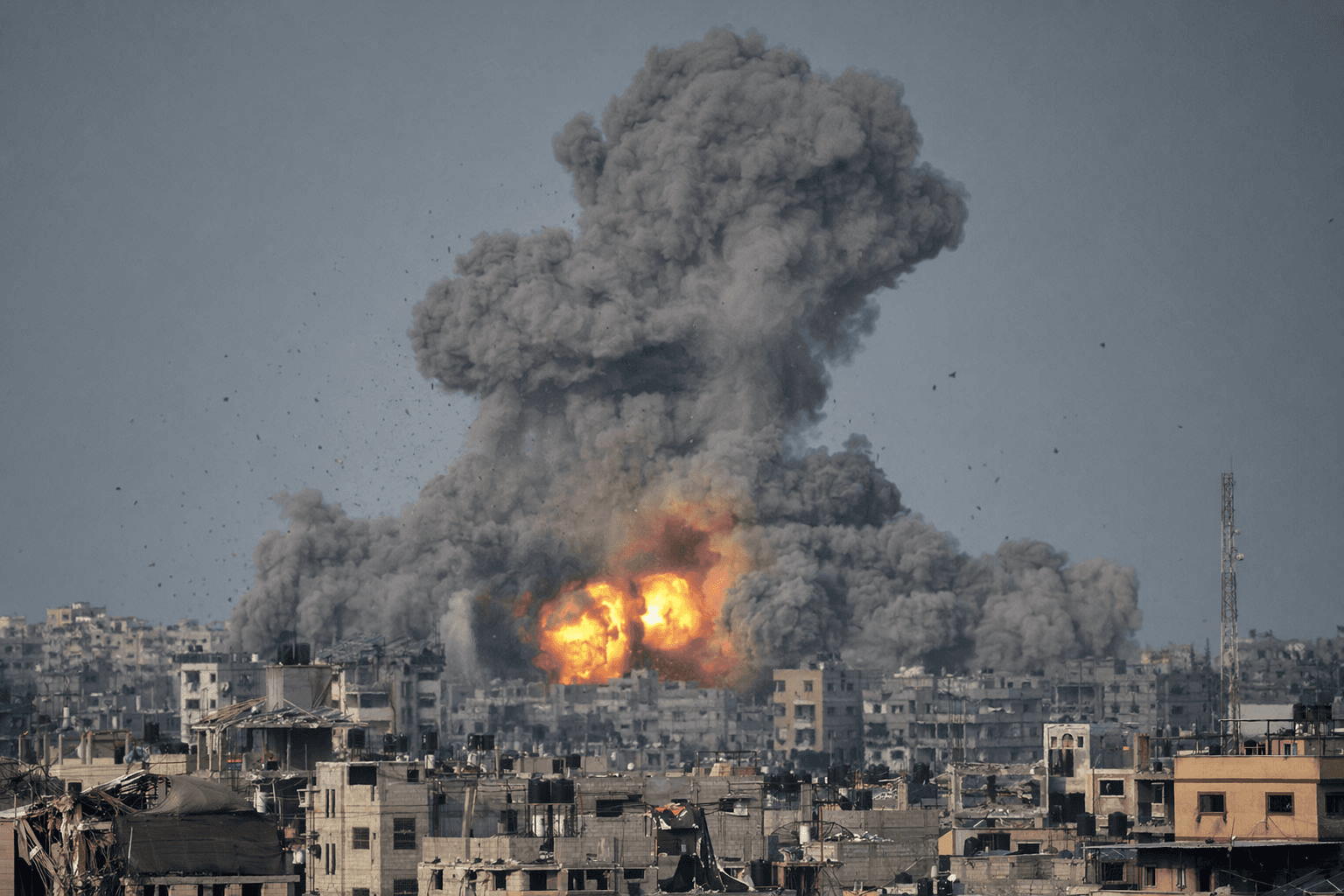
The verification gap remains central. A senior Hamas official told Reuters that Haddad had died after the Israeli airstrikes, but Hamas had not publicly confirmed his death when that account emerged. The uncertainty matters because Hamas has absorbed the loss of senior figures before, and the group’s command structure has been repeatedly forced to adapt under fire. Still, Israeli officials viewed Haddad as the head of Hamas’ military wing and, in the words of The Jerusalem Post, the highest-ranking military commander in the organization and the last leader of the Oct. 7 massacre remaining in the Gaza Strip.
Strategically, the killing carries weight beyond the battlefield. Reuters described Haddad as the most senior Hamas official killed by Israel since the U.S.-backed ceasefire deal in October 2025, a sign that the conflict’s political and military tracks remain tightly linked. Haddad had also been a member of Hamas’ military wing since its founding in 1987, and The Jerusalem Post reported that he had been the captor of former hostages Liri Albag and Emily Damari. That history makes his death more than another strike in a long war: it cuts into the network of commanders tied to the October 7 assault, hostage detention, and whatever leverage Hamas still holds.
Whether that translates into a real shift in Hamas’ operational capacity or hostage negotiations is less certain. Removing a commander of Haddad’s stature can disrupt planning and communication, but it can also produce a symbolic victory that does little to change the war’s trajectory unless Israel can pair it with a broader diplomatic and military strategy.
This article was produced by Prism’s automated news system from verified source data, official records, and press releases, then run through automated quality and moderation checks before publishing. The system is built and supervised by the people who set the standards it runs under. Read our full AI policy.
Did this article answer your question?