House approves $1.2 trillion spending bills amid DHS showdown
Lawmakers approved final fiscal spending bills to avert a partial shutdown, while Homeland Security funding faced sharp division and contested provisions.
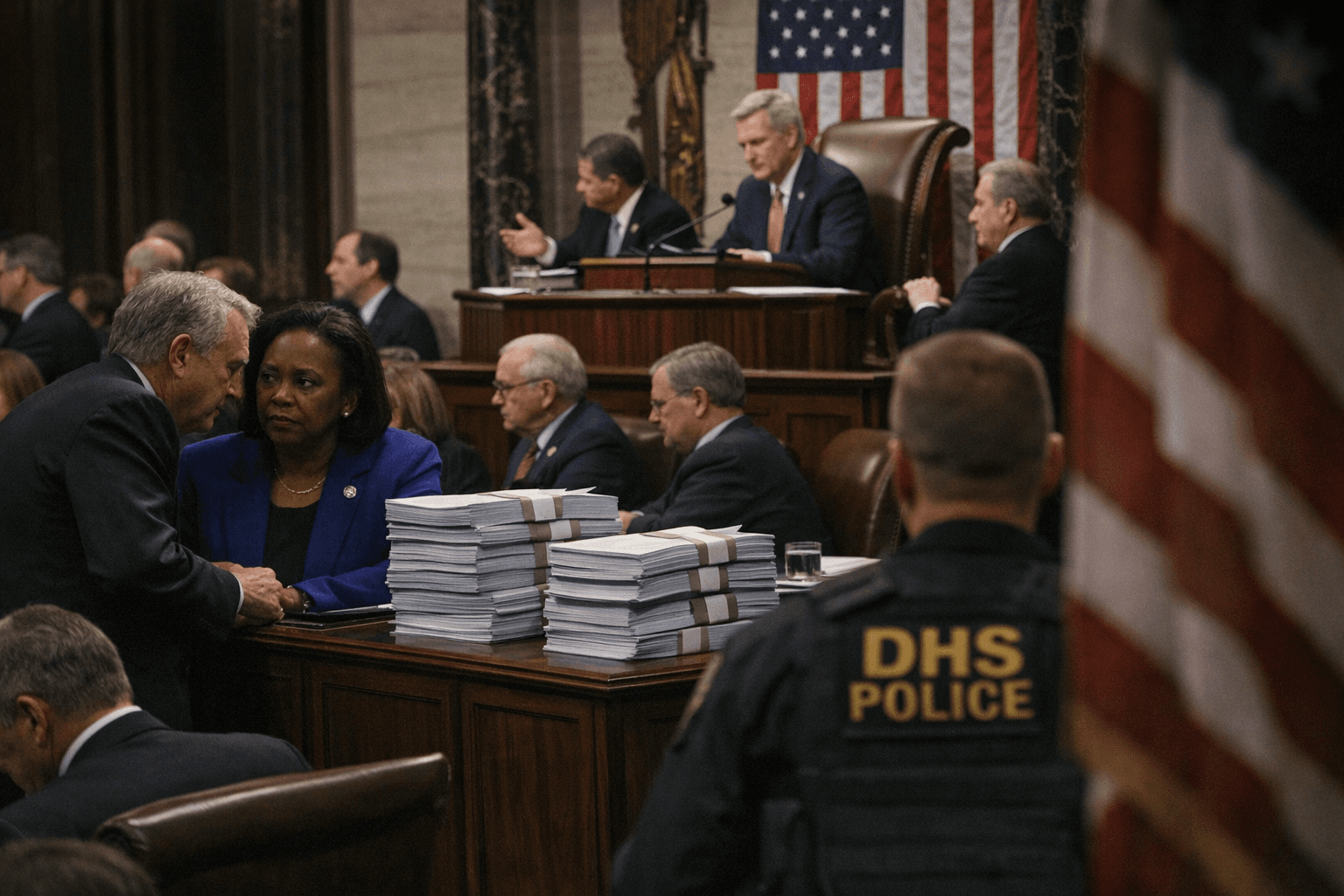
The House approved the last package of fiscal‑year spending bills on Jan. 23, clearing roughly $1.2 trillion in appropriations and averting a partial government shutdown before the Jan. 30 deadline. Three of the four bills won broad bipartisan support, but the Department of Homeland Security measure proved sharply divisive, drawing some of the most heated debate on the floor and in committee halls.
By completing the appropriations process in the House, lawmakers preserved uninterrupted funding for federal operations that underpin public health, disaster response and community services. Continued appropriations protect staffing and programs at agencies that run disease surveillance, vaccine distribution, community health centers, mental health services and emergency management, reducing the risk of service disruptions that disproportionately harm low-income and marginalized communities.
The DHS bill, which attracted opposition across the aisle, became the focal point of contention because members attached policy provisions that stakeholders warned could have outsized effects on immigrant communities and local first responders. Advocates and public health experts raised alarm over the potential for provisions to reshape enforcement priorities, complicate access to services and strain coordination between federal agencies and local health departments during emergencies.
A lapse in funding would have imperiled routine public health functions and emergency preparedness. During past shutdowns, clinical trials were delayed, disease surveillance reporting slowed, and workers in public health and disaster response were furloughed or worked without pay. Community clinics and school health programs that serve majority‑low income neighborhoods often feel these disruptions first, aggravating existing inequities in health care access and outcomes.
Beyond immediate operational consequences, the appropriations package highlights recurring structural tensions in federal budgeting. The partisan battles over the DHS measure reflect a broader trend in which contentious policy riders are attached to must‑pass funding bills, elevating political disputes above steady investment in infrastructure that supports community resilience. Public health leaders argue that predictable funding, not episodic crisis politics, is essential to address chronic problems such as rising mental health needs, respiratory disease surveillance and climate‑related disaster preparedness.
Healthcare policy implications extend to the way appropriations intersect with programs serving vulnerable populations. Funding stability for agencies that undergird community health amplifies or diminishes local capacity to run vaccination campaigns, respond to infectious disease outbreaks and support behavioral health initiatives. When appropriations are held hostage to political fights, those with the least resources, immigrants, people of color, rural residents and those experiencing poverty, face greater risk of service interruptions.
With House passage complete, the bills move to the Senate and then to the White House for final approval. Lawmakers and advocates say maintaining funding lines is necessary but insufficient; they call for long‑term commitments to public health infrastructure that center equity and community‑level resilience. The recent votes underscore how federal budget battles are not abstract fiscal contests but decisions that shape who receives care, how quickly communities bounce back from disasters, and whether public health systems can protect the most vulnerable.
This article was produced by Prism’s automated news system from verified source data, official records, and press releases, then run through automated quality and moderation checks before publishing. The system is built and supervised by the people who set the standards it runs under. Read our full AI policy.
Did this article answer your question?

