House GOP Reverses Course, Agrees to Reopen Most of Government
After 47 days of record-setting closure, GOP leaders agreed to fund most of DHS while routing ICE money through reconciliation to bypass the Senate filibuster.
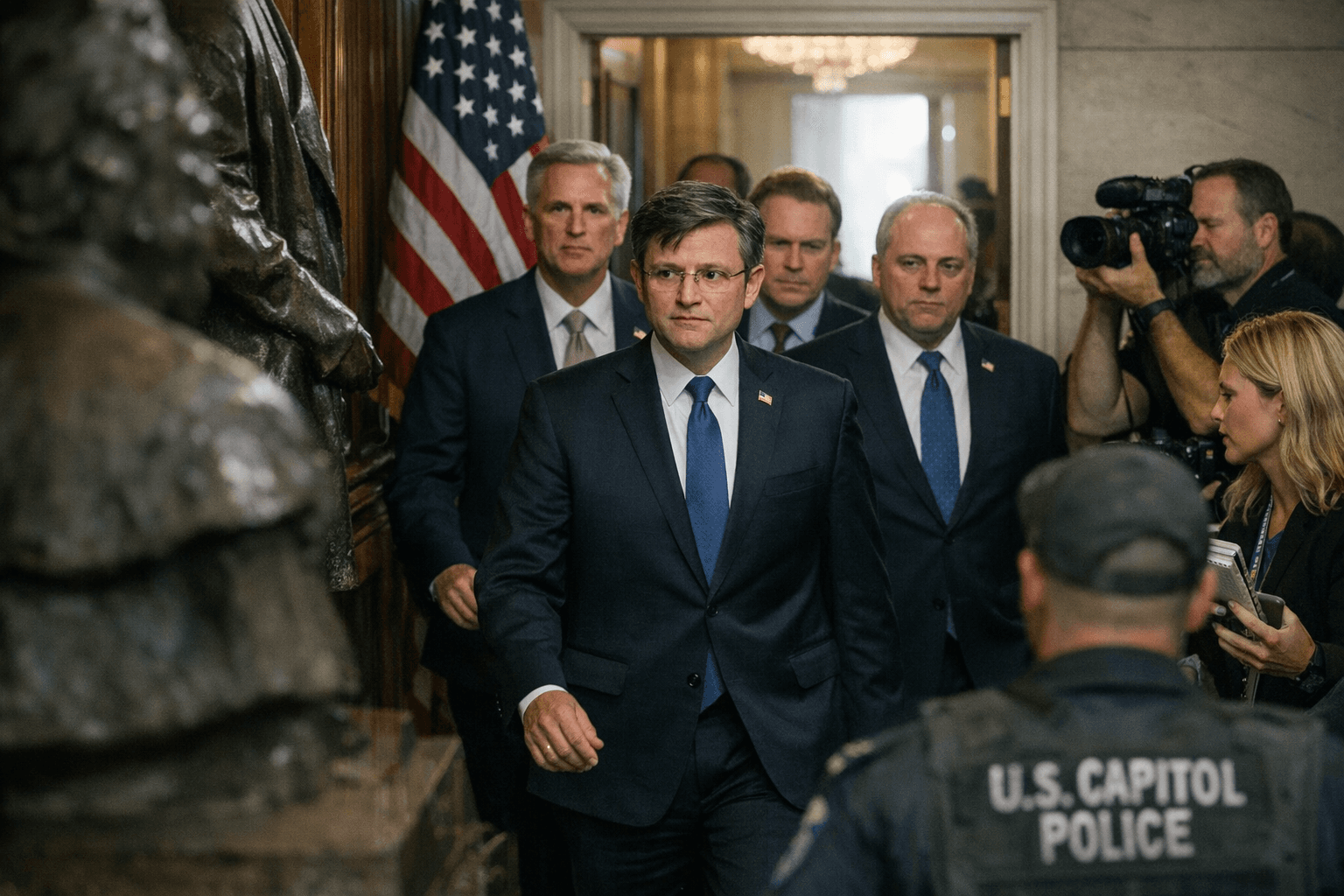
The record-breaking 47-day DHS shutdown edged toward resolution Thursday after Senate Majority Leader John Thune moved to send the House a bipartisan funding bill, but the House convened only for a pro forma session and took no action, ensuring the department remains partially shuttered into at least the week of April 13.
The path to this point followed a familiar pattern of governing by crisis. The shutdown, which began February 14, was triggered by two fatal shootings of U.S. citizens by federal immigration agents in Minneapolis in January. Senate Democrats, holding 47 seats against the Republican majority of 53, refused to supply the 60 votes needed to overcome the filibuster unless Republicans agreed to ICE reforms: body cameras, a ban on agents wearing masks during operations, and judicial warrants before entering homes.
The Senate struck a bipartisan deal in the early hours of March 27, passing a funding bill by voice vote just after 2 a.m. The measure would fund most of DHS's 10 agencies, including TSA, FEMA, and the Coast Guard, through September, while leaving ICE and portions of Customs and Border Protection without appropriations. Speaker Mike Johnson called the deal "a joke" and pushed through a 60-day continuing resolution for all of DHS instead. That bill passed the House 213-203, with only Reps. Henry Cuellar of Texas, Don Davis of North Carolina, and Marie Gluesenkamp-Perez of Washington crossing party lines. Senate Democrats declared it dead on arrival, and both chambers departed for recess.
The logjam broke April 1 when President Trump posted on Truth Social directing Republicans to fund ICE and Border Patrol through budget reconciliation, a procedural tool requiring only a simple majority in the Senate, and set a June 1 deadline: "I am asking that the bill be on my desk NO LATER than June 1st." Within hours, Thune and Johnson issued a joint statement announcing a "two-track approach": the House would take up the Senate-passed bill funding most of DHS through September via regular appropriations, while Republicans would separately pursue three years of ICE and Border Patrol funding through reconciliation. "In following this two-track approach, the Republican Congress will fully reopen the Department, make sure all federal workers are paid, and specifically fund immigration enforcement and border security for the next three years," they wrote.
Who won the standoff is contested. Thune said publicly that Democrats secured none of the policy concessions they had demanded on immigration enforcement. Schumer countered: "Throughout this fight, Senate Democrats never wavered. We were clear from the start: fund critical security, protect Americans, and no blank check for reckless ICE and Border Patrol enforcement."
The shutdown's most visible toll fell on travelers. Unpaid TSA agents missed paychecks and quit in large numbers, causing airport security lines to stretch for hours. Trump signed an executive order directing that TSA agents be paid from unspent funds in the "One Big Beautiful Bill Act," the 2025 Republican spending package that included tens of billions for DHS functions, including security for the 2026 FIFA World Cup and 2028 Olympics. Chris Sununu, president and CEO of Airlines for America and former New Hampshire governor, praised the move, noting TSA officers had been "serving with professionalism on the frontlines of our nation's aviation system, despite not receiving pay for more than 40 days."
Even with the Senate advancing the bill Thursday, a House vote remains days away, with many Republicans pressing for firm assurances on the reconciliation track before backing the appropriations measure. That leaves Congress roughly six weeks after returning in mid-April to draft and pass a three-year immigration enforcement funding package, with Trump's June 1 deadline as the governing constraint. In past shutdowns, "fund later" pledges have typically compressed difficult negotiations into narrower windows than anticipated; whether Republican leaders can hold both tracks together, or whether the same conservative pressures that rejected the original Senate deal fracture this arrangement as well, will define the weeks ahead.
Know something we missed? Have a correction or additional information?
Submit a Tip

