House Republicans race to fund security, renew spy powers, advance farm bill
House Republicans cleared a spy-power renewal but still faced a Senate deadline, a farm bill revolt and another scramble over homeland security funding.

House Republicans spent the week lurching from one deadline to the next as intraparty rebellions kept forcing leaders to patch, postpone and renegotiate basic governing work. The House approved a three-year renewal of Section 702 surveillance powers by a 235-191 vote on April 29, but GOP leaders still had to wait on the Senate before the authority expired April 30, while a farm bill vote was pushed back after another procedural revolt.
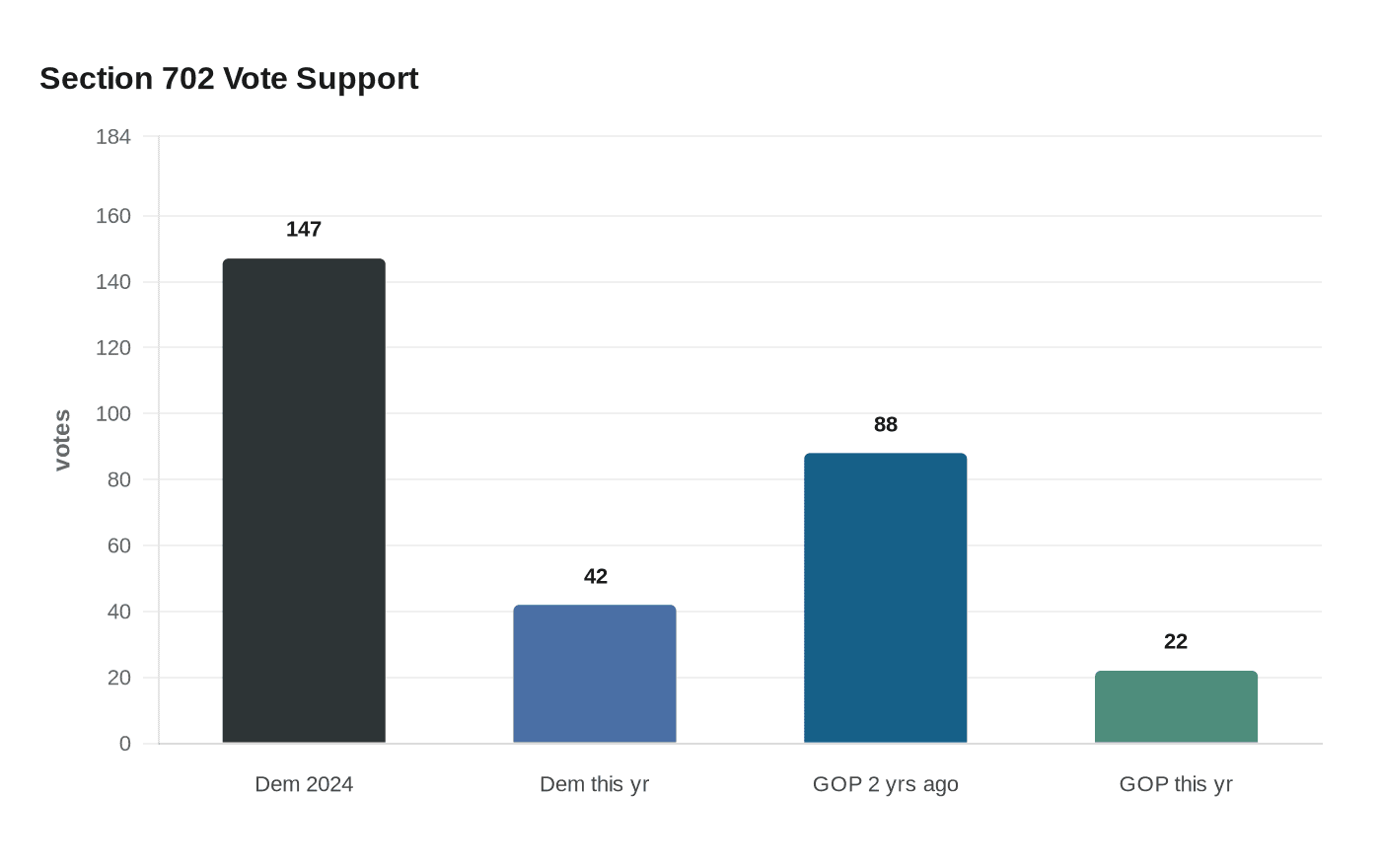
The surveillance fight showed how much pressure Speaker Mike Johnson was under to keep Republicans aligned. The House had already passed a short-term extension on April 17 after procedural votes collapsed, buying leaders only until April 30 to strike a deal. Section 702 lets the government collect communications of foreigners abroad, including when they interact with Americans, and supporters call it essential for counterterrorism and counterintelligence. The House bill included modest reforms, including expanding the pool of lawmakers who can review information presented to the Foreign Intelligence Surveillance Court, but privacy hawks still objected. The vote also reflected a sharp shift in party politics: only 42 Democrats backed the renewal this year, down from 147 in 2024, while Republican opposition fell to 22 from 88 two years ago. President Donald Trump had pushed Republicans toward a clean extension and hosted hard-line lawmakers at the White House on April 15.
The farm bill fight exposed a different fracture. House Agriculture Chair G.T. Thompson said the measure had not been reauthorized since 2018 and was due to be updated in 2023, making the latest delay another sign of how far behind Congress has fallen on agricultural policy. Leadership postponed the vote after a Republican revolt during a procedural test and planned to send the package back to the House Rules Committee, then try again in May after a weeklong recess. The biggest flash point was year-round E15 fuel sales, with some Midwest and farm-state Republicans objecting to leadership’s decision to decouple that provision while other hard-liners demanded their own priorities and amendments.
House Budget Chair Jodey Arrington, of Texas, captured the competing pressures: “Farm people want a farm vote. And corn-belt people want [renewable fuel standard] changes.” That split, playing out alongside efforts to move a budget resolution tied to immigration enforcement funding and a broader Department of Homeland Security funding fight, has left Republicans trying to govern by deadline extension rather than by consensus.
This article was produced by Prism’s automated news system from verified source data, official records, and press releases, then run through automated quality and moderation checks before publishing. The system is built and supervised by the people who set the standards it runs under. Read our full AI policy.
Did this article answer your question?

