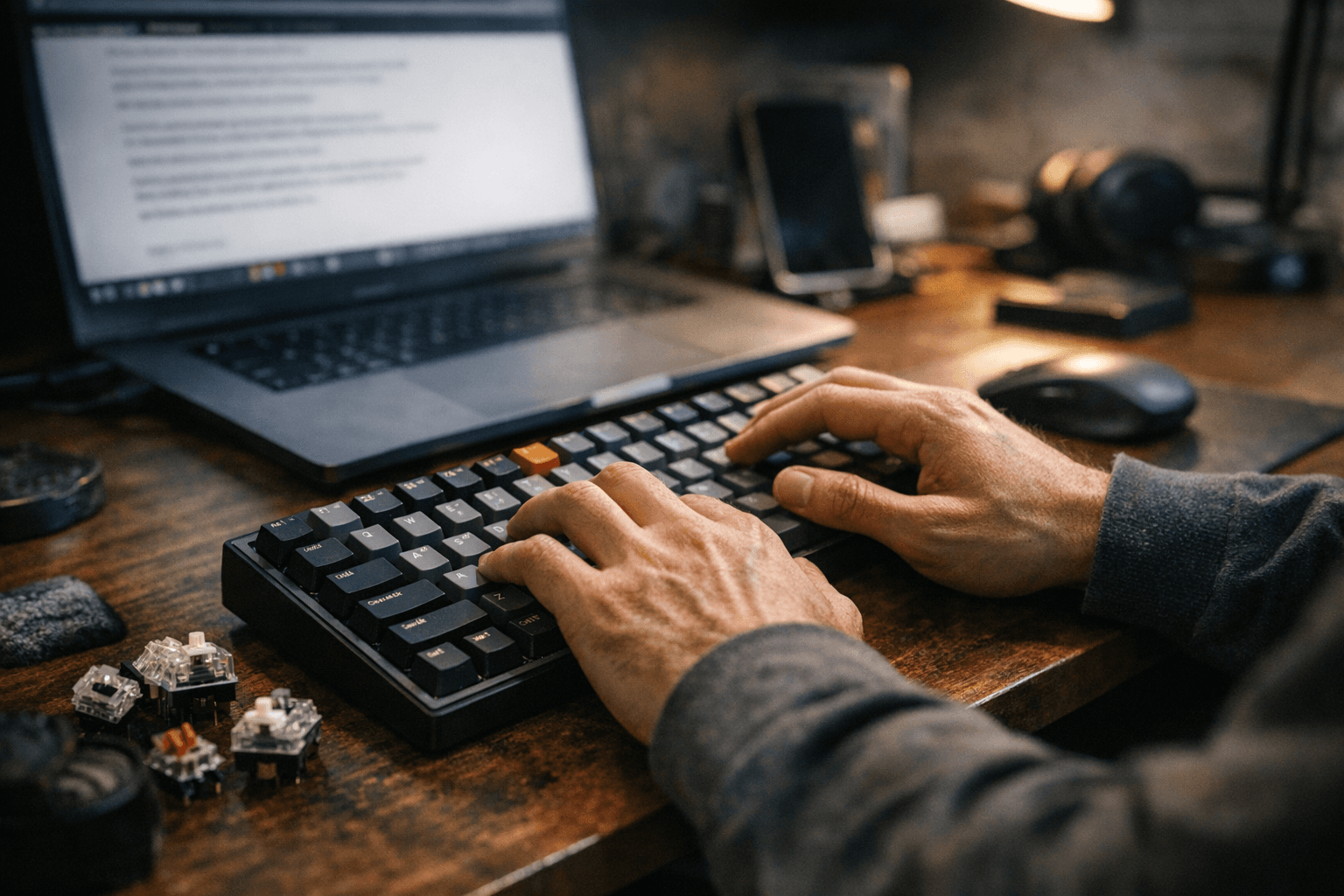
How keycap materials shape feel sound and longevity
A practical primer on ABS, PBT, POM and other keycap materials and why choices affect feel, sound, and durability.

The material your keycaps are made from is one of the clearest, most immediate ways to change how a keyboard feels and sounds. Pick the wrong material for your use and you may end up chasing shine, chasing a louder pitch, or paying more for a look that does not suit daily typing. Pick the right one and you get consistent feel, longer life, and the sound profile you want.
ABS, or acrylonitrile butadiene styrene, is the default for many mass market sets and vivid colorways. It yields bright legends and a smooth surface that plays well with doubleshot manufacturing, which preserves legends against wear. ABS tends to be thinner unless a thick ABS variant is used, and it develops shine with heavy use. Sonically, ABS is often brighter and higher pitched, so expect more clack than thock. Choose ABS when you want bold colors, glossy finishes, or lower cost, and accept that appearance will change over months or years of heavy typing.
PBT, polybutylene terephthalate, is the community favorite for daily drivers. It resists shine, is usually thicker, and produces a warmer, deeper thock that many typists prize. PBT surfaces stay consistent longer and feel more substantial under the fingers. Dye-sub or double-shot PBT sets exist, but they often cost more and colorways can be slightly more muted compared with ABS. For heavy typing, shared workstations, and anyone who hates shine, PBT is the practical choice.
POM, polyoxymethylene or acetal, is less common for full sets but valued for its slick, low friction surface and dense feel. POM can deliver a tight, crisp sound and a unique tactile glide, making it a strong pick for specialty keys or partial upgrades when tooling and availability are not limiting factors.
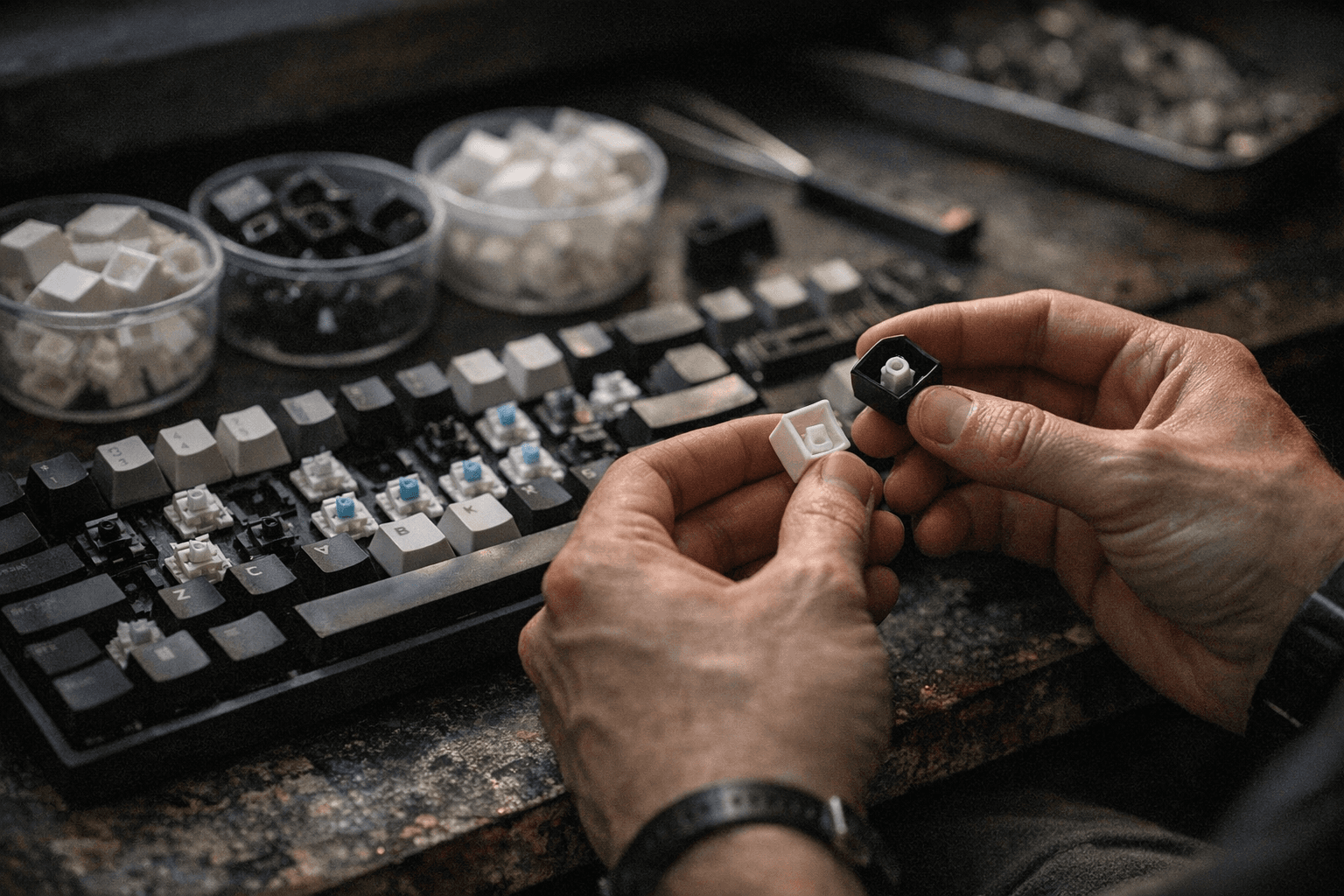
Beyond plastics, artisan caps in metal, resin, ceramic, or stone are primarily aesthetic or novelty choices. They can add heft and visual flair, but ceramic and stone are fragile and metal alters balance and typing feel significantly. Use these sparingly for accents or a single index cap if you want flair without compromising an entire layout.
Practical advice follows: for heavy daily use choose PBT for durability and predictable sound. If you prioritize vibrant novelty sets and long-lasting, crisp legends, doubleshot ABS remains a viable option but expect eventual shine. Try sample keys or swap a few replacement keycaps on your home row or modifiers before committing to a full set. When matching material, also consider profile, thickness, and legend method. Profile choices like SA, Cherry, DSA, and MT3 change travel and hand posture as much as material does, so test combinations if you can.
As options expand and small runs experiment with blends and new tooling, use this framework to match material to use case. Swap a set, live with it for a week, and tune from there, your board’s feel and sound are only a few keycaps away from exactly what you want.
Know something we missed? Have a correction or additional information?
Submit a Tip