How Long to Leave Sourdough on Counter Before Shaping
Expect to leave sourdough on the counter anywhere from a brief 30-minute check to several hours; temperature and dough state decide whether you shape now or delay for a cold retard.
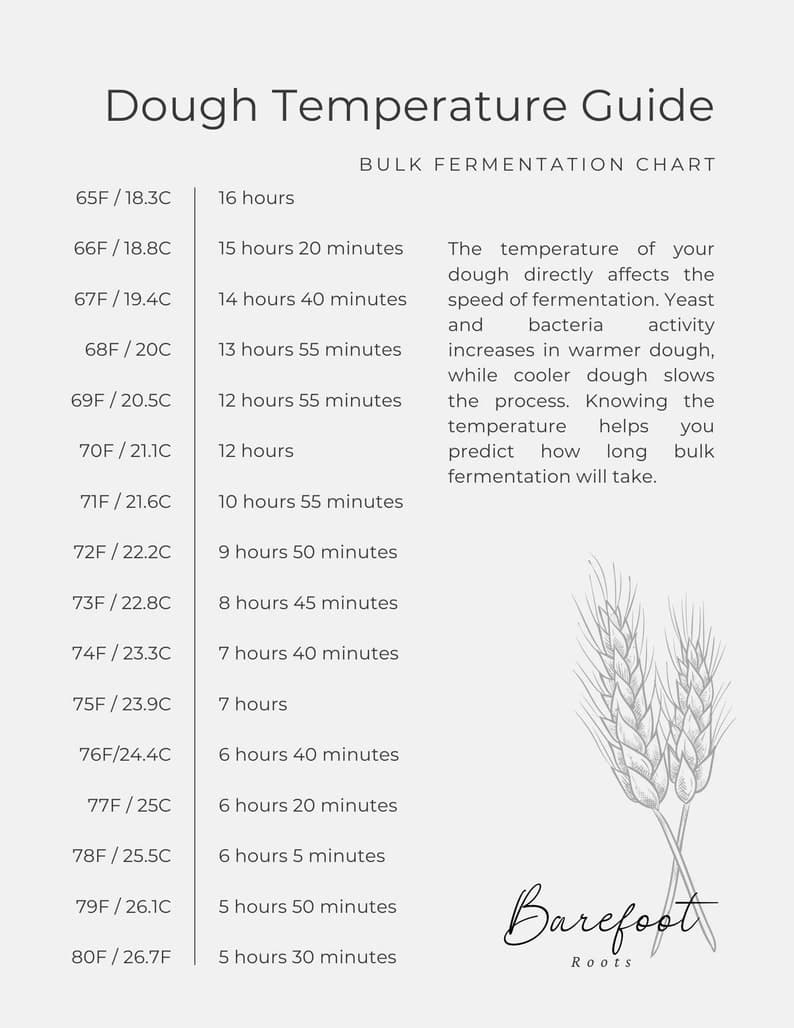
Sourdough timing is a moving target, and the single most important variable is temperature. Bulk fermentation can run “roughly 2–10 hours at room temperature depending on kitchen temperature,” with warm kitchens often cutting that window to about “2–4 hours at ~75°F+.” That range changes how long you leave dough on the counter before shaping and whether you go straight to a cold retard.
For the final proof on the counter, expect a practical window of about one to three hours. Wonderandtower lays out a typical room-temperature timeline and concludes that “the average range for proofing your sourdough at room temperature can be anywhere from 1-3 hours.” Thesourdoughjourney expands the range, noting “At room temperature, this process can take anywhere from 1 to 4 hours,” and adds a temperature anchor: “If the dough temperature is very warm, for example 80F/27C, the dough will continue to ferment quickly and may only take 1-2 hours to final proof.”
Many bakers use a hybrid workflow if the dough feels underdone after bulk. “A Hybrid Option –Many experienced bakers use a hybrid option between the countertop and refrigerator cold retard,” the guide states. In practice, “If the dough still feels somewhat stiff and possibly underproofed, they will let the dough proof on the countertop for 30-90 minutes before moving the dough into the refrigerator for the final cold retard.” Thesourdoughjourney calls this a “safety net” that can also be used “to push the envelope and really go for a wild open crumb,” while warning some bakers do not prefer the very open, irregular crumb it can produce.
Workflows vary across the community. A common sequence shared on Reddit runs: “Autolyse / Mix / Stretch & Folds / Bulk Fermentation / Divide, Pre-Shape, Bench rest / Final Shape / Retard overnight / sleep, work/proceed with life - / Remove from the fridge and bake approx 15-24 hours later.” Other bakers retard immediately after bulk and do shaping the next day; both approaches are used successfully, with shaping-before-retard often helping with scoring and handling cold dough.
Concrete schedules from community sites make this actionable. Wonderandtower’s day example runs from an 8:00 AM mix and autolyse to a 11:00 AM–5:00 PM bulk window and suggests shaping at 5:00 PM and setting “a timer for 1 hour to see how fast your dough is rising.” ThePerfectLoaf gives specific bench-rest timing: “Pre-shape – 2:05 p.m. … Set a timer for 35 minutes and let it bench rest. … Shape – 2:40 p.m.” The site also notes using a slightly larger levain in cold weather: “my percentage of increased levain: 25%.”
Practical details matter: “Make sure you set a timer. Depending on how warm your room is, your dough can overproof quickly if you’re not keeping an eye on it.” Cover bannetons, flour liberally, use a towel or plastic bag to hold moisture, and use parchment to flip dough when needed. Watch the dough rather than the clock alone; Thesourdoughjourney cautions that “When going past 2-3 hours in a final proof, the crumb tends to get very gassy and opens up large gas bubbles with a longer countertop proof.”
What this means for your baking: measure ambient temperature, learn how your starter and dough behave, and choose a workflow that fits your schedule. Try a 30–90 minute countertop check before cold retard if bulk feels short, aim for roughly 1–3 hours for a countertop final proof in typical kitchens, and use timers and banneton care to avoid overproofing. Adjust seasonally, the same baker reports that in an AZ summer at 84°F they skip warm bulk, while at 64°F they add an hour and a half on the counter, so let your kitchen set the pace.
Know something we missed? Have a correction or additional information?
Submit a Tip