How SA, Cherry, DSA, XDA and OEM profiles change feel and layout
Keycap profile changes how a keyboard feels and sounds; this guide explains SA, Cherry/CYL, DSA, XDA, OEM and vendor variants so you can pick the right swap.
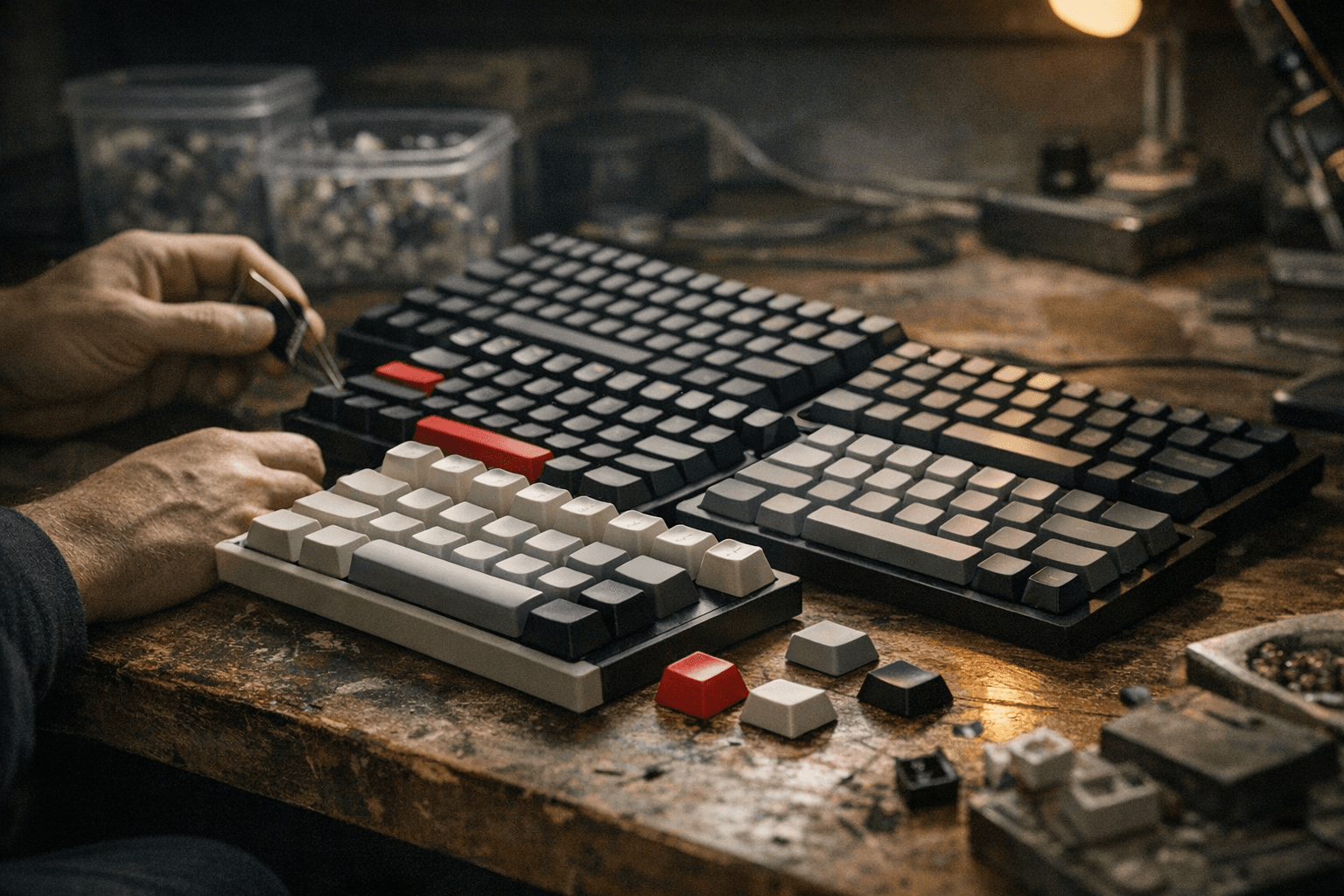
“Why this matters: keycap profile (the sculpted height/angle/shape of keycaps) is one of the quickest ways to change how a keyboard feels and sounds.” That framing drives every upgrade decision in the mechanical keyboard community: profile dictates ergonomics, typing speed, sound signature and layout flexibility.
Profiles fall into two clear camps. Sculpted profiles vary row-to-row to guide finger placement; uniform profiles keep all rows the same so keys can be rearranged and feel consistent. “In the world of high-end keyboards, keycap profiles are a defining feature. Understanding the differences between profiles allows you to make informed choices that align with your preferences,” Eloquentclicks writes, and the practical effects are immediate when you swap caps.
SA is the high, retro-styled heavyweight of the hobby. Geekboards De lists SA height at 16.5 mm and calls it “a retro-styled, high-profile keycap with deep spherical tops, offering a satisfying deep ‘thocky’ sound and a unique aesthetic appeal.” SA’s tall, spherical, sculpted rows produce a deep thock and often require adaptation; Signature Plastics designs many SA sets and most SA availability runs through group buys. For enthusiasts chasing sound and looks, SA ranks high; for competitive gaming, Eloquentclicks and Gloriousgaming advise avoiding SA because taller caps can slow reaction time.
Cherry, also referenced as CYL in some vendor naming, sits much lower. Eloquentclicks lists Cherry at 9.4 mm and calls it “a household name in the mechanical keyboard world. These keycaps are known for their low-profile design and slight curvature.” Melgeek notes Cherry’s angled curve matches finger curvature and positions Cherry as a reliable all-rounder. Eloquentclicks also reports that GMK renamed the commonly known “cherry profile” to “CYL Profile” in 2023 to distinguish it from the new MTNU profile; that vendor-driven naming shift is worth watching when buying sets.
OEM occupies the mainstream middle ground. Geekboards De records OEM at 11.9 mm and describes it as “slightly taller than Cherry” and very common on pre-built boards from Keychron, Logitech and Razer. Low-profile uniform options like DSA and XDA are flat and consistent; Gloriousgaming says “DSA: These are flat and uniform, with a very low profile. They are popular among some gamers because they provide a consistent feel across all keys,” and Eloquentclicks flags DSA and XDA as harder for touch-typing while listing XDA and Cherry as solid picks for gaming.
Vendors keep iterating. Melgeek markets MDA as “a reduced-height SA variant” that preserves sculpt while cutting height for extended comfort. Thekapco diagrams mapping rows against profiles help visualize how sculpted rows change hand posture. Availability follows the usual enthusiast pattern: OEM and Cherry/CYL are broadly available, SA often runs via Signature Plastics and group buys, and many niche shapes surface in limited runs.
Material and build matter as much as shape. Gloriousgaming recommends considering ABS versus PBT, thickness and RGB compatibility; switching thin ABS stock caps to aftermarket PBT keycaps often delivers the biggest feel and sound upgrade without a new keyboard. Gloriousgaming cautions, “It’s important to note that when picking keycaps, you should avoid high-profile keycaps if you have a high-profile board. This combination requires you to angle your wrists higher, which could end up causing harm.”
If you are hunting a swap, start by matching profile height to your board, pick PBT for durability, and prioritize sculpted Cherry or OEM for mixed typing and gaming. For vintage sound and bold aesthetics pick SA or MT3; for rearrangeable layouts and consistent travel try DSA or XDA. The next round of community group buys and vendor releases will keep profiles multiplying, so test a few stems at meetups or through keycap try-before-you-buy events before committing to GAS-level purchases.
Know something we missed? Have a correction or additional information?
Submit a Tip