How to buy used marine electronics without costly mistakes
A practical checklist helps buyers avoid water damage, corrosion, stolen gear, and orphaned software when shopping for used chartplotters, VHF, and sonar.
Used marine electronics can offer major savings, but the market rewards patience and punishes rushed decisions. Buyers looking for chartplotters, multifunction displays, fishfinders, or VHF radios face threats from water intrusion, corrosion, missing accessories, orphaned software, and stolen units. Follow a systematic approach so a seemingly cheap unit does not turn into an expensive headache.
Start by defining requirements. Know the function you need—navigation, fishfinding, or communications—then research models that meet those needs and set a realistic price baseline. Compatibility matters: check whether the unit supports chart formats and networking standards you use, such as chartplotter data, sonar frequencies, or NMEA connections. Establishing what the device must do before you hunt will stop impulse buys that don’t fit your boat.
Buy from reputable sources whenever possible. Certified refurbishers, marine dealers, and consignment shops that test and warranty gear reduce risk. If you buy privately, vet the seller’s history and ask for proof of purchase. Request the serial number up front and verify it against manufacturer records or stolen-equipment databases to avoid purchasing hot gear.
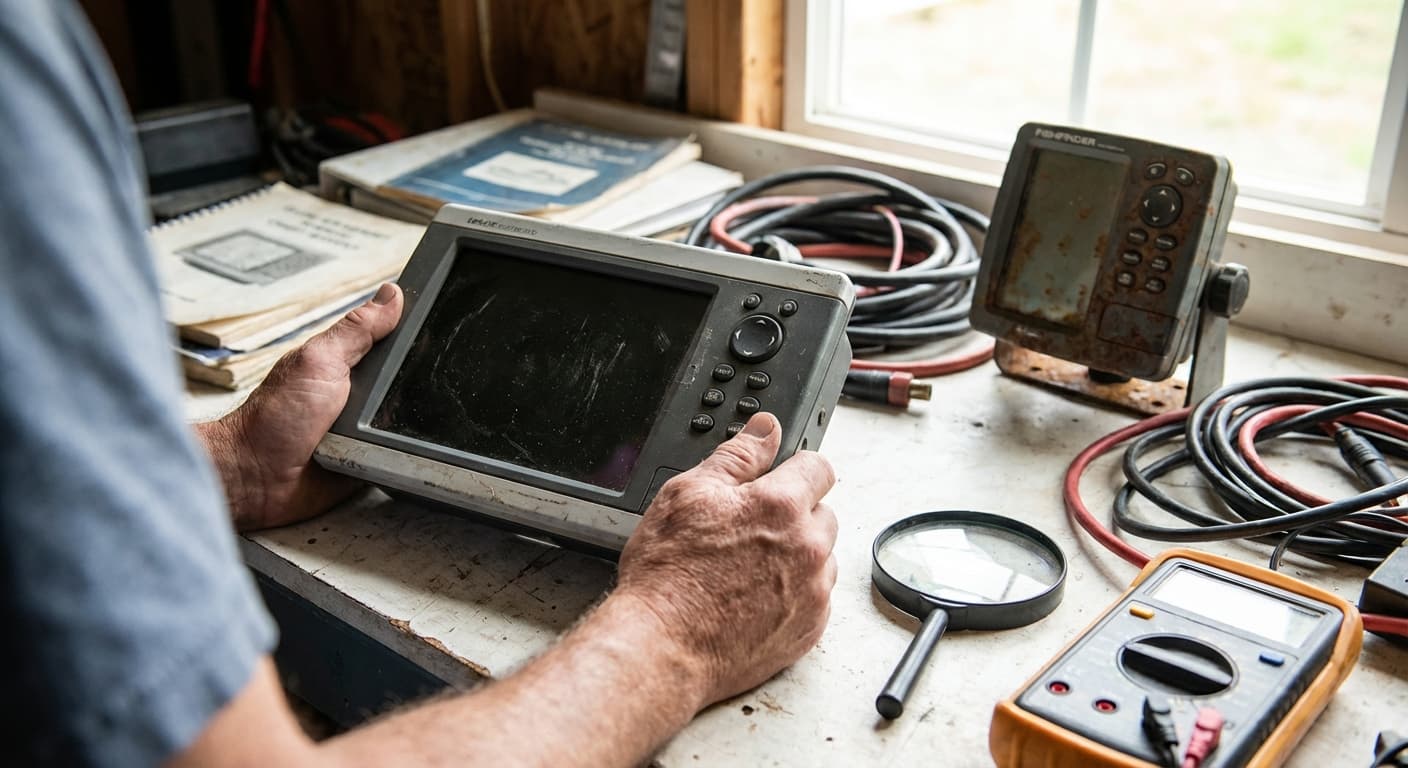
Always inspect used units in person. Examine connectors, housings, gasket seals, and circuit boards for corrosion or signs of water ingress. Ask the seller to power up the unit and demonstrate core functions: obtain a GPS fix, load a chart and pan/zoom, show a sonar return with a transducer attached, and test VHF transmit and receive if applicable. Missing mounting brackets, power harnesses, or transducers can add hundreds in replacement parts.

Confirm software and support status before handing over cash. Check that firmware updates are still available from the manufacturer and that the model is not orphaned; devices without ongoing support can be difficult to maintain or integrate. Factor in installation and support costs into the total price. Professional installation, adapters, new transducers, panel cutting, or troubleshooting can quickly erase any upfront discount.
Document the transaction thoroughly. Create a bill of sale that lists make, model, serial number, condition, and price, and keep receipts or written guarantees. Get any warranty or return conditions in writing. If you’re unsure about diagnosing corrosion or firmware issues, bring a marine technician or an experienced boater to the inspection.
The used market is useful for equipping a boat on a budget, but it rewards diligence. Verify serial numbers, confirm support, and budget for installation so the unit you buy fits your system and stays serviceable. With care and patience you can save money without sacrificing reliability.
Sources:
Know something we missed? Have a correction or additional information?
Submit a Tip