How to Choose Your First Ping Pong Paddle: Practical Guide
Choosing the right paddle starts with your grip and playing style and can dramatically speed your improvement. This guide breaks down blade construction, rubber choices, budget tiers, and maintenance so you can buy with confidence and get the most from club practice or local meetups.
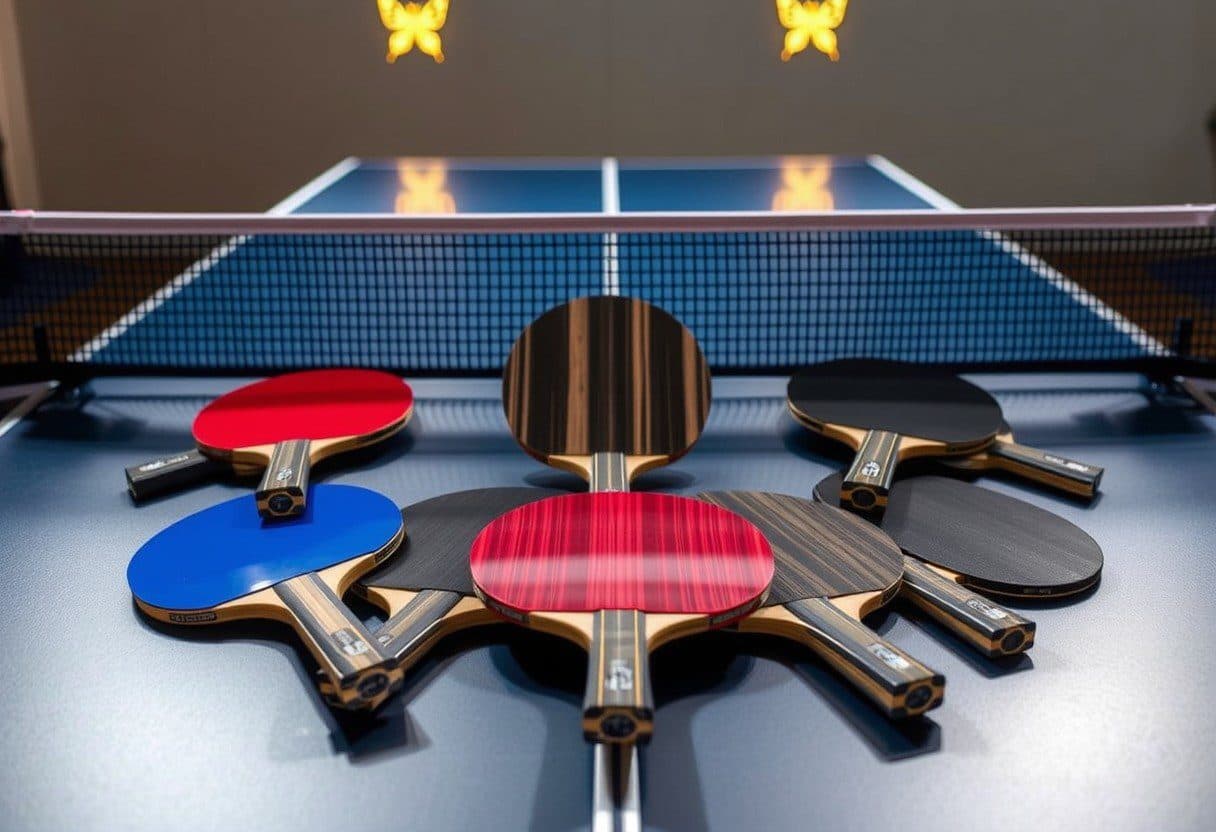
Start by deciding your grip and overall playing style. Shakehand is the most common choice for beginners and supports a balanced forehand and backhand game. Penhold offers a compact wrist advantage for short play and remains popular in parts of Asia. If you plan to attack with loops and drives, aim for a faster blade and higher-spin rubber; if you prioritize control and rallying, choose a slower, allround blade with softer, grippier rubber.
Blade construction is the next critical factor. Most beginner-to-intermediate blades are five to seven ply wood. Carbon layers add speed and stiffness, so for your first paddle a five-ply all-wood blade focused on control is a safe starting point. Blade weight affects power and maneuverability: heavier blades deliver more force but reduce quickness at the wrist, so a medium-weight blade suits uncertain preferences.
Rubbers glued to each side shape how the ball reacts. Sponge thickness matters: thicker sponge in the 2.0 to 2.2 mm range yields more speed and spin but sacrifices some control. Beginners get a better mix from 1.5 to 1.9 mm sponge. Rubber types vary from tensor high-energy designs for experienced players to tacky rubbers that generate very high spin but less outright speed. New players should consider mid-range tackiness with a reliable sponge for learning technique without being overwhelmed.
Decide between pre-built factory paddles and custom builds based on how sure you are of your style. Pre-built paddles are convenient and frequently tuned for beginners; reputable brands to consider include Butterfly, JOOLA, Stiga, and DHS. Custom builds let you mix blade and rubbers and are best once you understand your game and preferences.
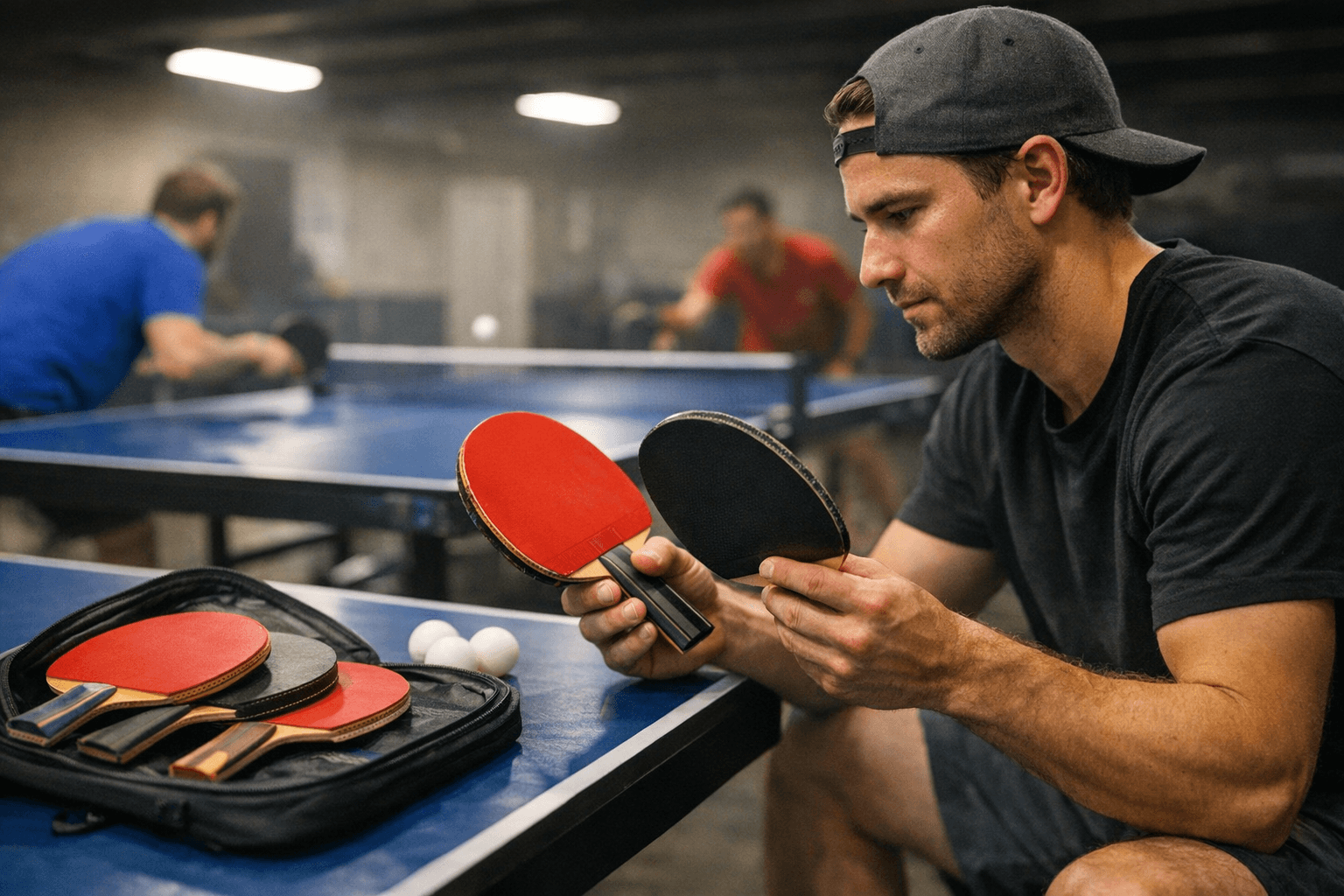
Handle ergonomics affect comfort and slip resistance. Flared, straight, and anatomical handles change how a paddle sits in your hand. Flared handles are popular for shakehand players because they help prevent slippage.
Budget affects what you can expect. Entry-level paddles under $40 are good for casual play but limit spin and speed. Mid-range options between $50 and $150 offer better blades and rubbers that let you develop technique and are recommended for serious beginners and intermediates. Advanced equipment above $150 uses higher-performance materials and is worth buying once you know your style.
Maintain your paddle by cleaning rubbers after sessions with a mild sponge or dedicated rubber cleaner, avoiding extreme heat and direct sunlight which can warp wood and degrade glue, and replacing rubbers every six to eighteen months depending on use. Before buying, try paddles at your club or Meetup to test weight and handle feel, and ask local coaches or club members for recommendations tailored to your growth plan.
Know something we missed? Have a correction or additional information?
Submit a Tip