How to plan a safe, productive offshore tuna trolling trip
A practical primer for planning safe, effective offshore tuna trolling trips focusing on gear, safety, and handling. Follow these steps to reduce risk and improve hookups.
Offshore tuna trolling trips demand planning that balances safety with a solid bite strategy. Start by checking local season dates, retention limits, and permit requirements for your region; size rules and allowable tackle can change between fisheries. Inspect weather and sea forecasts, file a float plan with a trusted contact, and confirm vessel safety gear is aboard and functioning: VHF radio, EPIRB, lifejackets for everyone, a fire extinguisher, a stocked first-aid kit, and a charged phone.
Tackle choices set the tone for a successful day. For medium-to-large tuna such as yellowfin and smaller bluefin, run stout conventional or heavy spinning setups. Rods in the 50-80 lb class paired with reels that have large-capacity spools to hold plenty of braid will handle long runs and tough shots. Use braid in the 50-130 lb test range depending on the targeted species and how far from structure you fish. Rig trolling lures and baits on stout wire or fluorocarbon leaders and fit hooks per local rules - double or single hooks are both common depending on tournaments and fishery regulations.
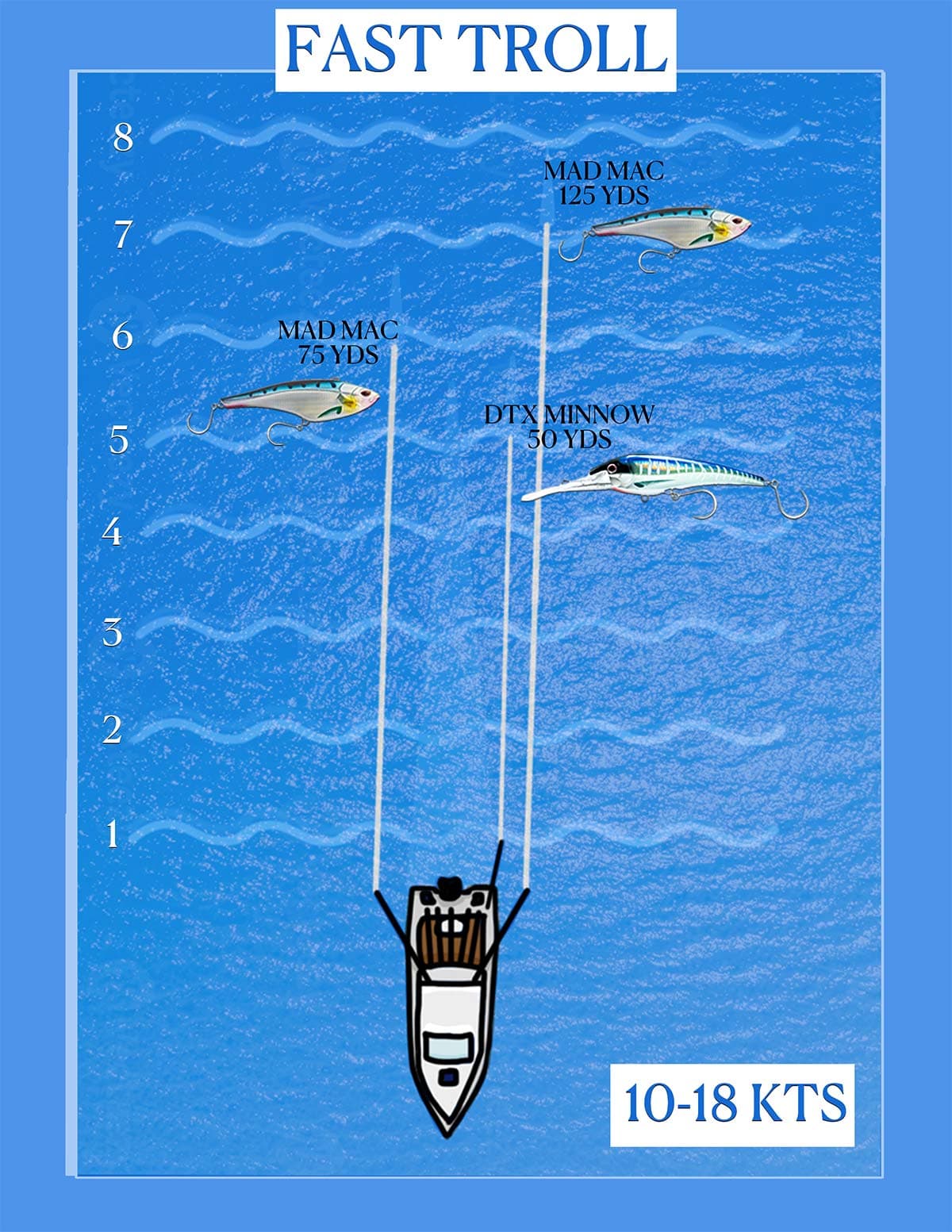
Build a trolling spread that covers depth and speed. Mix skirted large plugs, cedar plugs, and medium to large diving plugs at varying distances behind the boat. Typical speeds for yellowfin sit in the 8-12+ knot window, while schooling fish sometimes respond to slower, tighter presentations. Watch birds and porpoise activity closely; working birds and cooperative dolphins often point directly to bait schools and feeding tuna. When you see that activity, tighten your spread and prepare the angler.
When a tuna hits, prioritize angler safety and clear communication. Keep a controlled rod tip, watch for loose clothing, and maintain steady calls between captain, mate, and angler during runs. Be mindful of long, fast runs that can pull the angler off balance. For tournament settings, follow any immediate reporting or tagging requirements.
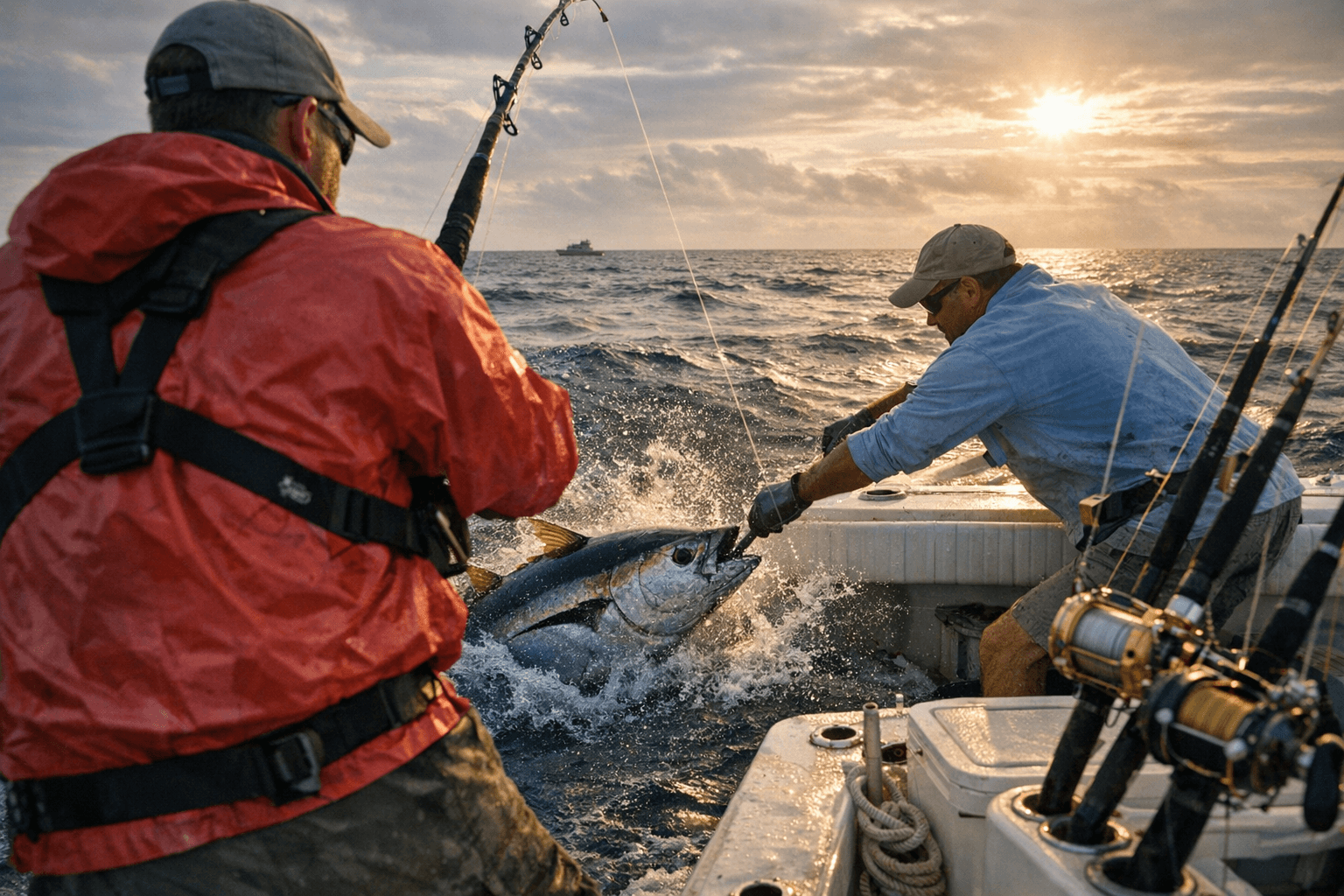
Handling and release practice matters. Use dehooking tools to minimise time out of water, support large fish when lifting, and avoid extended air exposure if you intend to release. Follow local best-practice handling to maximise survival for catch-and-release fish and participate in tag-and-release or reporting programs where required. Respect seasonal closures and gear-specific rules to protect the fishery and your community's access.
A well-planned trip reduces risk and increases chances of a memorable hookup. Prepare gear and safety systems, tune your spread for birds and porpoise work, and practice careful handling so today's catch contributes to healthy tuna stocks and more good days on the water ahead.
Know something we missed? Have a correction or additional information?
Submit a Tip