How Viktor Orbán Helped Shape Trump's MAGA Populist Movement
Viktor Orbán pioneered the illiberal democracy blueprint that Steve Bannon, CPAC, and the Heritage Foundation imported wholesale into Trump's MAGA project.
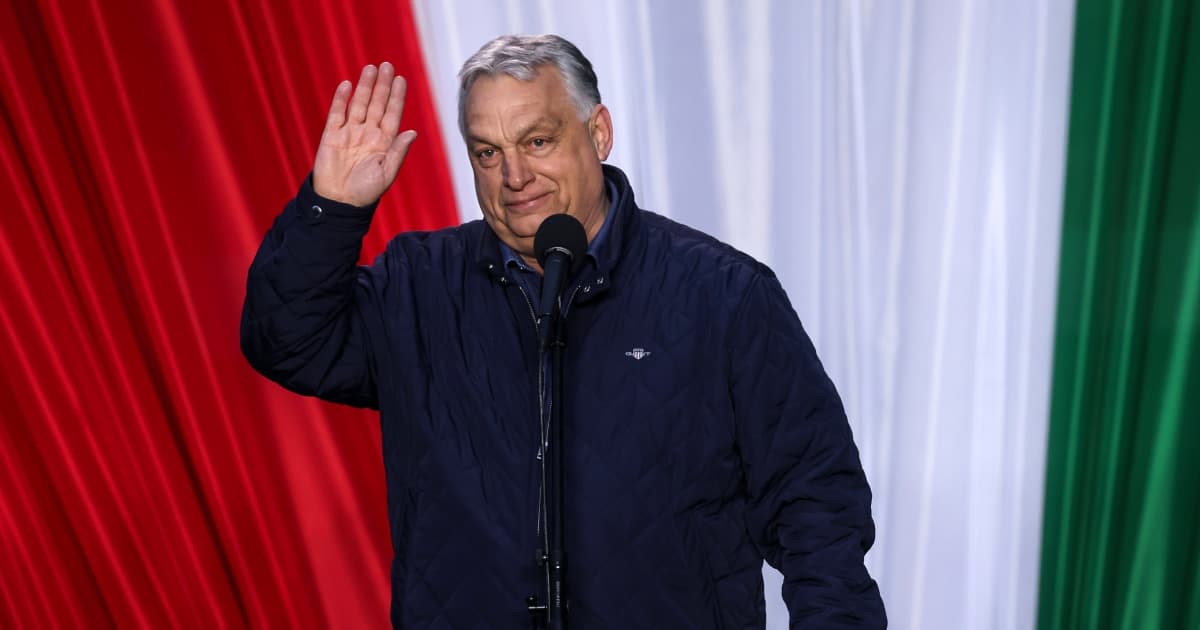
Viktor Orbán did not merely inspire Donald Trump's MAGA movement from a distance. He became its patron saint, its visiting professor, and its most-cited proof of concept, turning Budapest into the unlikely capital of 21st-century right-wing populism long before Trump reclaimed the White House.
Steve Bannon, the architect of Trump's first presidential campaign, was among the initial cheerleaders, calling Orbán "Trump before Trump" in a speech in Budapest in 2018. The phrase stuck because it was accurate in sequence as well as spirit: the "Budapest Playbook" of Hungary's prime minister offered the populist right everywhere a roadmap for keeping power well before Trump had fully articulated what MAGA would become.
The Budapest Pilgrimage
The pipeline between Budapest and Washington's conservative establishment hardened quickly after Trump's 2016 victory. On an almost daily basis, supporters and media allies of the MAGA Republicans began lauding Orbán. That admiration took institutional form through the Conservative Political Action Conference. Budapest became a venue for CPAC for the fourth year in a row, underlining the growing relationship between MAGA Republicans and the country under Orbán's ruling Fidesz party.
Trump took the unusual step of endorsing the reelection of Viktor Orbán ahead of the Hungarian parliamentary election of April 2022. Orbán had returned the favor years earlier: he was the first European Union leader to speak out in support of Trump's campaign in 2016.
Tucker Carlson's pilgrimage to Budapest became one of the most symbolically potent moments in this transatlantic alliance. While still at Fox News, Carlson broadcast his popular prime time show from Hungary and interviewed Orbán. Orbán reciprocated the affection openly. "Only my friend Tucker Carlson places himself on the line without wavering," Orbán said at a CPAC gathering in Budapest. "Programs like his should run day and night. As you say, 24-7."
The Playbook: Capture Everything
What MAGA strategists found in Hungary was not just a charismatic strongman but an operating manual refined over more than a decade of practice. Over the past decade and a half, Fidesz used its two-thirds parliamentary supermajorities to redesign the constitution, neutralize institutional checks, capture large parts of the media, and reshape the electoral system in its favor.
The electoral architecture alone is instructive. With Hungary's disproportionate electoral system, Fidesz gained a two-thirds majority in the 2010 parliamentary election by winning just 52% of the popular vote. That supermajority then became a self-perpetuating machine: electoral laws were modified to favor Fidesz through gerrymandering and changes to voting rules, and the judiciary was reformed through mandatory retirement ages that allowed the government to appoint loyalists, as well as the creation of a parallel administrative court system under government control.
Media consolidation followed the same logic. Orbán's government used its party's supermajority to undermine the independence of the judiciary, crack down on independent media, demonize migrants, and discriminate against LGBTQ people. The state's first moves on returning to power were instructive: the first thing Orbán did was suspend the civil service law and fire huge numbers of public employees, particularly those in public broadcast media, because they were committed to truthful news. The second move was to weaponize the state budget.
Media Capture and the KESMA Parallel
Academic analysis of the two movements' messaging found near-identical fingerprints. Research cross-analyzing 1,360 headlines from KESMA (Hungary's state-aligned media conglomerate) and MAGA outlets found the two systems producing parallel narratives, linking antiliberal, antimulticultural, and antiglobalist themes. Orbán himself told American conservatives exactly what he thought they needed to do, delivering the message from the CPAC stage in Budapest: "Have your own media. It's the only way to point out the insanity of the progressive left."
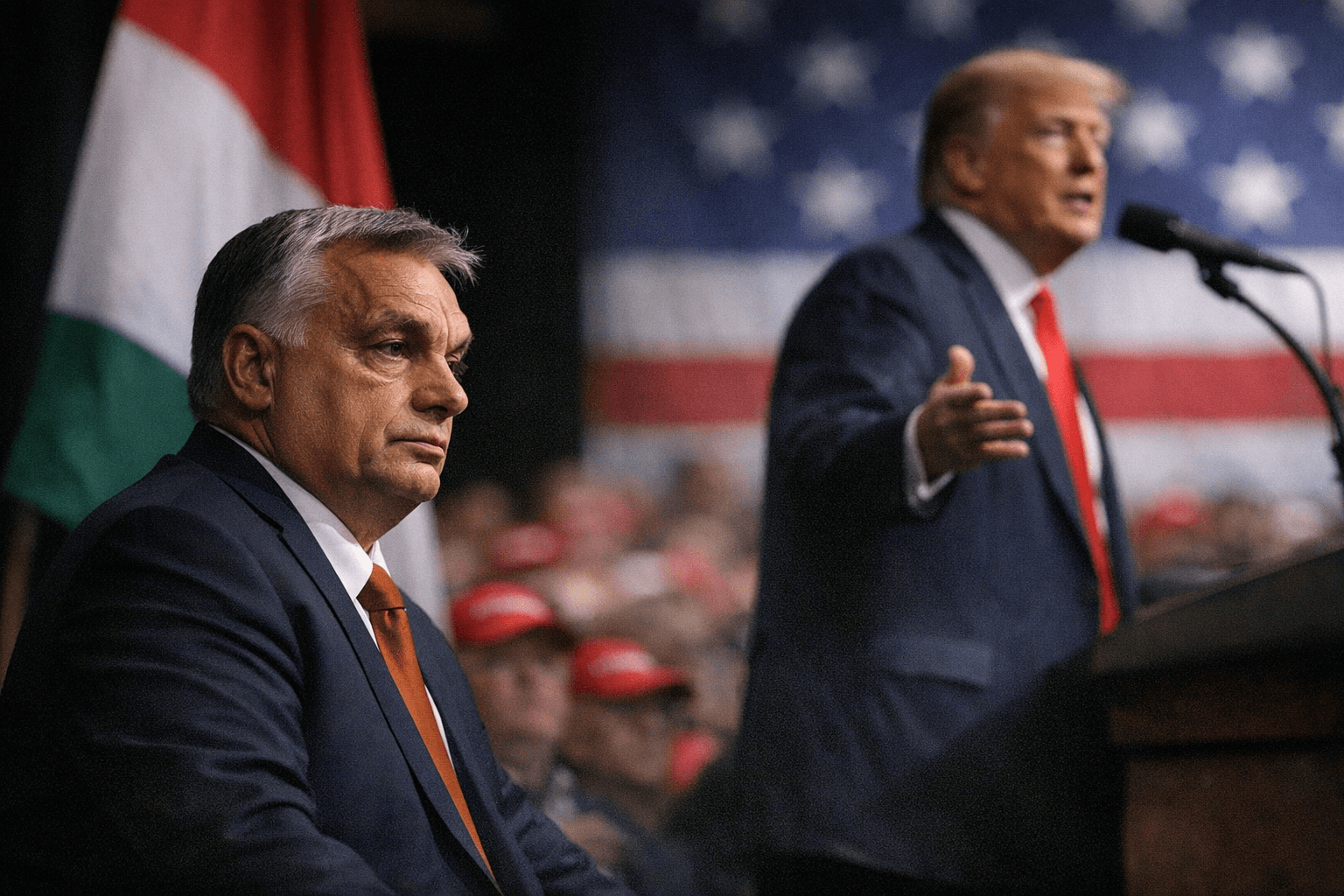
American media personalities such as Steve Bannon and Tucker Carlson traveled to Budapest to meet with Orbán and study his playbook, while the Hungarian leader became a star on the U.S. conservative circuit. The structural echoes extended to the billionaire dimension of the project: where Orbán's allies acquired and repurposed unfavorable media, Trump found powerful media partners of his own; Elon Musk's 2022 takeover of Twitter, now X, mirrors the strategy of Orbán's billionaire allies, effectively transforming the platform into a megaphone for Trump's agenda.
Project 2025 and the Heritage Connection
The most concrete institutional link between the Budapest Playbook and Washington governance runs through the Heritage Foundation. Kevin Roberts, president of the Heritage Foundation and the architect of Project 2025, has described Hungary "not just as a model for modern statecraft, but the model." In May 2024, Heritage even welcomed Orbán for a closed-door meeting.
Many observers now recognize the Orbán playbook in Project 2025, a blueprint for a Republican president written by conservative Trump allies and loyalists, some of whom are now in government. Trump's decisions in his first months back in office mirror some of the decisions Orbán made in his own early days back in power. The self-reinforcing loop has become impossible to ignore: inside the expressed concerns over Bannon and Carlson's interest in Orbán resides a deeper anxiety about the significance of these international exchanges, given that two of the most influential voices in American right-wing media and politics have been looking to Hungary and its government as a blueprint.
Hungary's Veto Power and the EU Stakes
The MAGA-Budapest axis carries concrete geopolitical weight that extends far beyond political aesthetics. Orbán maintains open channels to Moscow and has positioned himself as a potential mediator in Trump's broader strategy of "strategic stability" with Russia. The current U.S. administration has backed Orbán's model comprehensively, granting Hungary a one-year exemption from sanctions on Russian oil and positioning Budapest as a venue for U.S.-Russia diplomacy.
Inside the European Union, that posture translates directly into leverage. Orbán has frequently stood as the lone dissenting voice among EU leaders on the Ukraine war, singling out Ukrainian President Volodymyr Zelenskyy for frequent attacks. Hungary's veto power in EU Council deliberations has been used repeatedly to slow or water down sanctions packages and delay military assistance decisions. A Budapest aligned with Washington on Russia policy is, in effect, an inside lever on the EU's entire Ukraine posture.
The April 12 Referendum
All of this makes the Hungarian election on April 12, 2026 something larger than a domestic contest. The Trump administration is extremely invested in the outcome: Vice President JD Vance traveled to Budapest for a series of events with Orbán, and Secretary of State Marco Rubio made the same trip in February, touting the "golden age" of U.S.-Hungarian relations. Russian President Vladimir Putin has also voiced support for Orbán, who trails in most polls, with Vance flying to Budapest in an attempt to reverse his ally's ailing electoral forecast.
The rest of Orbán's pitch paints the vote as an existential struggle against liberal values, immigration, and "gender ideology," echoing campaigns he has deployed previously. The challenge is that Peter Magyar's Tisza party has for the first time consolidated opposition voters into a credible single force, threatening the coalition math that Orbán has relied upon since 2010.
An Orbán defeat would not only reshape Hungary's domestic trajectory; it would deliver a significant blow to the international network of right-wing populism that has used Budapest as its proving ground. Sixteen years of institutional engineering cannot be dismantled overnight, but the levers work in both directions: the same gerrymandered electoral map that kept Fidesz in power can constrain a successor government, and a media ecosystem built to serve one party does not flip allegiances on election night. What changes immediately is the voice at the EU Council table, and with it, the durability of the West's fractured but consequential unity on Ukraine.
This article was produced by Prism’s automated news system from verified source data, official records, and press releases, then run through automated quality and moderation checks before publishing. The system is built and supervised by the people who set the standards it runs under. Read our full AI policy.
Did this article answer your question?