How White-Label Content and Social Services Help Agencies Scale Faster
Agencies that white-label content and social services grow client rosters without hiring — here's how the model works and which providers lead each category.
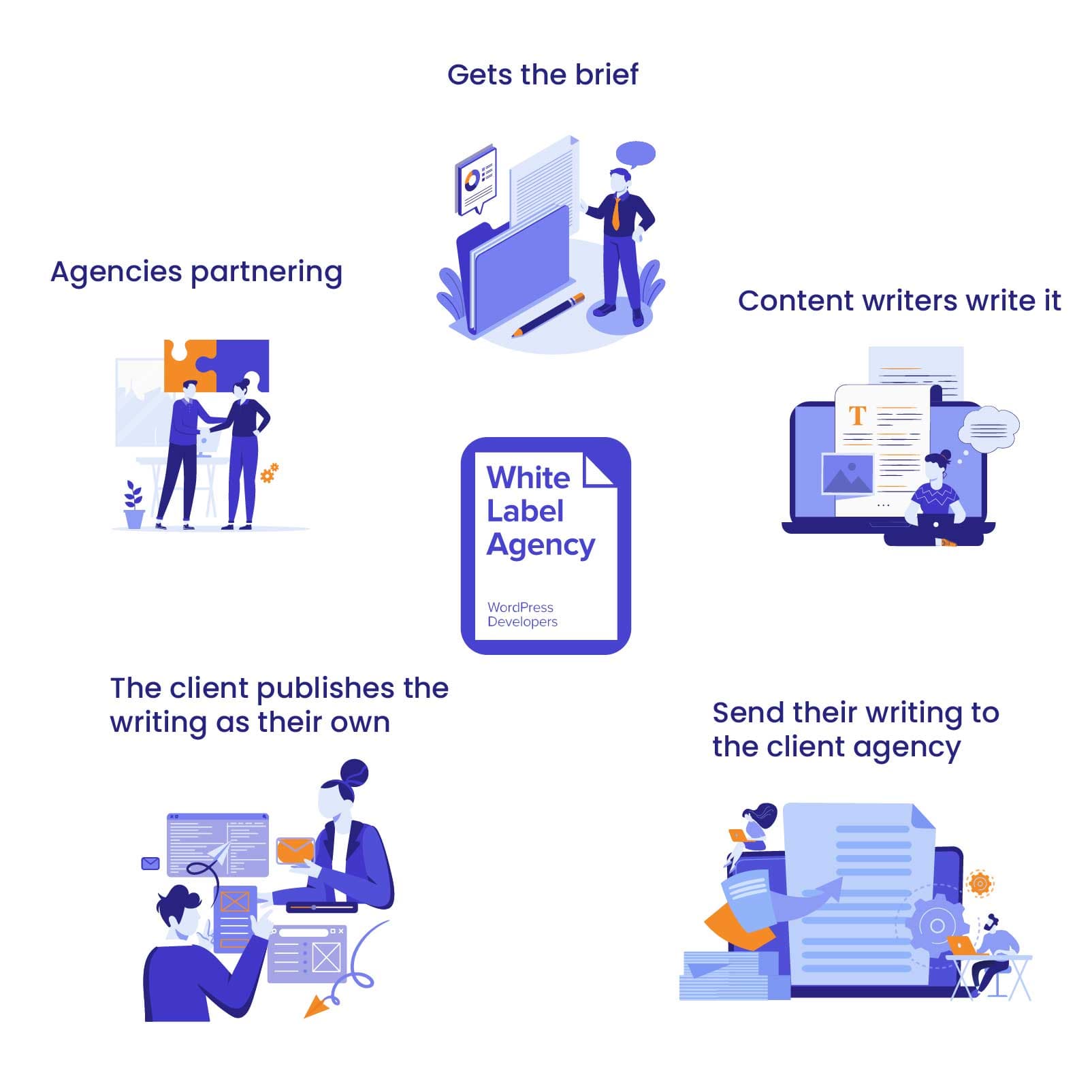
White-label digital marketing lets agencies sell professional services under their own brand while a specialist provider handles every deliverable behind the scenes. For growing agencies, this model removes the single biggest bottleneck to scaling: the need to hire, train, and manage in-house teams before taking on new clients.
What Is White-Label Content Marketing?
White-label content marketing is a service model where a provider creates blog posts, articles, social media content, and other marketing materials that an agency delivers to its clients under its own brand. The agency takes credit; the provider stays invisible.
Semify describes this arrangement directly: agencies receive high-quality content their clients never know was outsourced, saving time and resources while preserving brand credibility. The practical effect is that a five-person agency can produce content at the volume of a twenty-person team without expanding payroll.
The content types that can be white-labeled are broad:
- Blog posts and long-form articles
- Social media copy and scheduling
- Email marketing campaigns
- Video scripts and production
- Infographics and visual content
BrandLume notes that white-label email marketing specifically focuses on high open rates and strong engagement, with professionals handling design, writing, and campaign management entirely on the agency's behalf.
What Is White-Label Social Media Management?
White-label social media management means a backend provider builds and executes a client's social strategy while the agency maintains the client relationship under its own name. Business Nucleus frames the problem clearly: balancing existing client work with managing new business already consumes an agency's bandwidth, and adding social media management on top creates unsustainable workloads.
The solution is outsourcing execution while retaining ownership of the client relationship. A white-label social partner creates content calendars, writes platform-specific copy, schedules posts, monitors engagement, and reports results, all without any client-facing branding that reveals the arrangement. The agency presents the work as its own.
Clickx lists social media marketing alongside SEO, Google and Facebook ads, content marketing, and email marketing as the most commonly white-labeled services. This matters because social media is rarely sold in isolation; clients typically want it bundled with content creation and paid media, which means agencies need providers who can handle the full stack.
How Digital Marketing Reseller Programs Work
A digital marketing reseller program is a formal partnership where an agency sells a provider's services to its own clients, often at a markup, while the provider executes everything in the background. White Label DM describes this as a model where resellers can "concentrate on building" client relationships while the provider manages all campaign execution.
The term "reseller" comes directly from the broader white-labeling concept, which originated in manufacturing: a supplier produces a product, a reseller applies their own label, and the end customer buys from the reseller without knowing who made it. Propellant Media Partners traces this etymology to the literal blank white label that manufacturers once pasted on products so resellers could stamp their own branding.
Applied to digital marketing, the same logic holds. A reseller agency partners with a white-label provider for SEO, PPC, content, and social services, then sells those services to SMB clients at agency rates. The provider invoices the agency at wholesale; the agency bills the client at retail.
WhiteLabelEdge positions itself as a "one-stop solution" for this model, offering reseller services through an in-house team of marketing executives covering the full spectrum of digital disciplines. WhiteLabelEdge emphasizes that modern businesses need personalized marketing plans to compete, which means resellers need providers flexible enough to customize across client verticals.
What Services Can Be Fully White-Labeled?
The breadth of white-labelable services has expanded significantly. Clickx outlines the most common categories agencies resell:
- SEO (on-page, technical, local)
- Google Ads and Facebook Ads management
- Mobile and website development
- Social media marketing
- Video marketing
- Content marketing
- Email marketing
The key point Clickx makes is that the scope of what you can offer "will ultimately depend on the agency you partner with." Not every provider covers every service, which makes partner selection a strategic decision, not just a vendor relationship.
For agencies focused on content production at scale, providers like Semify handle blog posts and articles, while platforms like WhiteLabelSEO.ai (from $199.99/mo for 50 articles, scaling to $499.99/mo for 200 articles) offer AI-powered content pipelines with auto-publishing to WordPress, Ghost, Webflow, and Shopify. The HOTH, Vendasta, and DashClicks each offer reseller programs that bundle content with broader digital marketing services at various price points.
Bundled vs. A La Carte Pricing Models
Agencies choosing between bundled and a la carte white-label services face a classic build-vs-buy tradeoff. Bundled programs, like those from White Label DM or Vendasta, combine SEO, content, social, and reporting under a single monthly fee. This simplifies billing and ensures service consistency across disciplines.
A la carte models let agencies buy only what they need. An agency already strong in SEO might white-label only social media management, keeping margins higher by not paying for bundled services they don't resell. Semify and The HOTH both offer modular content services that agencies can layer onto existing offerings.
The bundled approach wins for agencies scaling quickly and wanting a single provider to manage. The a la carte approach suits established agencies with existing service lines that need to fill specific gaps without disrupting client pricing structures.
Top Providers by Service Type
Choosing the right provider depends on which services you need to resell. Here is a breakdown of the leading options by specialty:
| Provider | Best For | Key Services | Pricing | Notable Feature |
|---|---|---|---|---|
| Semify | Content resellers | Blog posts, articles, social copy | Custom quotes | Dashboard reporting for resellers |
| White Label DM | Full-service resellers | SEO, PPC, content, social | Custom | End-to-end campaign management |
| WhiteLabelEdge | Multi-discipline agencies | Full digital marketing stack | Custom | Personalized marketing plans per client |
| Business Nucleus | Social media focus | Social strategy, content deployment | Custom | White-label reseller program |
| Clickx | Agency partnerships | SEO, ads, social, content, web dev | Custom | No-limits service scope |
| WhiteLabelSEO.ai | Content-heavy agencies | AI content, SEO, auto-publishing | From $199.99/mo | Branded client portal, multi-model AI |
| The HOTH | SEO and content | Link building, blog posts, local SEO | A la carte | Transparent per-unit pricing |
| Vendasta | Platform-first agencies | Full marketing suite, CRM, reseller tools | Tiered plans | Marketplace with 100+ white-label products |
| DashClicks | Growing agencies | SEO, PPC, social, content, analytics | Free to tiered | Centralized fulfillment dashboard |
Frequently Asked Questions
What is white-label content marketing?
White-label content marketing is a service where a specialist provider creates blog posts, articles, social media content, email campaigns, and other marketing materials that an agency delivers to clients under its own brand. The provider handles all production; the agency presents the work as its own. Providers such as Semify, The HOTH, and WhiteLabelSEO.ai offer this service, allowing agencies to scale content output without hiring in-house writers or editors.
How do digital marketing reseller programs work?
A digital marketing reseller program is a wholesale partnership where an agency buys services from a white-label provider and resells them to clients under its own brand at a markup. The provider executes SEO, PPC, content, and social campaigns in the background. Providers such as White Label DM, Vendasta, WhiteLabelEdge, and DashClicks offer formal reseller programs that cover strategy, execution, and reporting, allowing agencies to focus entirely on client relationships and business development.
What content services can be white-labeled?
A wide range of content services can be white-labeled, including blog posts and long-form articles, social media copy and scheduling, email marketing campaigns, video scripts and production, and infographics. Providers like Semify, BrandLume, and The HOTH specialize in written content, while platforms like WhiteLabelSEO.ai add AI-powered production pipelines with direct publishing integrations to WordPress, Ghost, Webflow, Shopify, HubSpot, and Wix for agencies managing high content volumes.
The white-label model's core advantage is speed: agencies that partner with the right providers can expand their service offerings, take on more clients, and grow revenue without the overhead of building internal teams from scratch. As client expectations for integrated digital marketing services continue to rise, agencies that leverage white-label partnerships will be positioned to compete at a level that purely in-house operations simply cannot match at the same cost structure.
Know something we missed? Have a correction or additional information?
Submit a Tip