HUD proposal would require citizenship proof from all public housing residents
HUD would require every resident to document U.S. citizenship or eligible noncitizen status, a step advocates say could force tens of thousands from subsidized homes.
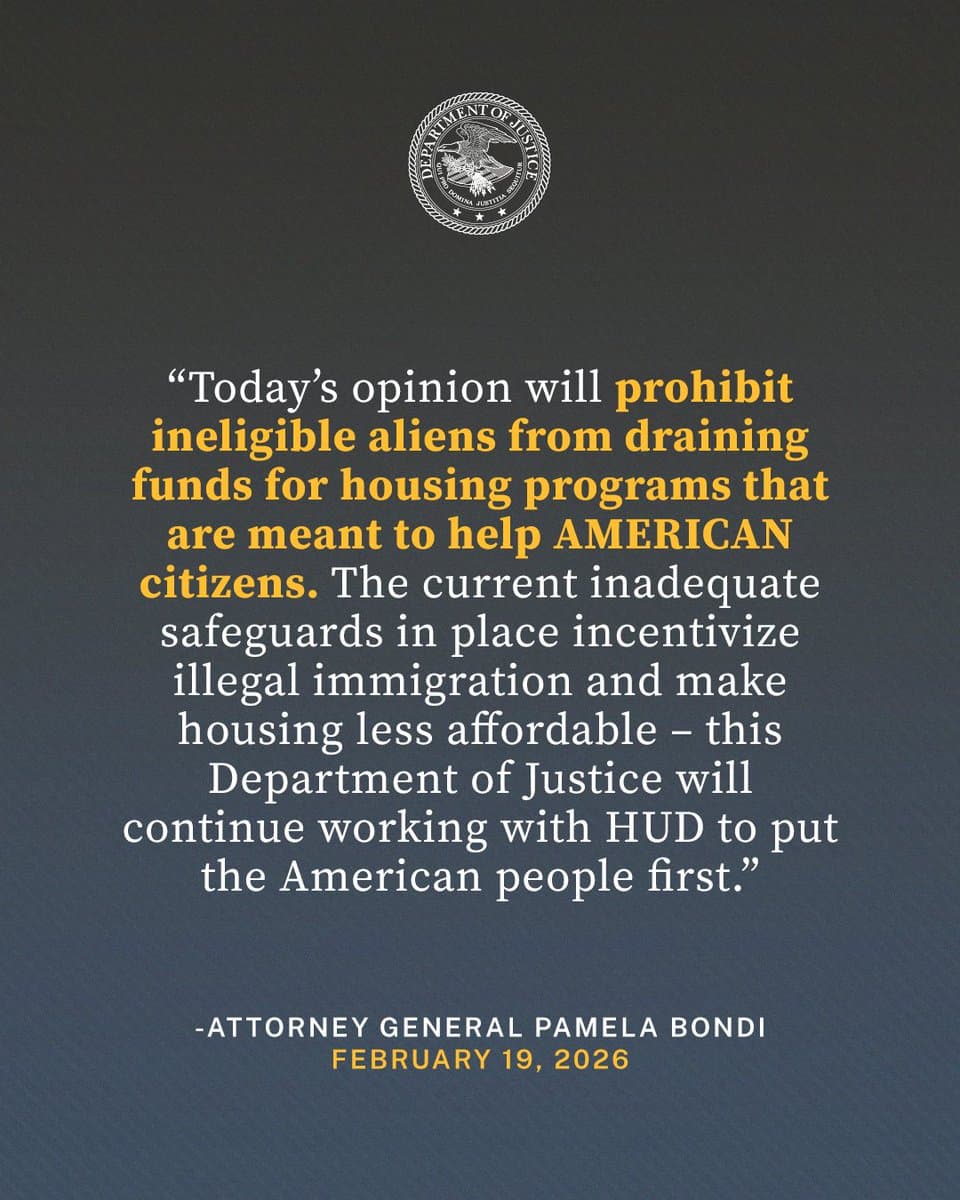
The Department of Housing and Urban Development has moved a proposal to require every resident of HUD-funded housing to document U.S. citizenship or “eligible noncitizen” status, a change that housing advocates warn could force tens of thousands of people out of subsidized homes and effectively bar mixed-status families from public housing. The proposal also would require residents age 62 and older, who previously only had to verify age, to present immigration-related documentation.
HUD Secretary Scott Turner framed the measure as an anti-fraud and taxpayer protection step, saying in a statement, “Under President Trump’s leadership, the days of illegal aliens, ineligibles, and fraudsters gaming the system and riding the coattails of American taxpayers are over. HUD’s proposed rule will guarantee that all residents in HUD-funded housing are eligible tenants. We have zero tolerance for pushing aside hardworking U.S. citizens while enabling others to exploit decades-old loopholes.”
The administration says the rule will tighten eligibility verification across public housing, Section 8 vouchers and other HUD-funded programs. Officials have placed the proposal in the Federal Register for formal publication; the agency has not disclosed how long it would take before any rule could take effect and did not provide an estimate of how many households would be displaced.
Advocates and some housing policy researchers say the practical consequences could be severe. Housing groups warn that requiring documentation from every household member will be particularly disruptive for mixed-status families, households that include both eligible residents and people without eligible status, and could lead to “tens of thousands” of evictions unless exceptions or transitional protections are written into implementing guidance. Local public housing authorities face the operational task of verifying documentation, which advocates say will impose significant administrative costs and legal risks.

The citizenship-verification plan is part of a broader push at HUD to narrow access and reshape assistance. Separately, agency leaders have signaled support for a two-year limit on rental assistance; a New York University analysis found that a strict two-year time limit could put more than 1 million low-income households at risk and could affect as many as 1.4 million households, a scenario NYU researchers concluded would produce “enormous disruption and large administrative costs” as housing authorities “would have to evict all of these households and identify new households to replace them.”
Budget context heightens the stakes. The administration has proposed deep cuts to HUD funding in recent budgets, including a $9.6 billion reduction described as roughly an 18 percent cut below FY2019 enacted levels. Public housing currently houses almost 1 million households, a majority of which include seniors or members with disabilities, and the sector carries a capital repair backlog estimated at at least $50 billion. Those figures have led civil legal groups and housing providers to warn that tightening eligibility while underfunding repairs and operations would further strain an already fragile system.
Legal and logistical questions remain unanswered: how HUD will define “eligible noncitizen,” which programs are covered in full, whether PHAs will receive federal funding to cover verification costs, and whether there will be waivers, appeals or transition periods for long-standing tenants. Housing authorities and advocacy organizations are preparing to press for detailed guidance and to quantify how many households could be affected when the formal rule text and any regulatory impact analysis are released.
This article was produced by Prism’s automated news system from verified source data, official records, and press releases, then run through automated quality and moderation checks before publishing. The system is built and supervised by the people who set the standards it runs under. Read our full AI policy.
Did this article answer your question?

