Hundreds clash with police in Alice Springs after child death
A five-day search for a missing five-year-old ended in grief, then a 400-strong crowd turned Alice Springs Hospital into a scene of tear gas and rubber bullets.

A search for a missing five-year-old Indigenous girl ended in tragedy and then in turmoil, as hundreds of people clashed with police outside Alice Springs Hospital after her body was found in the desert outside town.
The child, who her family wants remembered as Kumanjayi Little Baby, vanished from the Old Timers town camp in Alice Springs late on Saturday. Police found a body on Thursday after five days of searching in harsh country around the Northern Territory town, and Jefferson Lewis, 47, was arrested at 10:30pm the same night. Police later flew him to Darwin on Friday morning after a health check and a fit-for-custody assessment.
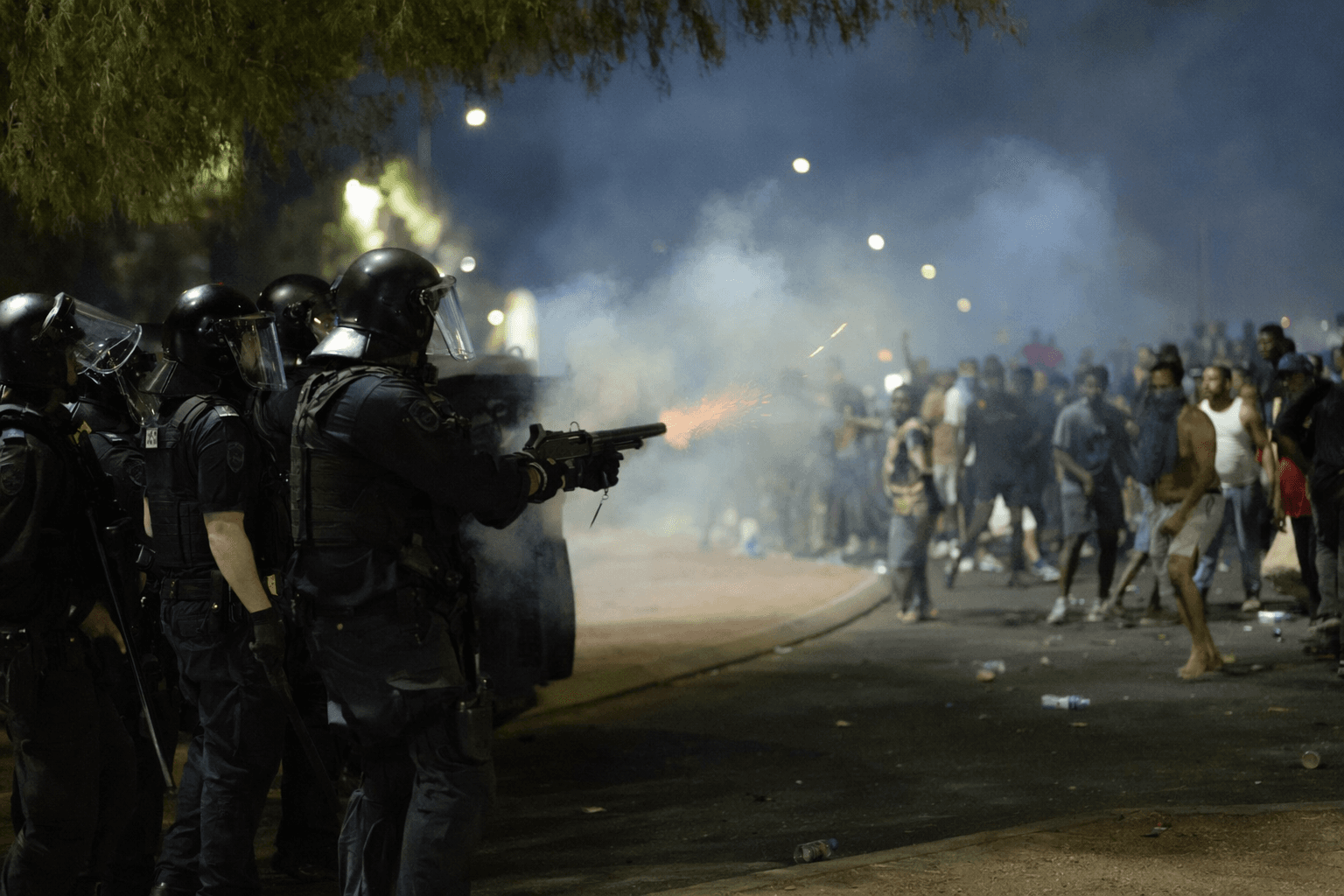
The grief quickly spilled into violence. A crowd of about 400 people gathered outside the hospital where Lewis was being treated, and authorities said some tried to force their way inside. Police used tear gas and rubber bullets to break up the confrontation, while protesters threw projectiles and set fires, including at least two police cars. Two police officers and two medical workers were injured. Emergency services personnel suffered injuries including stitches and a facial injury, and police said Lewis had been subject to “a sustained attack” by locals before his removal.
The unrest laid bare how quickly a homicide investigation in Alice Springs can become a wider confrontation over trust, safety and accountability. The town has long carried the weight of those tensions, with anger over housing shortages, weak services and repeated crisis response in remote communities feeding a cycle of grievance that rarely stays contained for long.
That strain is sharper in Central Australia because Indigenous disadvantage is not abstract here. Aboriginal and Torres Strait Islander people made up 3.2% of Australia’s population in the 2021 Census, but they accounted for 20.6% of residents in the Alice Springs Indigenous region. Nationally, there were 17,432 Aboriginal and Torres Strait Islander prisoners as at 30 June 2025, underscoring how heavily the justice system still bears on Indigenous communities.
Government Closing the Gap reporting says Indigenous life expectancy remains lower than non-Indigenous life expectancy, and the life-expectancy target is not on track. In that context, the search for the missing girl, the alleged killing, the assault on the suspected offender and the police response have become more than separate episodes. They now form part of the same crisis of confidence between Indigenous communities and the authorities meant to protect them.
Northern Territory Chief Minister Lia Finocchiaro and Police Commissioner Martin Dole were due to brief the public after the unrest, as Alice Springs faced another test of whether anger, mourning and mistrust could be contained before the violence spread further.
Know something we missed? Have a correction or additional information?
Submit a Tip