Hundreds of drones and missiles strike across Ukraine, officials say
Overnight barrage struck multiple regions, damaging power, hospitals and homes and killing civilians; official tallies of launches and losses vary.

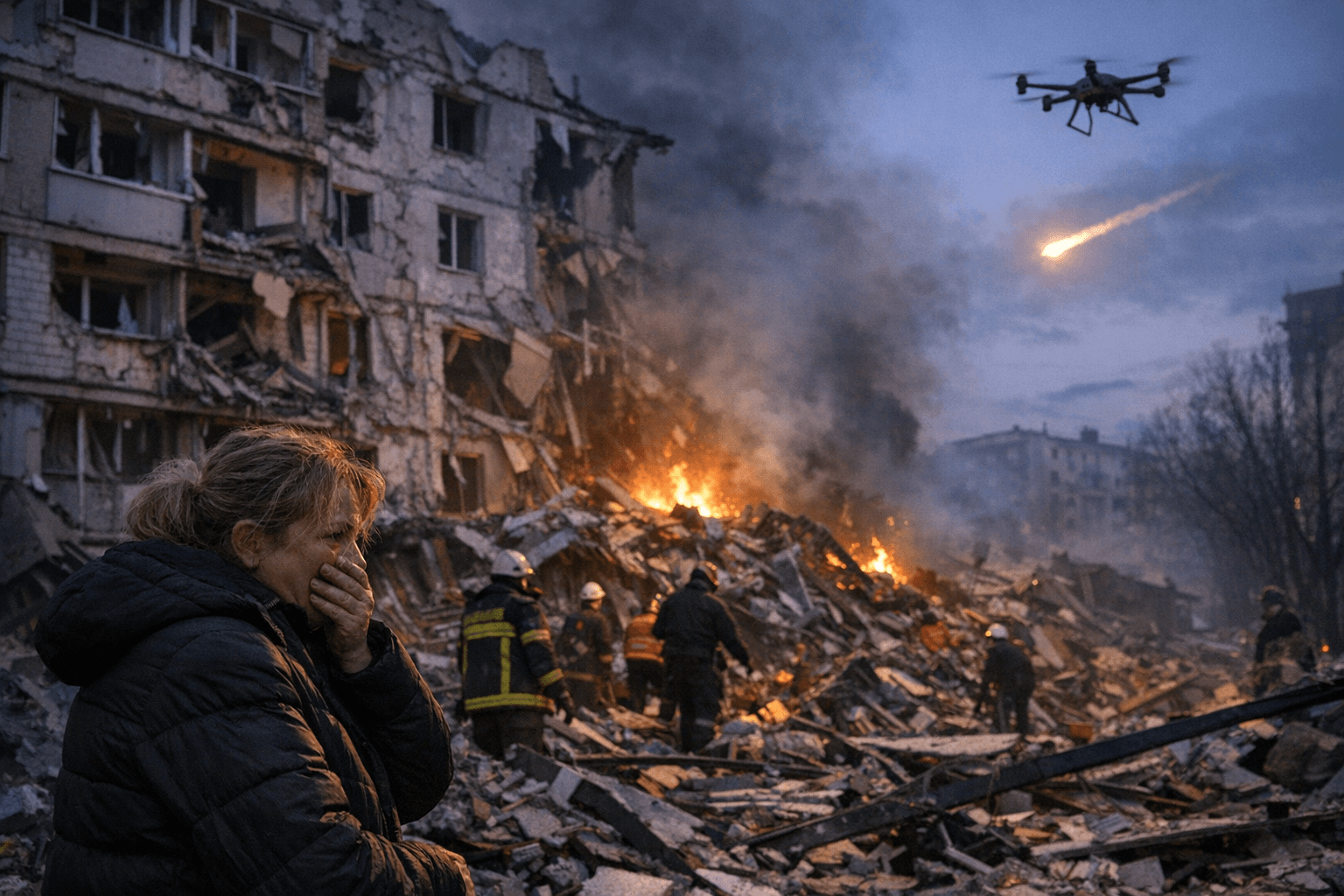
A large, coordinated aerial assault struck Ukraine overnight, officials said, involving waves of attack drones and ballistic and cruise missiles that damaged civilian infrastructure and left people dead in several regions.
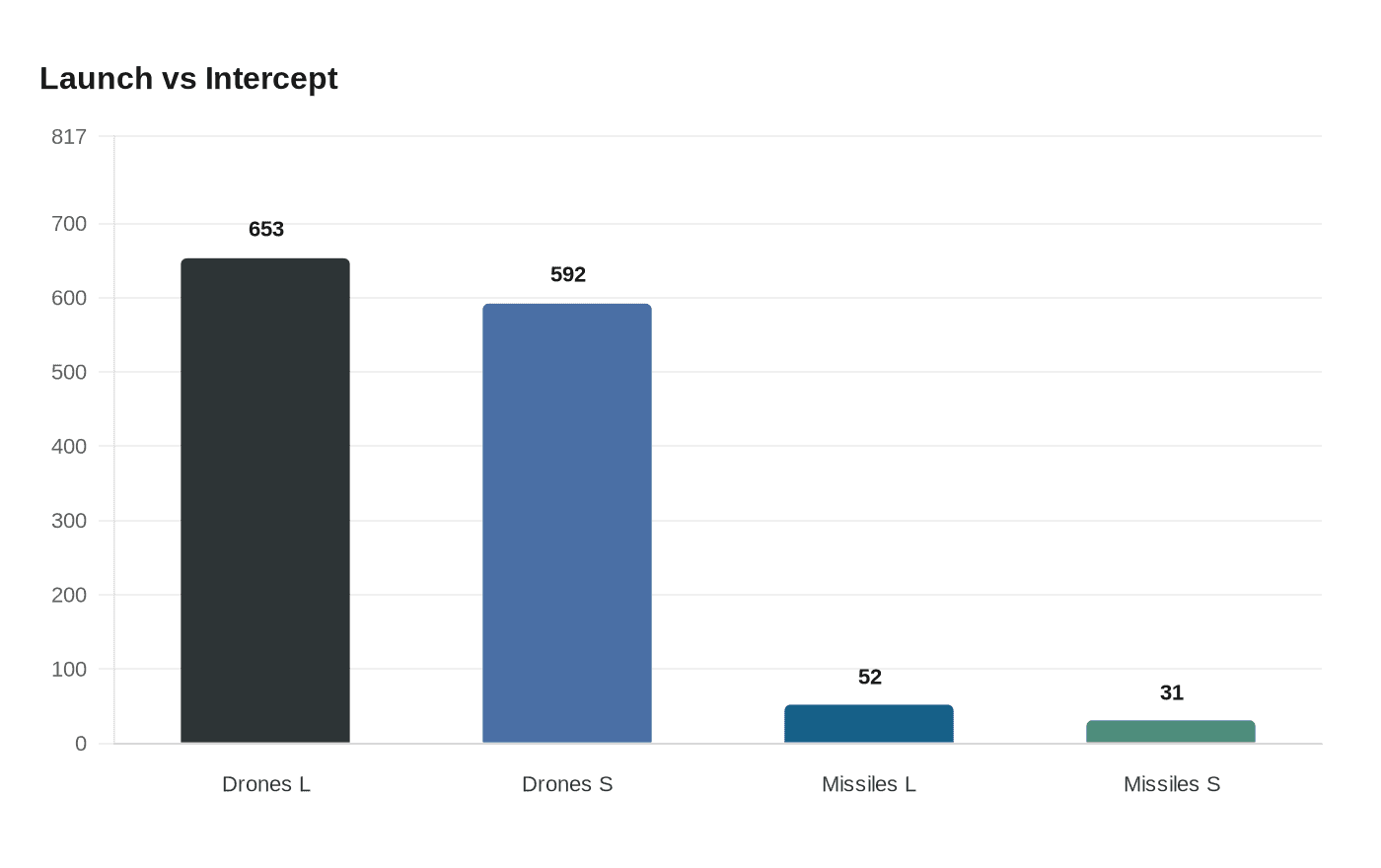
The Ukrainian air force reported that the strike consisted of hundreds of aerial weapons, providing figures that vary by statement: one air force release said 653 drones and 52 missiles were launched and that 592 drones and 31 missiles were shot down or otherwise suppressed, while other Ukrainian military updates put the number of attack drones fired at roughly 85 to 90 with dozens intercepted. President Volodymyr Zelensky said the assault struck civilian targets and energy infrastructure across the country. Local tallies and military assessments differ markedly from each other, and officials cautioned that counts remained provisional.
The human toll was scattered but severe. Regional officials in Lviv said the western region suffered among the heaviest blows, with Governor Maksym Kozytskyi calling it "the largest of the war on the Lviv region" and reporting hundreds of incoming drones and missiles in his area. In Zaporizhzhia city, Governor Ivan Fedorov said a combined strike killed one person, wounded several and left more than 73,000 households without power; emergency service bulletins also reported injuries at a maternity hospital after a drone strike. In Dnipro local authorities said a man and a woman died after a strike on residential areas. A separate attack on Feb. 1 outside Pavlohrad struck a bus carrying miners; regional officials reported at least 15 miners killed and 15 injured in that incident, which officials portrayed as distinct from the overnight barrage.
Ukrainian air defenses engaged targets across multiple directions, and the Russian Defense Ministry publicly asserted its forces shot down scores of Ukrainian drones in Russian airspace. Moscow's ministry said dozens of Ukrainian drones were intercepted, including some over the Moscow region that were allegedly heading toward the capital. Ukrainian commanders and analysts described the exchanges as unusually attritional and noted that adverse weather appeared to have been exploited to increase Russian strikes when Ukrainian drone operations were impeded. "Russian forces are exploiting adverse weather conditions that impede Ukrainian drone operations to conduct more frequent highly attritional assaults," a Ukrainian 16th Army Corps statement said. A Ukrainian brigade in the Kharkiv sector said it was expanding the "kill zone" into Belgorod region with "fiber-optic drone strikes" in response to Russian artillery launches.
Weapons identified in official and military statements included Shahed-type attack drones and other models referred to as Gerbera and Italmas, and Ukrainian sources said launches originated from directions inside Russia. National and regional emergency services reported widespread damage to homes and critical infrastructure, and energy officials warned of a morning "cascade shutdown" in parts of the power grid.
Polish authorities scrambled jets and temporarily adjusted airspace along their border after unidentified objects were detected, reflecting wider international concern about spillover risks. Analysts and military officials noted the scale of the assault makes it one of the largest barrages of the war, surpassed only by a night of heavier strikes in early September, according to comparative assessments offered by Ukrainian and international analysts.
Officials emphasized that casualty and strike tallies remain contested and urged independent verification. Ukrainian authorities said investigations and damage assessments were under way across affected regions.
This article was produced by Prism’s automated news system from verified source data, official records, and press releases, then run through automated quality and moderation checks before publishing. The system is built and supervised by the people who set the standards it runs under. Read our full AI policy.
Did this article answer your question?


