Hundreds of high school students rally at Lincoln Memorial over ICE
Hundreds of Washington-area students walked out to protest Immigration and Customs Enforcement, part of a nationwide wave of school demonstrations that has spread to Indiana and beyond.
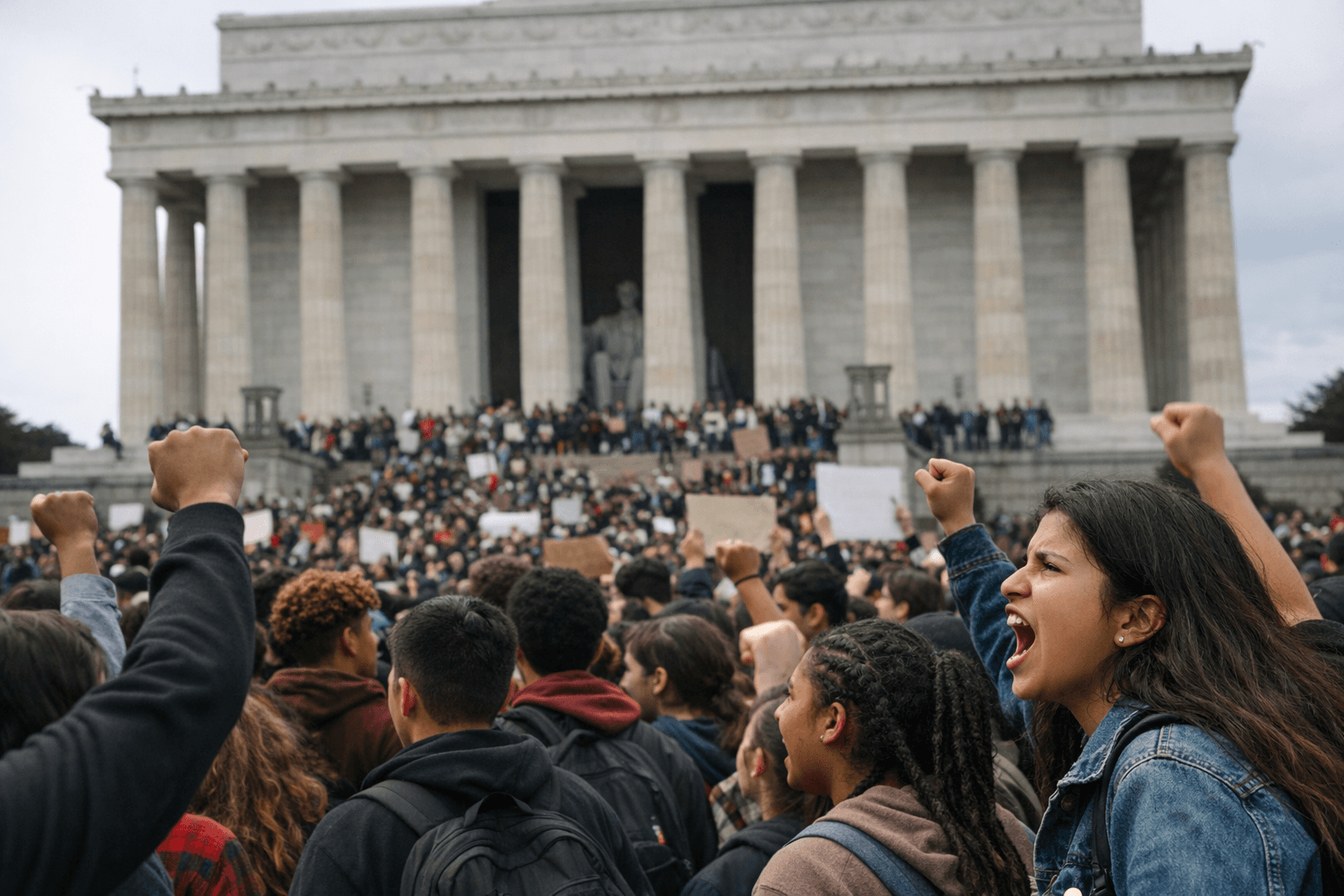
Hundreds of high school students walked out of Washington-area schools and rallied at the Lincoln Memorial to protest Immigration and Customs Enforcement, organizers and multiple local reports said, part of a broader national wave of student demonstrations opposing deportations and ICE practices.
The Lincoln Memorial action was described by one report as the latest in a string of school walkouts across the country. Those campus actions have spurred local rallies, student-organized groups and, according to one account, both praise and official condemnation; specific arrest figures and official responses were not identified in the accounts reviewed.
In Indiana, more than 100 students from Valparaiso High School staged a walkout on Friday, Feb. 27, 2026, stepping onto Campbell Street to protest ICE operations and deportations. Student protesters quoted in local coverage framed the demonstrations as civic interventions into national policy. Gideon White said, “What Trump is doing will affect us all, no matter what skin tone we have,” and warned that failure to act would leave peers vulnerable. Zero Wineinger told reporters, “U.S. citizens are also being taken, and it’s not OK. I’m here doing this for all of the adults, children, teens that have been forcibly taken from their homes.” Valparaiso students including Teagan O’Connell and Parker Lewis were identified in photographs from the event.
The wave has extended to individual high schools where organized student groups drove turnout. At Eleanor Roosevelt High School, Students Against ICE, in collaboration with the student government, organized a walkout described in local reporting as part of a nationwide action scheduled by a group called Dare to Struggle. Co-leaders Divine Anamara and Axel Ramos Diaz said they formed a group chat to mobilize peers; Diaz said, “And then me and [Divine] said ‘okay, if we’re really serious about this, then let’s do something.’ If they’re doing it, why not us?” Organizers reported an interest poll in which 372 students signed their names in favor of participating. Students chanted slogans including, “Say it loud, say it clear, immigrants are welcome here!”
The demonstrations are unfolding alongside separate student protests in Washington over proposed changes to the Department of Education. College and high school student governments rallied outside the department, chanting “hands off our schools” and “give us back our DOE,” and warning that an executive order directing the secretary to shrink the agency has already affected staff levels. A student quoted as Warren said, “The federal government has invested in our public schools. Taking that away from our kids so that a handful of billionaires can be even richer is just plain ugly, and I will fight it with everything I've got.” Georgetown student leaders warned of a chilling effect on campuses.
The rapid spread of student walkouts highlights how younger voters and school communities are translating national debates over immigration and federal education policy into visible civic action. Organizers have used school-based networks and social media to coordinate turnout; local reporting shows students citing direct personal stakes and constitutional principles. The pattern of walkouts raises questions for school districts, police and federal agencies about crowd management, student discipline and the civic role of minors in protests on federal land.
Reporters and officials seeking verification should confirm precise dates, attendance figures and any arrests or disciplinary actions tied to specific walkouts, and identify the role national groups played in coordinating local events. Local student organizers and school officials remain the primary sources for next-stage reporting on planning, safety measures and administrative responses.
This article was produced by Prism’s automated news system from verified source data, official records, and press releases, then run through automated quality and moderation checks before publishing. The system is built and supervised by the people who set the standards it runs under. Read our full AI policy.
Did this article answer your question?

