Hyundai recalls 294,128 vehicles over seat belt anchor defect
Hyundai is recalling 294,128 vehicles after regulators found a seat belt anchor that could detach in a crash, raising the risk of serious injury.
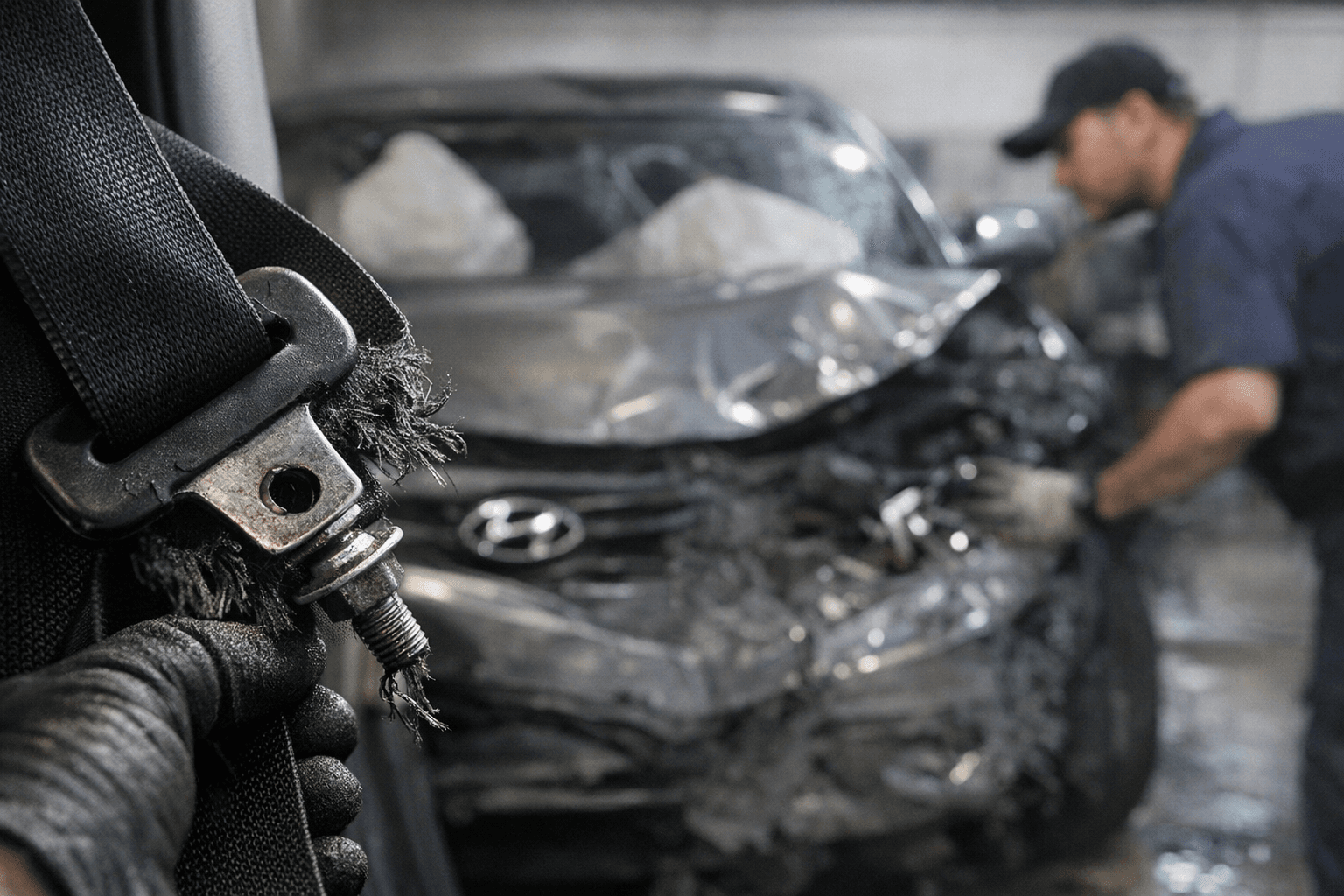
A damaged seat belt anchor has triggered a Hyundai recall of 294,128 vehicles in the United States, with federal regulators warning that the front belts may not stay securely attached to the seat frame in a collision. The defect raises the risk that an occupant will not be properly restrained when crash forces hit.
The recall, identified as campaign 26V218000, covers certain 2023-2025 Hyundai Ioniq 6 models, 2023-2026 Genesis G90 models, and 2024-2026 Hyundai Santa Fe and Santa Fe Hybrid models. Hyundai Motor America said affected owners will be notified by first-class mail, and Hyundai and Genesis dealers will inspect the vehicles and reinforce the lower seat belt anchor or replace the seat belt assembly if needed, at no cost.
The National Highway Traffic Safety Administration said the front seat belt(s) in the subject vehicles may not be sufficiently attached to the seat frame because of a damaged snap-on anchor. That matters because a detached anchor can compromise one of the most basic safety systems in any vehicle, turning a restraint designed to save lives into a weak point during a crash. Regulators said no crashes, injuries or deaths have been reported in connection with the issue.
Independent reporting based on the recall filing said the problem appears to stem from damage to the snap-on anchor, potentially during service or repairs when technicians remove or reinstall seats. That reporting said NHTSA first identified the issue after a consumer complaint involving a 2025 Santa Fe, and that investigators later concluded the defect occurs after production rather than during assembly.
The Santa Fe lineup makes up the largest share of the recall, with roughly 158,001 Santa Fe SUVs and 95,268 Santa Fe Hybrid SUVs included. Independent reporting said Hyundai and Genesis were aware of six complaints related to the anchors, underscoring how a relatively narrow defect can affect a large number of newer vehicles across both mainstream and luxury brands.
The recall also puts a spotlight on how quickly regulators move when a restraint problem could affect occupant safety. NHTSA’s Office of Defects Investigation administers the safety recall program and reviews complaints to identify potential defects. Consumers can search recall information by vehicle identification number, license plate, year, make and model, or product type, a reminder that seat belt failures deserve the same urgency as braking or steering problems when crash survivability is on the line.
This article was produced by Prism’s automated news system from verified source data, official records, and press releases, then run through automated quality and moderation checks before publishing. The system is built and supervised by the people who set the standards it runs under. Read our full AI policy.
Did this article answer your question?