IAEA chief demands strict verification in any U.S.-Iran nuclear deal
Grossi said any U.S.-Iran deal needs inspectors on the ground, as the IAEA still cannot fully verify Iran's 60% enriched uranium stockpile.

Any deal between Washington and Tehran, Rafael Grossi warned, would be judged on whether IAEA inspectors could actually see what Iran was doing, not on promises made at the negotiating table. The head of the U.N. nuclear watchdog said an agreement without “very detailed” verification measures and inspectors on the ground would be “an illusion of an agreement,” a blunt warning as Donald Trump said a second round of U.S.-Iran talks could come within two days after an initial meeting in Pakistan failed to produce an accord.
Grossi’s demand goes to the center of the dispute. Iran has not granted IAEA access to the nuclear facilities bombed by Israel and the United States during a 12-day war in June 2025, and a confidential agency report said inspectors could not verify whether Tehran had stopped all enrichment-related activity or determine the size of the uranium stockpile at the damaged sites. The IAEA says Iran holds 440.9 kilograms of uranium enriched to 60% purity, close to weapons-grade levels, and Grossi has said that amount could theoretically be enough for as many as 10 nuclear bombs if it were enriched further and weaponized.
The monitoring fight has already shaped the diplomacy. On June 12, 2025, the IAEA Board of Governors adopted a resolution urging Iran to cooperate fully, in a 19-3 vote with 11 abstentions. Israel launched attacks on Iranian nuclear facilities the next day, and on June 20 the IAEA said the strikes had sharply degraded nuclear safety and security in Iran. Grossi told the U.N. Security Council on June 22 that inspectors had to return to account for uranium stockpiles, including the 60% material, and to establish “the facts on the ground” through inspections.
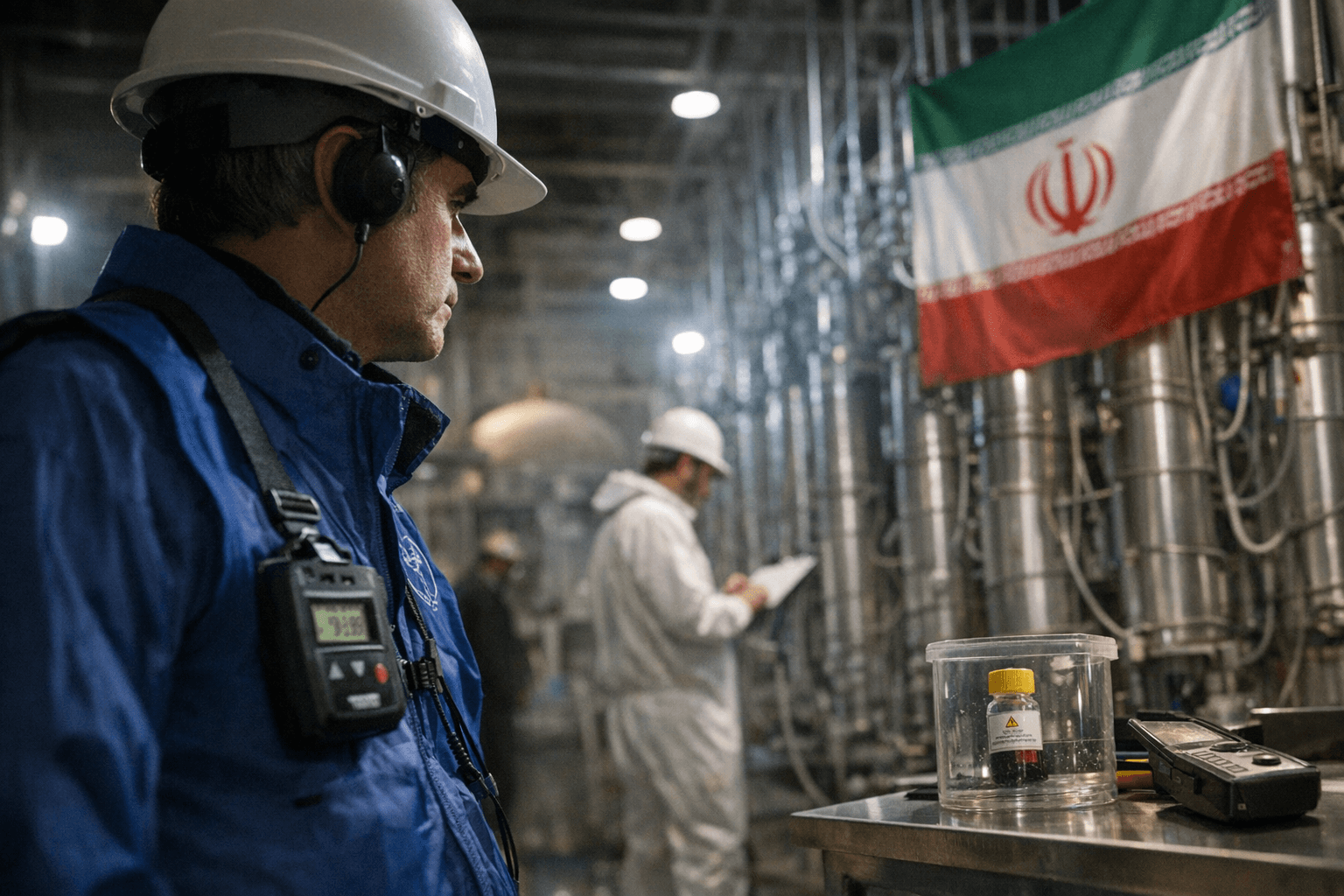
A later attempt to restore access produced only partial progress. On Sept. 10, 2025, Grossi and Iranian Foreign Minister Abbas Araghchi agreed on practical modalities to resume IAEA inspection activities in Iran, but the broader standoff over safeguards never disappeared. Grossi renewed the alarm on April 4, 2026, when he said he was deeply concerned by another strike near the Bushehr nuclear power plant, warning again that attacks near nuclear sites threaten nuclear safety and risk an accident.
For any U.S.-Iran deal to survive, the verification regime would have to be immediate, intrusive and continuous, with inspectors on the ground and access strong enough to account for every known stockpile and check for undeclared activity. Without that, Grossi’s warning suggests, any agreement would leave the world guessing about whether Iran’s program was peaceful or merely hidden from view.
This article was produced by Prism’s automated news system from verified source data, official records, and press releases, then run through automated quality and moderation checks before publishing. The system is built and supervised by the people who set the standards it runs under. Read our full AI policy.
Did this article answer your question?


