IAEA chief says North Korea rapidly advancing nuclear weapons program
North Korea may be nearing completion of a new enrichment plant at Yongbyon, a move that could expand fissile material output and make its arsenal harder to constrain.
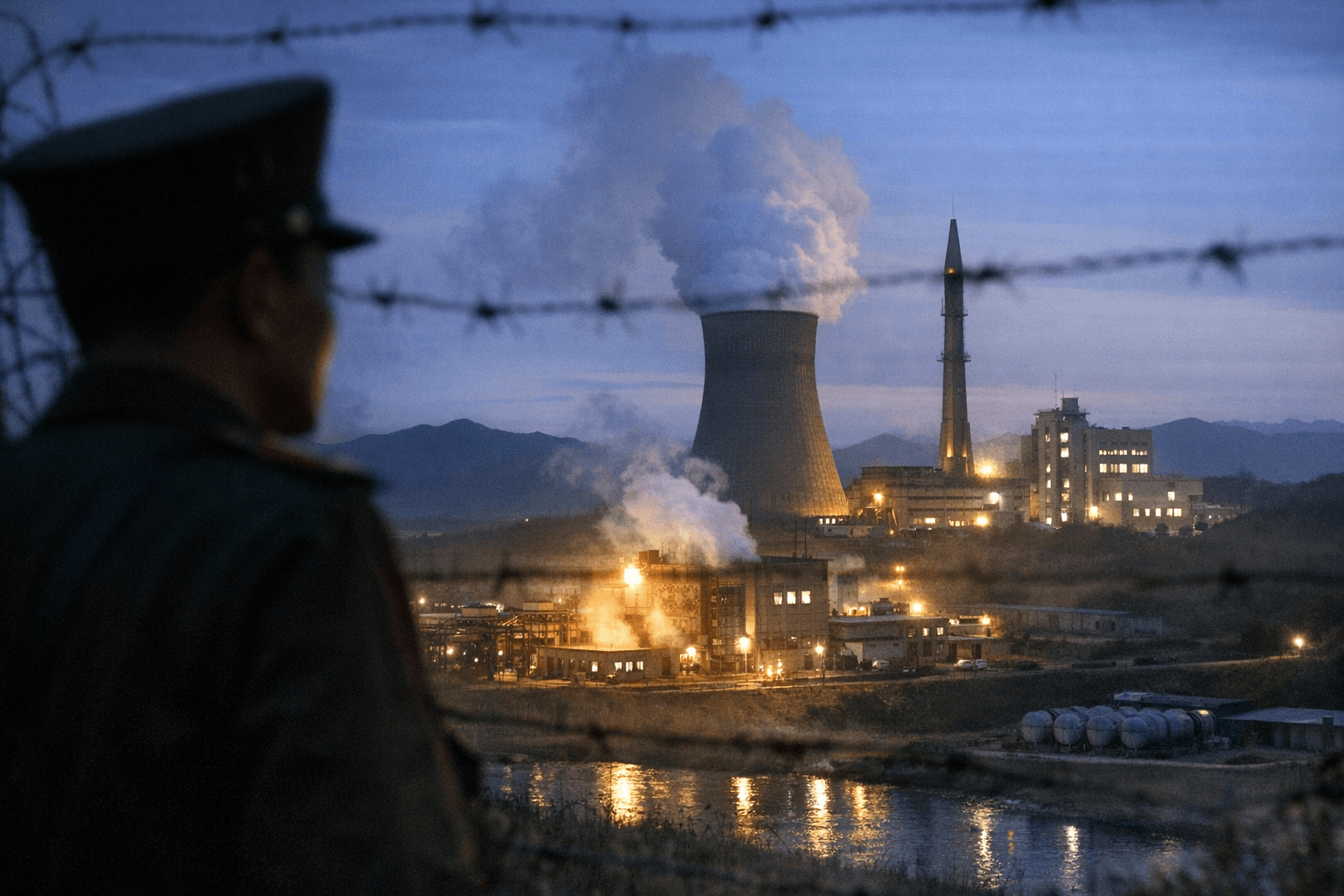
Rafael Grossi said North Korea was pressing ahead on the core machinery of its nuclear program, with signs that Yongbyon may be nearing completion of a new uranium enrichment facility and that multiple other parts of the complex were operating more actively. Speaking in Seoul on April 15, the International Atomic Energy Agency chief said the agency had seen a rapid rise in activity at the five-megawatt reactor, the reprocessing unit, the light-water reactor and related sites tied to North Korea’s nuclear infrastructure.
The significance is not just another building at Yongbyon. If the new structure is what the IAEA believes it is, North Korea would be adding another route to weapons material, alongside plutonium reprocessing, and that means more fissile material, faster production and greater flexibility in how Kim Jong Un can expand the arsenal. Satellite imagery from April showed completion of a building at Yongbyon widely believed to be a uranium enrichment plant, with generators, fuel storage tanks, cooling units and support buildings nearby, about 480 meters from existing facilities.
Grossi’s warning lands against a long record of North Korean escalation. The country first tested a nuclear device on October 9, 2006, and outside estimates put its arsenal at only a few dozen warheads, with the Nuclear Threat Initiative estimating about 50. That relatively small stockpile is exactly why a sharper boost in production capacity matters: a state with limited numbers can change the strategic balance quickly if it can produce more highly enriched uranium, bring new facilities online, and shorten the time needed to turn material into warheads.
For Washington, Seoul and Tokyo, the implication is that deterrence planning has to account for a more adaptable North Korean weapons complex, not just a fixed inventory. More capacity at Yongbyon complicates estimates of how quickly Pyongyang can surge production in a crisis and makes missile defense and regional security planning harder to calibrate. It also narrows the space for diplomacy, because negotiations become less useful when the underlying technical base keeps expanding even in the absence of a deal.
Grossi said the IAEA had not seen evidence of Russian technology being used in the North Korean weapons program, a careful distinction at a moment when Moscow and Pyongyang have deepened ties. He also said South Korea’s nuclear-powered submarine ambitions would require an “ironclad” safeguards arrangement to prevent proliferation concerns. South Korea’s Ministry of Foreign Affairs has stressed its commitment to nonproliferation, but Grossi’s comments underscored a broader reality: North Korea’s program is advancing while the region’s nuclear policy debates grow more complicated.
This article was produced by Prism’s automated news system from verified source data, official records, and press releases, then run through automated quality and moderation checks before publishing. The system is built and supervised by the people who set the standards it runs under. Read our full AI policy.
Did this article answer your question?


