ICE detention population falls as DHS leadership shifts enforcement strategy
Fewer ICE arrests of people without criminal records drove the detention decline, even as the population stayed far above past administrations.

The drop in ICE detention since January has been driven less by a broad retreat in enforcement than by fewer arrests of people without criminal records, a sign of a possible recalibration inside DHS after a leadership shakeup. The average daily detention population fell 12% from about 72,000 in January to about 63,000 in March, while the number of detainees without criminal records fell 21% over the same period.
The shift came after backlash to Operation Metro Surge in Minnesota, where federal agents killed two U.S. citizens, and after President Donald Trump said the administration could use “a little bit of a softer touch.” Trump then removed Gregory Bovino from his post overseeing sweeping Border Patrol operations and replaced DHS Secretary Kristi Noem with then-Sen. Markwayne Mullin. ICE data show the decline was not limited to one category of detention, but the steepest drop was among people without criminal convictions, who remained the largest share of the detained population.
By April 4, ICE was holding 60,311 people, down from a recent high of 68,289 in early February. In February, 73.6% of those in custody had no criminal conviction; by April, that share was 70.8%, still more than 42,000 people. Detainees with pending charges fell 5% from January to March, and those with convictions fell 4%. New ICE bookings also slowed, dropping 18% from 39,694 in January to 32,531 in March, suggesting the change was not only in stock detention but also in the flow of new arrivals.
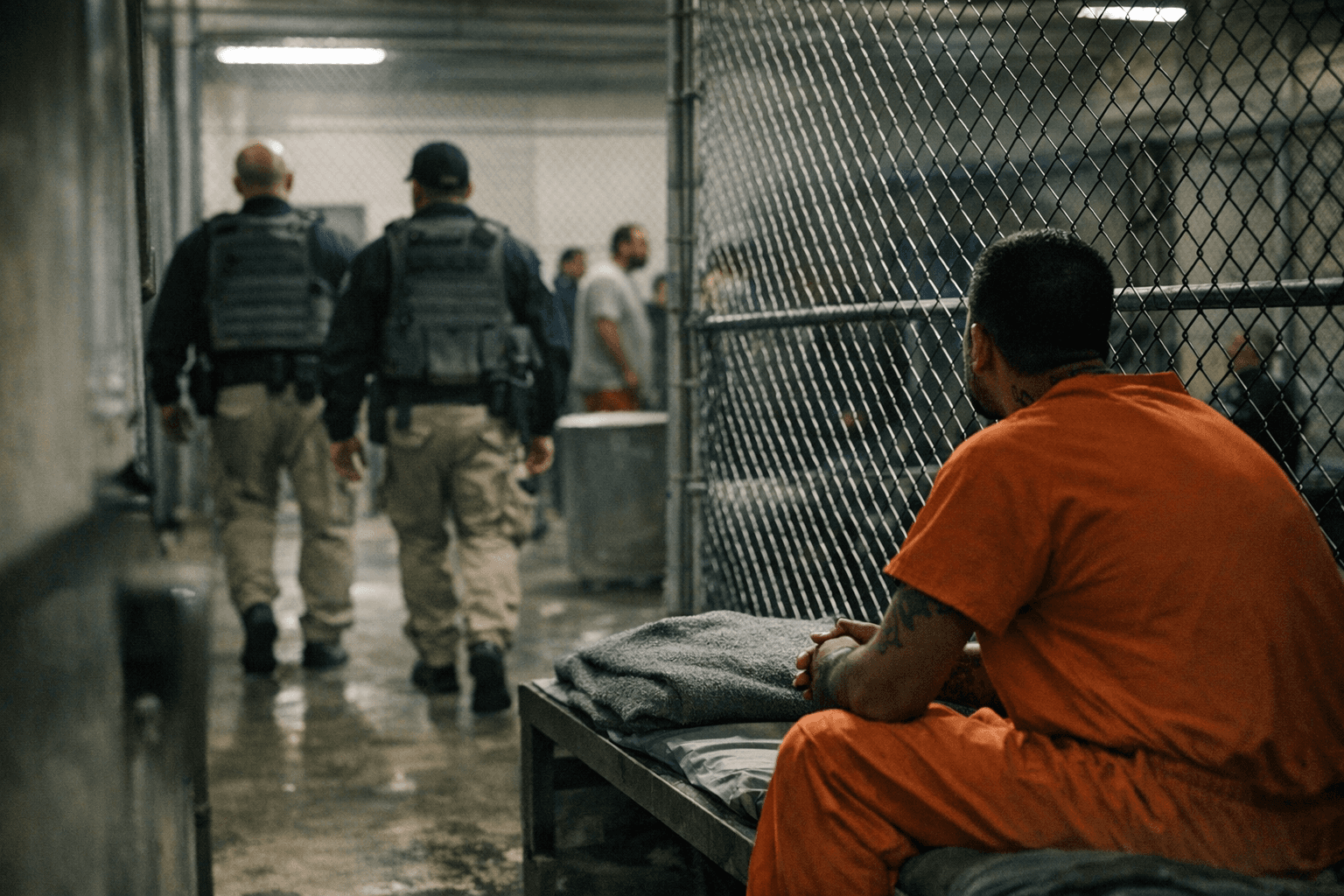
Even with the decline, detention remained historically elevated. Vera Institute of Justice data put ICE’s single-day detention peak at more than 73,400 in mid-January, and the agency was holding people in 456 facilities in February across all 50 states, plus Guam, Puerto Rico, the Northern Mariana Islands and Guantanamo Bay. Texas had the largest state detainee population, followed by Louisiana, California, Florida and Georgia. The largest facility by average daily population was ERO El Paso Camp East Montana in El Paso, Texas, which averaged 2,505 detainees a day by April.
Advocates and analysts say the numbers matter because they suggest ICE may be shifting tactics under new DHS leadership, even as the agency keeps relying heavily on detention for people without criminal records. ICE says its enforcement officers prioritize actions based on agency and department priorities, funding and capacity, and the first week of April suggested the decline was still continuing. TRAC also reported that ICE’s Alternatives to Detention program stayed nearly flat, at 179,991 in February and 180,701 by April, underscoring that the slowdown in detention has not yet translated into a major expansion of noncustodial supervision.
This article was produced by Prism’s automated news system from verified source data, official records, and press releases, then run through automated quality and moderation checks before publishing. The system is built and supervised by the people who set the standards it runs under. Read our full AI policy.
Did this article answer your question?

