IMF Projects U.S. Growth at 2.4% in 2026, Flags Inflation and Fiscal Risks
The IMF raised its U.S. growth forecast to 2.4% for 2026 but warned rising energy prices could push inflation above target and complicate the Fed's rate path.
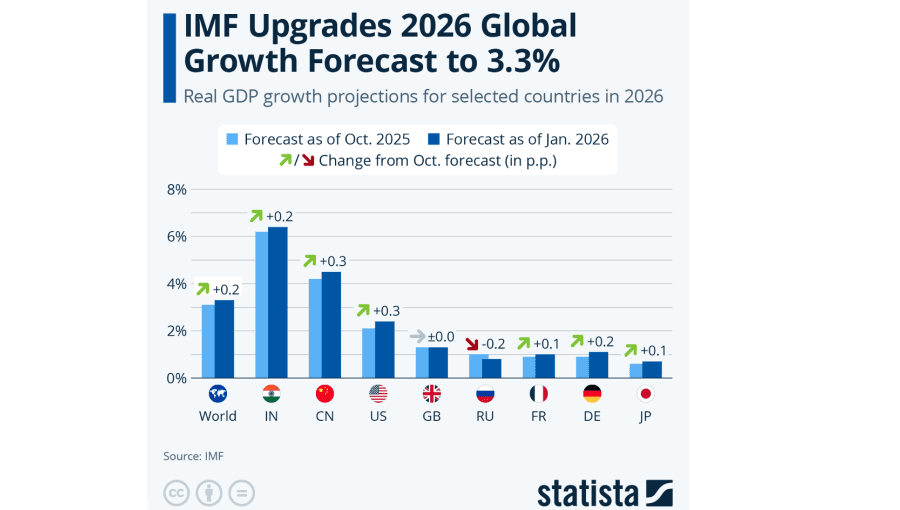
The International Monetary Fund concluded its annual audit of the U.S. economy with a cautiously optimistic verdict: growth will accelerate in 2026, but an energy price spike remains the single biggest threat to that outlook, one that could ripple from gas pumps to grocery bills and force the Federal Reserve to hold rates higher for longer.
The IMF's Executive Board completed the 2026 Article IV consultation with the United States on April 1, projecting GDP growth of 2.4% this year on a fourth-quarter-to-fourth-quarter basis. That would mark a step up from a resilient 2025, when growth reached 2% despite major shifts in the policy environment and a government shutdown that cut into fourth-quarter activity, with strong, broad-based productivity growth underpinning buoyant economic activity even as employment growth slowed, in part due to sharply lower immigration flows.
The Fund's inflation outlook carries an important condition. Growth in 2026 is expected to be supported by expansionary fiscal policy, a waning drag from tariffs, and the impact of policy rate cuts made in 2025. As those tailwinds materialize, fading tariff effects and lower oil prices should bring core PCE inflation back to 2% during the first half of 2027. But the IMF was explicit about what could derail that timeline: "Near-term risks to growth and unemployment are balanced, but rising energy prices pose upside inflation risks."
That warning carries tangible implications for household budgets and business costs. Higher oil prices feed directly into gasoline and diesel, raise shipping and freight rates, and push up electricity bills, each of which can feed back into the broader price level and extend the period before the Fed achieves its inflation mandate. IMF staff's baseline projects the federal funds rate declining modestly to between 3.25% and 3.5% by end-2026, consistent with a return to full employment and inflation settling around 2%. An energy shock would put that trajectory at risk, likely pushing the timeline for rate relief further out.

On labor markets, the picture is one of gradual cooling rather than deterioration. Employment growth has slowed, in part due to sharply lower immigration flows, but the unemployment rate should remain close to 4%.
The fiscal scorecard was mixed. The federal deficit fell from 6.3% of GDP to 5.9% of GDP in fiscal year 2025, a modest improvement that nonetheless left the government's balance sheet in a vulnerable position. General government debt rose to 123.9% of GDP, and the current account deficit remained large at 3.7% of GDP. Looking ahead, the federal deficit is expected to exceed 6% of GDP in the coming years, and the federal debt-to-GDP ratio is expected to steadily increase over the medium term.
The Fund's assessment frames a narrow path for U.S. policymakers in 2026: growth is real, productivity is a genuine strength, and the labor market has held up through significant policy disruption. But a sustained move higher in energy prices, whether from Middle East tensions or supply constraints, could quickly reorder those priorities, forcing a choice between supporting growth and containing an inflation problem that was supposed to be on its way out.
This article was produced by Prism’s automated news system from verified source data, official records, and press releases, then run through automated quality and moderation checks before publishing. The system is built and supervised by the people who set the standards it runs under. Read our full AI policy.
Did this article answer your question?

