U.S. Job Growth Surges in March, Tripling Economist Expectations at 178,000
March's 178,000 jobs blew past the 65,000 Wall Street forecast, but a shrinking labor force and surging long-term unemployment complicate the blowout headline.
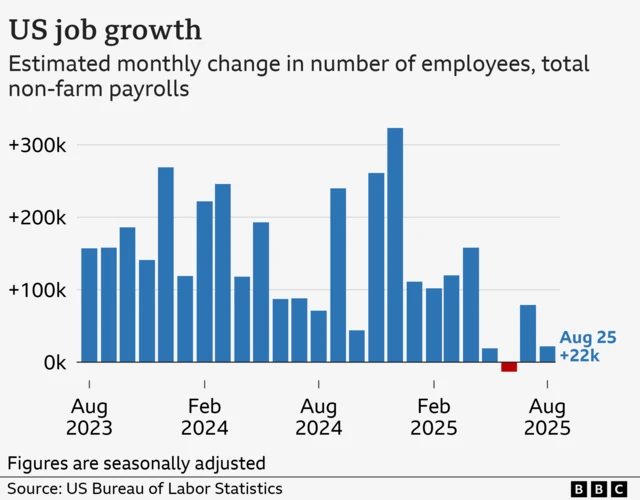
The American labor market delivered its strongest monthly hiring total since late 2024 in March, with employers adding 178,000 nonfarm payroll jobs and leaving nearly every Wall Street economist flat-footed. Bloomberg-surveyed economists had penciled in just 65,000 new positions; the FactSet and CNBC consensus sat even lower, at roughly 57,000 to 59,000. The 178,000 figure cleared every single estimate in Bloomberg's survey.
The unemployment rate ticked down to 4.3% from 4.4% in February, but that headline number carries an asterisk. The civilian labor force shrank by 396,000 in March, meaning fewer Americans were actively working or looking for work, which mechanically pulls the jobless rate lower regardless of true labor demand. The BLS report also revised February's already-weak numbers sharply downward, from a reported loss of 92,000 jobs to a steeper 133,000 decline, the first monthly job loss since December 2025.
Health care was the engine of March's gains, adding 76,400 positions. A significant portion of that rebound traces directly to roughly 31,000 Kaiser Permanente employees returning from a February strike rather than to organic new hiring. Construction and transportation and warehousing also posted gains. Federal government employment continued its long retreat, having shed 327,000 positions, or 10.9%, since its October 2024 peak.
Average hourly wages rose 0.2% from February and 3.5% year-over-year, a pace analysts said is consistent with the Federal Reserve's 2% inflation target. That keeps the Fed in a comfortable holding pattern: CME FedWatch data showed a 90% to 95% probability that policymakers leave rates unchanged at their April meeting, and the rate path is expected to stay largely flat through the rest of 2026. Analysts characterized the report as strong headline, balanced internals, giving the Fed room to stay patient rather than accelerating any rate-cut timeline.
Below the surface, the stress points are harder to dismiss. The share of workers unemployed for 27 weeks or more rose to 25.4% of all unemployed, and the number of marginally attached workers, those who want jobs but have not actively searched recently, jumped by 325,000 in March. Those figures underscore how difficult re-entry remains for anyone who has been sidelined for an extended stretch.

The March figure also arrives in the wake of a dismal year for hiring. Revised BLS data show U.S. employers added just 181,000 jobs across all of 2025, the worst annual total since 2020 and, outside a recession year, since 2003. The St. Louis Federal Reserve now estimates the monthly breakeven level needed to hold unemployment steady at just 15,000 to 87,000 jobs, down sharply from 153,000 as recently as April 2025, reflecting slower population and immigration growth.
The report landed as the U.S.-Israel war on Iran, which began in late March 2026, was already introducing energy and supply-chain uncertainty. Bloomberg noted the data suggest the labor market was stabilizing as the conflict began, though forward-looking risk remains elevated.
Separately, data from Challenger, Gray and Christmas showed employers announced 60,620 job cuts in March, down sharply from 275,240 announced in the same month a year earlier. Artificial intelligence was cited as the reason for 15,341 of those cuts, roughly 25% of the March total, making it the leading stated cause of announced layoffs.
Atsi Sheth, chief credit officer at Moody's Ratings, said the firm's baseline for 2026 expects "a weaker job market but not one where unemployment rises so much as to tip us into recession," while flagging sectors exposed to Middle East conflict and technology-driven displacement as key watchpoints. Adam Schickling, senior economist at Vanguard, described the current environment as a "low-hire, low-fire labor market," a characterization that captures both the resilience and the stagnation visible in Friday's report. For now, that fragile equilibrium appears to be holding.
This article was produced by Prism’s automated news system from verified source data, official records, and press releases, then run through automated quality and moderation checks before publishing. The system is built and supervised by the people who set the standards it runs under. Read our full AI policy.
Did this article answer your question?

