IMF Warns Tokenized Finance Could Amplify Market Crises, Urges Oversight
IMF Financial Counselor Tobias Adrian warns tokenized stocks and bonds could trigger crises too fast for central banks to stop, as NYSE and Nasdaq race to build blockchain trading platforms.
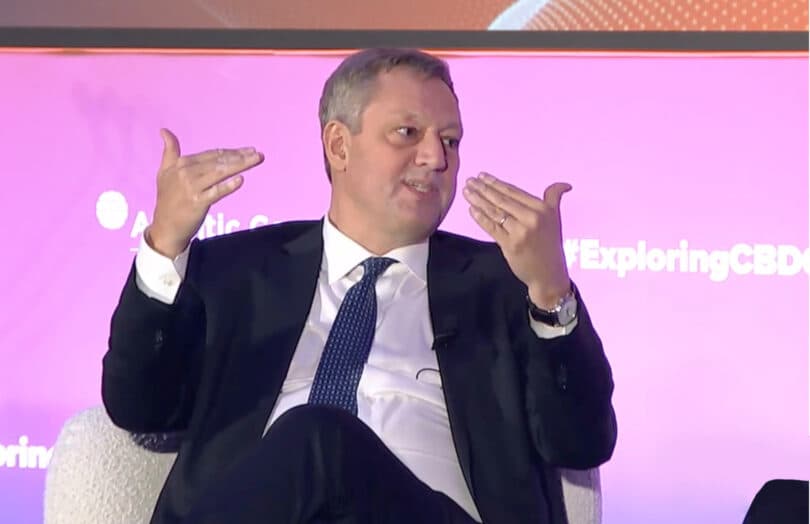
The International Monetary Fund released its most detailed warning yet about tokenized finance, arguing that placing stocks, bonds, and cash on blockchain-based ledgers could trigger financial crises that unfold faster than central banks can respond, and urging regulators to build guardrails before the architecture is locked in.
The warning came from IMF Financial Counselor Tobias Adrian, whose paper, published as IMF Notes 2026, characterized tokenization as "a structural shift in financial architecture" rather than a marginal efficiency gain. At its core, the concern is speed: instant, round-the-clock settlement removes the time buffers regulators and market operators have historically depended on to intervene when stress builds. When a shock hits tokenized markets, the cascade could be over before a central bank completes its first emergency call.
The parallel to earlier financial innovations is difficult to dismiss. Securitization in the 2000s repackaged mortgages into tradable instruments that appeared to spread risk broadly until opacity, leverage, and hidden interconnectedness amplified a housing correction into a global crisis. Tokenization carries structural echoes: assets are redefined, redistributed across new holders, and linked through automated smart contracts whose counterparty exposures are difficult to audit in real time. The difference is velocity. In 2008, a failing CDO still settled on a two-day cycle. On a blockchain, the same trade settles in seconds, around the clock, across borders.
Adrian singled out stablecoins as the system's most vulnerable link, comparing them to money market funds: functional in calm conditions but susceptible to runs the moment confidence breaks down. Stablecoin transaction volume had already reached $1.8 trillion per month by early 2026, meaning even a partial loss of confidence could transmit stress into traditional banking channels with no circuit-breaker available.

The warning lands as the largest U.S. exchanges accelerate into tokenized markets with few guardrails yet in place. Nasdaq has sought SEC approval to trade tokenized equities on regulated venues. The New York Stock Exchange is building a blockchain-based platform for continuous trading of tokenized stocks and ETFs. BlackRock and JPMorgan Chase are running live tokenization pilots. In the United Kingdom, UK Finance has launched pilots involving at least six of the country's largest banks. The IMF's report is, in effect, a caution flag thrown onto a track where the engines are already running.
What regulators need, the Fund argued, is a suite of protections designed specifically for this architecture: liquidity backstops calibrated to 24/7 trading dynamics, disclosure requirements that make smart-contract-based leverage visible and auditable, custody standards suited to on-chain settlement, and explicit procedures for when automated systems seize under stress. Cross-border coordination is equally critical. Without harmonized standards, activity will migrate to the most permissive jurisdictions, exactly the regulatory arbitrage that deepened systemic fragility in the years before 2008.
Adrian outlined three possible futures: a coordinated system anchored by central bank digital currencies, a patchwork of incompatible national platforms, or a landscape dominated by private stablecoins with weaker public protections. Which path emerges will depend heavily on how aggressively policymakers move in the next 12 to 24 months, before the infrastructure governing trillions in assets is already built and the risk is already embedded.
This article was produced by Prism’s automated news system from verified source data, official records, and press releases, then run through automated quality and moderation checks before publishing. The system is built and supervised by the people who set the standards it runs under. Read our full AI policy.
Did this article answer your question?
%3Amax_bytes(150000)%3Astrip_icc()%2FCertificate-of-deposit-2301f2164ceb4e91b100cb92aa6f868a.jpg&w=1920&q=75)