IMF’s Gita Gopinath Warns Fragmentation Could Cut Global GDP 7%
IMF First Deputy Managing Director Gita Gopinath warned that a deepening geoeconomic split in trade and investment could shave as much as 7 percent off world GDP, underscoring the costs of broad decoupling amid U.S.-China rivalry and the Ukraine war. She also flagged large financial-market risks from an AI-fuelled equity rally, urging governments to rebuild fiscal buffers while the global economy remains resilient.
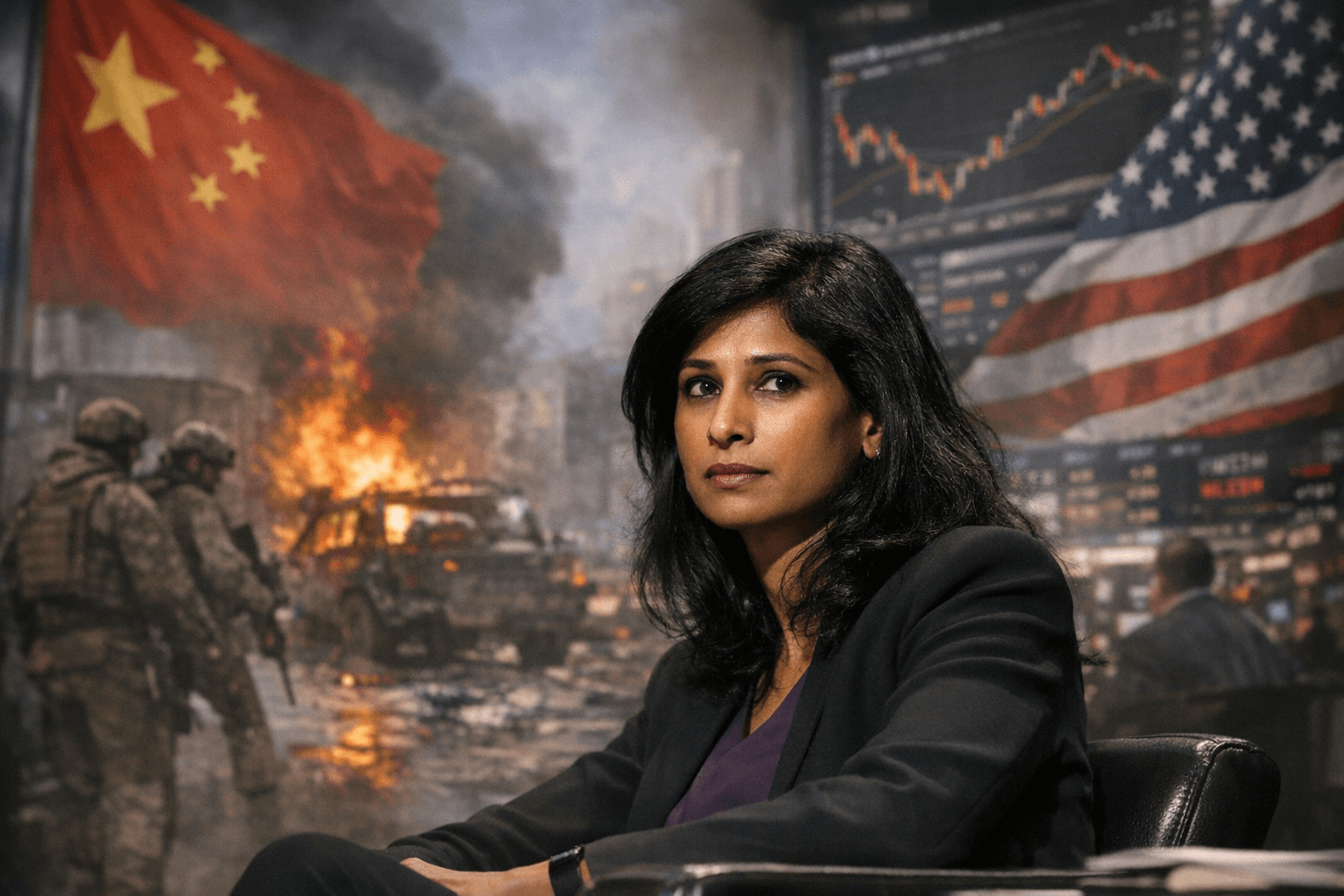
IMF First Deputy Managing Director Gita Gopinath told audiences on Jan. 4 that an escalation from current geopolitical tensions into broad trade blocs and tariff-driven decoupling could reduce global output by nearly 7 percent. She described the scenario as “very serious decoupling and broad scale use of tariffs,” saying such a shock would be tantamount to “basically losing the French and German economies.” The warning frames fragmentation not as a distant possibility but as a policy-contingent risk with measurable macroeconomic consequences.
Gopinath delivered the comments amid a cautious IMF view that the global economy has achieved a soft landing from recent shocks but remains exposed. She urged policymakers to take advantage of this relatively steady growth environment to build resilience, noting that “this will not be the last crisis” and that now is “a moment to rebuild your fiscal buffers.” The call reflects concern that diminished fiscal space would limit governments’ ability to respond to future recessions, climate shocks, or geopolitical disruption.
Economists say fragmentation would operate through higher trade costs, fractured supply chains, and reduced foreign direct investment as firms reconfigure production within narrower trading spheres. For open economies with integrated manufacturing networks, that process would erode productivity and investment, with spillovers especially severe for export-dependent countries and multinational supply chains.
Gopinath paired her trade warning with a separate caution about financial-market vulnerabilities. She said the global economy had become “dangerously dependent” on U.S. equity valuations, where enthusiasm for artificial intelligence has driven a concentrated rally that looks detached from fundamentals. Different estimates attributed to her commentary paint a stark picture of potential losses should investor sentiment reverse: one assessment warned of up to $35 trillion in global financial losses that would hit households, pension funds and institutions and spill into the real economy; another placed potential U.S. household wealth losses at more than $20 trillion, a shock that could trim roughly two percentage points off U.S. GDP growth through reduced consumer spending.
Those market-loss figures are presented as separate, non-reconciled estimates tied to the same broad concern: a large valuation correction in major equity markets would not be confined to investors but could translate into weaker demand, tighter credit conditions and a wider downturn. The IMF plans to incorporate evolving risks when it updates its global forecast in July.
Gopinath’s remarks drew on a wider geopolitical context, including the economic fallout from the Ukraine war and intensifying U.S.-China strategic competition, and followed her participation in a seminar during the 2025 IMF/World Bank Spring Meetings in Washington on April 25, 2025. Her dual emphasis on trade fragmentation and market excesses underscores a central policy challenge for 2026: sustaining growth while shoring up buffers against shocks that are economic and strategic at once.
For governments and investors, the message is clear. Absent concerted policy action to limit the slide toward block-based trade and to temper financial exuberance, the costs could be measured not in isolated losses but in permanent reductions in global income and living standards.
This article was produced by Prism’s automated news system from verified source data, official records, and press releases, then run through automated quality and moderation checks before publishing. The system is built and supervised by the people who set the standards it runs under. Read our full AI policy.
Did this article answer your question?


