Immigrant mothers wait as Supreme Court weighs birthright citizenship limits
A Ukrainian asylum seeker waits as the Supreme Court considers whether babies like her son Ivan can be denied citizenship at birth.
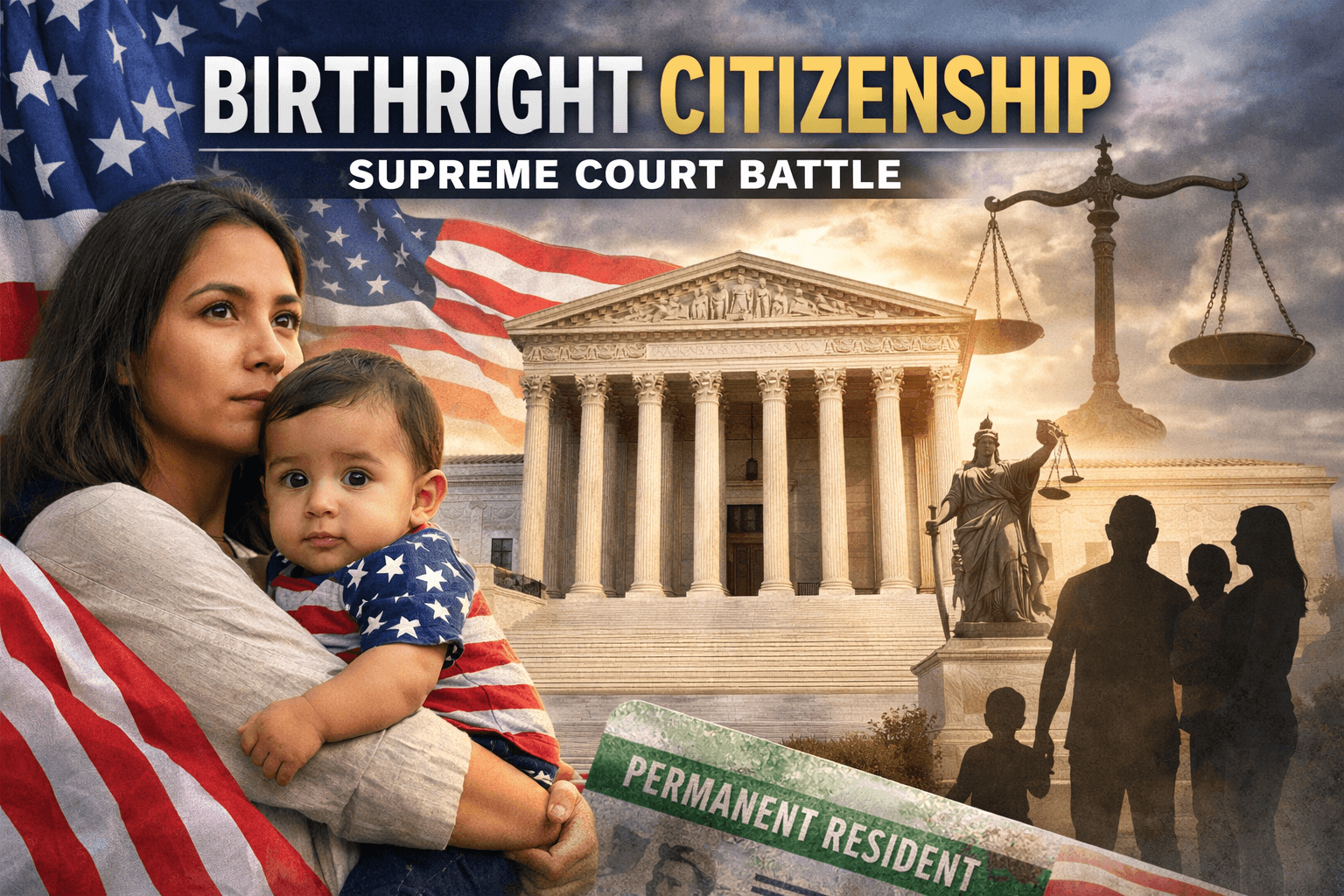
Lily knows the stakes are not abstract. Her 8-month-old son, Ivan, was born in the United States after President Donald Trump signed an order seeking to deny citizenship to babies born to non-citizen parents, and she now waits as the Supreme Court decides whether that policy can take effect.
Lily, a Ukrainian asylum seeker whose family fled violence tied to Russia’s war on her hometown, said the pace of political change has left her unable to know what comes next. She is legally present in the United States while her asylum claim is reviewed, but a ruling for Trump could put her child, and millions of others, in a far more precarious legal position. Advocates warn that children left stateless can lose access to identification, benefits and basic legal recognition.
The order at the center of the case is Executive Order 14160, Protecting the Meaning and Value of American Citizenship, issued on January 20, 2025. It says that 30 days after issuance, children born to a mother who is unlawfully present in the United States or present only on a temporary basis, and to a father who is not a U.S. citizen or lawful permanent resident, should not be recognized as citizens and should not receive federal documentation such as passports or Social Security numbers.
The Supreme Court’s June 27, 2025 decision in Trump v. CASA did not decide whether the order is constitutional. Instead, the justices limited nationwide injunctions, a ruling that let the administration keep pressing its case in narrower litigation after lower courts blocked the order. The main merits case, Trump v. Barbara, was argued on April 1, 2026, and a final decision is expected by the end of June 2026.
At the center of the fight is the Fourteenth Amendment, ratified in 1868, which says that all persons born or naturalized in the United States and subject to its jurisdiction are citizens. A landmark 1898 ruling, United States v. Wong Kim Ark, held in a 6-to-2 decision that a child born in San Francisco to Chinese immigrant parents was a U.S. citizen under that clause, and it has long anchored modern birthright citizenship doctrine.
The case could reverberate through hospitals, schools and federal agencies from the moment a child is born. ABC News reported that birth certificates have long been used to obtain Social Security numbers and passports, and to prove citizenship for voter registration, employment, home loans and military service. If the Supreme Court upholds Trump’s order, families like Lily’s could face immediate uncertainty over whether a child born on American soil is recognized as American at all.
This article was produced by Prism’s automated news system from verified source data, official records, and press releases, then run through automated quality and moderation checks before publishing. The system is built and supervised by the people who set the standards it runs under. Read our full AI policy.
Know something we missed? Have a correction or additional information?
Submit a Tip