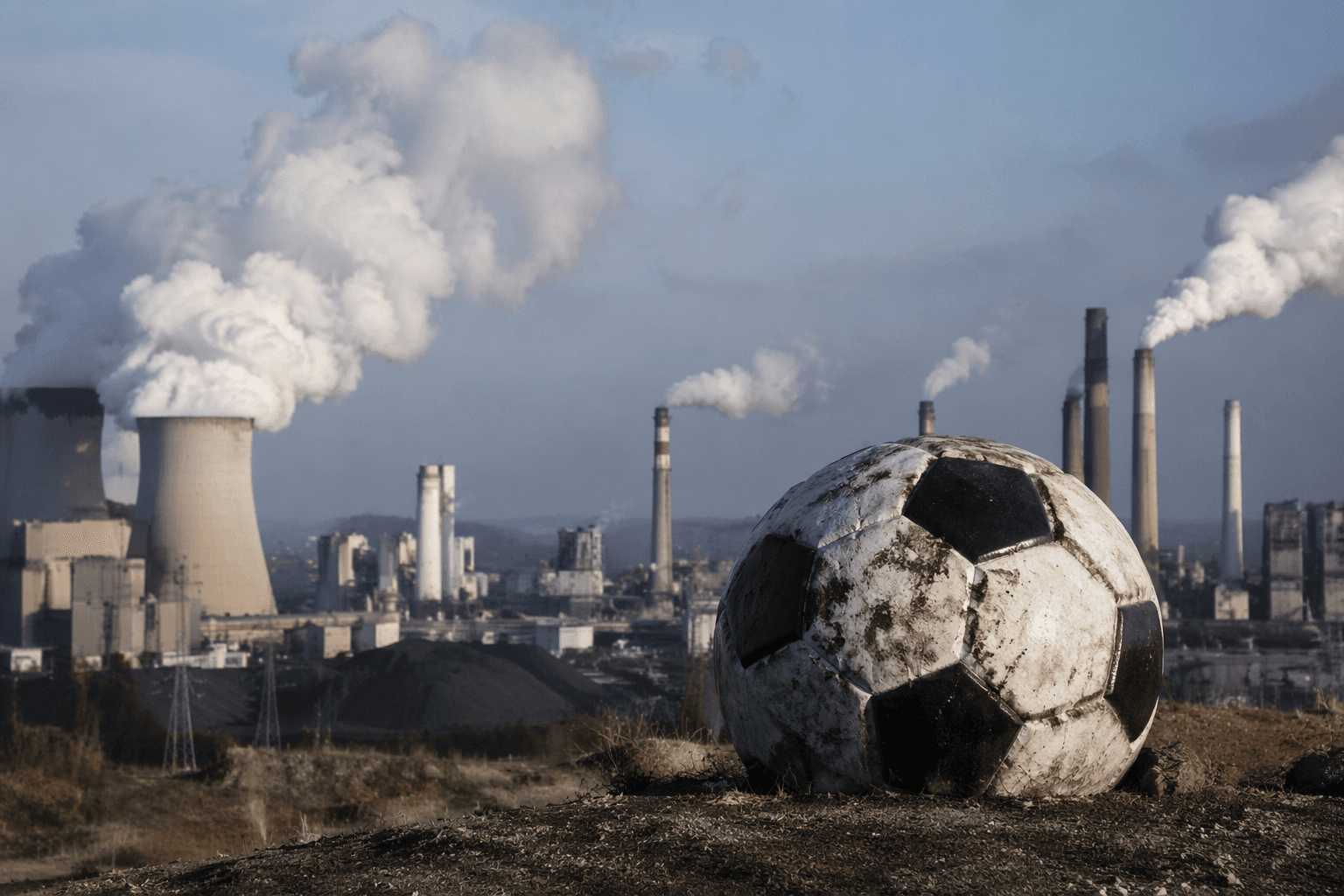
In Mexico, soccer thrives in fields, craters and canals
Mexico's pickup pitches reveal a country where soccer doubles as public life, filling the gaps left by thin urban planning and scarce safe space.
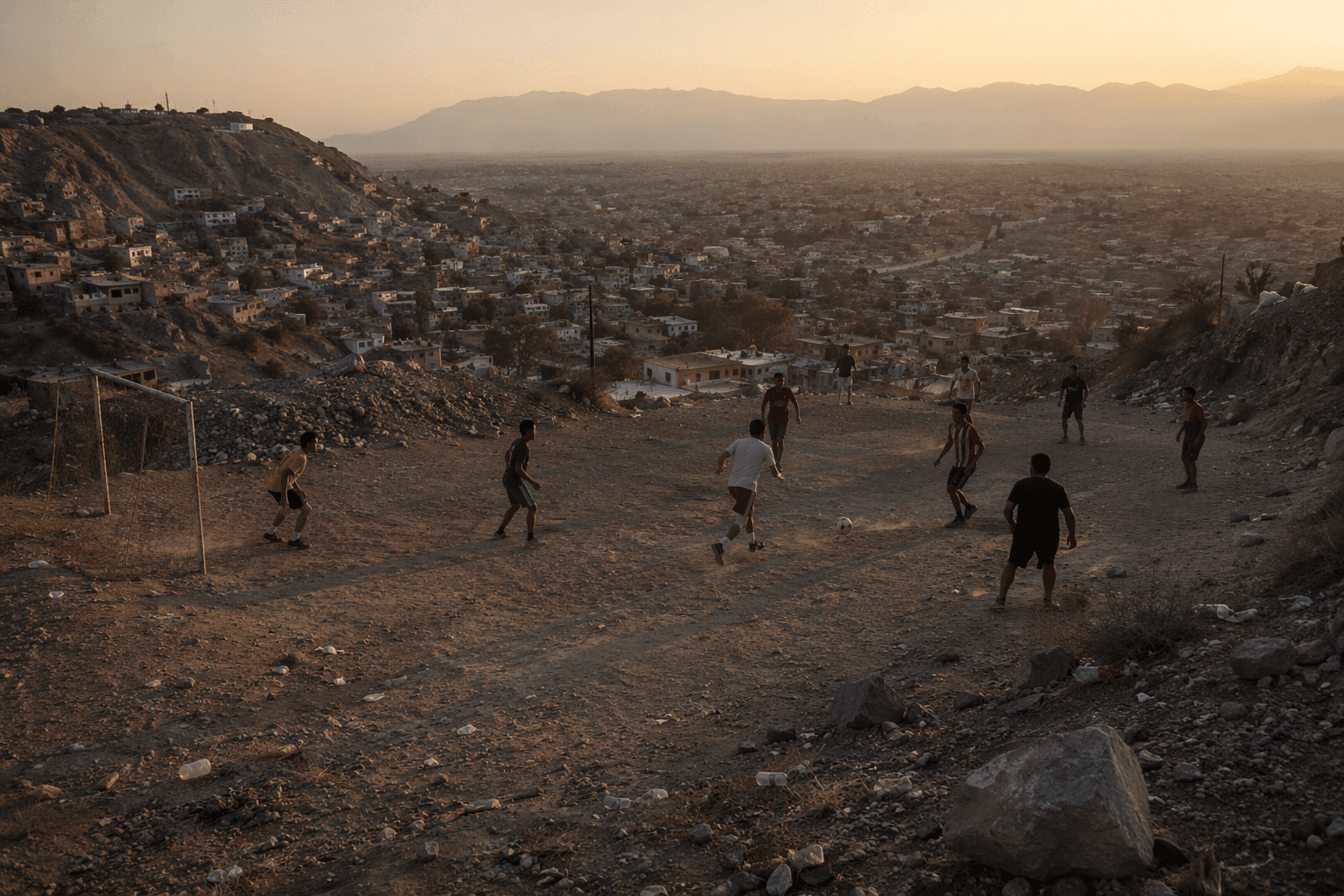
Mexico's soccer culture is not confined to polished stadiums or televised matches. It spills into rough neighborhood fields, under highway overpasses and even into a crater carved by an extinct volcano, where the game becomes a way to claim space, build community and turn scarcity into movement. As the country prepares to co-host the World Cup, those improvised pitches say as much about Mexican life as any official arena.
Soccer where space is left, not where it is planned
Across the country, people play wherever room can be found. That means the edges of towns, the spaces beneath elevated roads and other leftover corners of the city where formal recreation infrastructure is thin or absent. The result is a version of soccer shaped by improvisation: uneven ground, makeshift boundaries and fields that are not always designed for safety, but are used because they are available.
That pattern reflects a larger urban reality. In many places, the need for public recreation outpaces the supply of well-maintained parks and fields, especially in working-class neighborhoods. Soccer fills the gap because it requires little more than a ball, a patch of ground and a shared understanding of the rules. In Mexico, that flexibility has made the game a social institution as much as a sport.
Monterrey's rough field and one boy's ambition
In Monterrey, 14-year-old Humberto Guadalupe spends his weekends on the only community field in his neighborhood. Friends and family call him Messi, a nickname that captures both affection and hope, and the field where he plays is far from ideal: a rough space bordered by abandoned cars and dirt roads. Yet it is still the place where he imagines his future.
Humberto wants to become a professional player, and his confidence is striking in a setting that offers few guarantees. He says, “One way or another, it’s going to happen.” The line matters because it shows how soccer in Mexico operates as a private dream and a public habit at the same time. For a teenager on a battered field, the sport is not an escape from daily life so much as a route through it.
A crater pitch that draws families from every direction
In Mexico City, the so-called Field of the Gods gives the game a more dramatic backdrop. The pitch sits inside the crater of the Teoca volcano, turning an extinct geological landmark into an active gathering place for amateur matches. Families arrive by car, motorcycle, bicycle and on foot, treating the site not only as a sports venue but also as a weekend destination.
That mix of movement says something important about public space in Mexico. People are willing to travel to unconventional places if those places offer community, open air and the chance to watch or play. The crater field is memorable not just because of where it is, but because it shows how informal recreation can become a civic ritual when more conventional options are limited.
Xochimilco's canals, grass and contested landscape
The story becomes even more vivid in Xochimilco, where players travel in traditional trajinera boats across canals to reach some of Mexico City's last natural grass pitches. These fields sit inside a UNESCO World Heritage Site, which makes them both cherished and contested. They are an important social hub, but they also raise ecological concerns because they lie in habitat associated with the endangered axolotl salamander.
That tension captures the broader stakes of soccer in a city under pressure. The pitches are not just places to play. They are part of a living landscape where recreation, heritage and conservation overlap. The fact that people still make the boat trip to reach them shows how deeply rooted the game is in local life, even when access requires creativity and effort.

What the game reveals about inequality and urban life
Seen together, these places are more than picturesque settings. They point to the uneven geography of opportunity in Mexican cities and towns, where formal infrastructure is often scarce and community life has to adapt to what is left over. Soccer survives because it is cheap, portable and socially powerful enough to organize people around spaces that might otherwise be ignored.
That makes the sport a useful lens for understanding inequality. A city with ample safe recreation would not need underpasses, craters and canal crossings to house its most popular game. But in Mexico, those unconventional fields show how residents build meaning where planning has fallen short. The game does not erase those gaps; it makes them visible and, in some cases, livable.
Why the World Cup matters beyond the stadiums
Mexico's role as a World Cup co-host will put elite facilities on display, but Reuters' portrait argues that the tournament belongs just as much to the grassroots game. The country's soccer culture is already embedded in ordinary neighborhoods, in family outings to crater pitches and in boats headed for canal-side fields. The official spectacle will unfold in major stadiums, but the emotional foundation of the sport is much wider.
That is why these improvised fields matter. They show a country where soccer is not waiting for perfect infrastructure to begin. It is already there, sustained by local effort, shared memory and the simple conviction that if there is space, however rough, the game can be played.
This article was produced by Prism’s automated news system from verified source data, official records, and press releases, then run through automated quality and moderation checks before publishing. The system is built and supervised by the people who set the standards it runs under. Read our full AI policy.
Know something we missed? Have a correction or additional information?
Submit a Tip