India closes fiscal year with deficit at 4.4% of GDP
India hit its 4.4% deficit target with Rs 15.19 lakh crore in red ink, but April already showed how tight the fiscal room will be in FY27.

India closed the fiscal year ended March 31, 2026 with its central government deficit at 4.4% of gross domestic product, or Rs 15.19 lakh crore, landing almost exactly on the target set in the Union Budget and signaling a rare year of fiscal control in a still-high-spending economy.
The final figure, equal to about Rs 159.91 billion, amounted to 97.5% of the government’s revised estimate from February. That matters because it shows New Delhi did more than simply benefit from strong nominal growth. It managed to hold revenue and expenditure close enough to plan to keep the headline deficit from drifting higher, a result that can help preserve confidence among bond investors watching India’s borrowing needs and the pace of consolidation.

The fiscal math improved on several fronts. Net tax receipts rose to Rs 33 trillion from Rs 30.87 trillion a year earlier, while non-tax revenue climbed to Rs 6.8 trillion from Rs 5.31 trillion. Total expenditure increased to Rs 49 trillion from Rs 47.16 trillion, but capital spending also advanced, reaching Rs 10.7 trillion compared with Rs 10.18 trillion in FY25. That is important for roads, railways, ports and other physical infrastructure, because it shows the government kept leaning on investment-led growth even as it held the deficit in line.
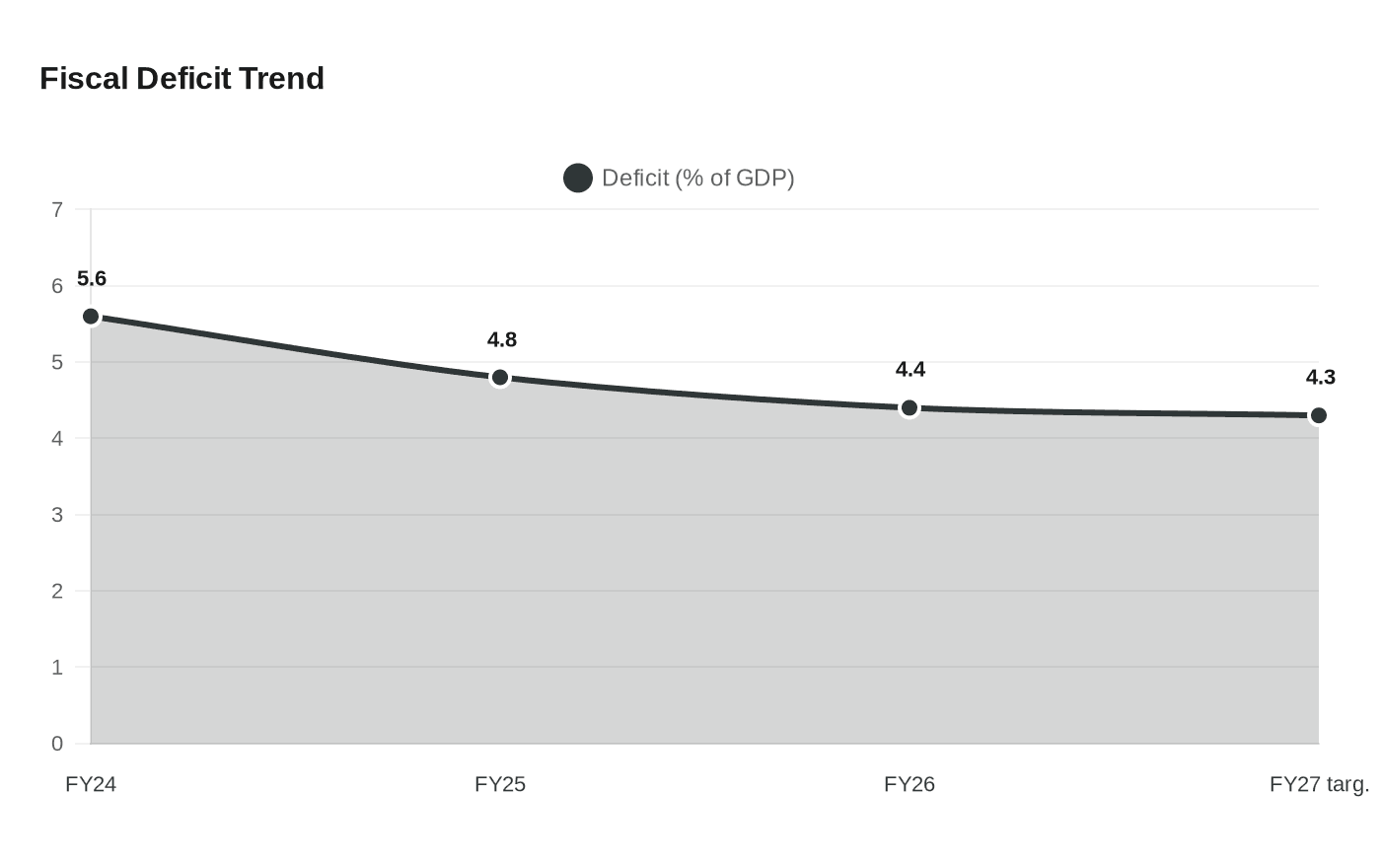
The outcome also marks another step in a slow fiscal repair. India’s deficit had already narrowed to 4.8% of GDP in FY25 from 5.6% in FY24, so FY26 extends a two-year trend of tighter public finances after the post-pandemic surge. The February 1 budget set FY26 borrowing at Rs 14.82 lakh crore and capital expenditure at Rs 11.21 lakh crore, while laying out a further reduction in the FY27 deficit target to 4.3% of GDP. In other words, FY26 was not the finish line but a checkpoint on a gradual glide path.
Still, the early signal from April suggests the discipline will be tested quickly. The deficit in the first month of the new fiscal year already reached 21.4% of the full-year budgeted target, underscoring how much of the annual arithmetic starts to build almost immediately. If growth softens or revenue collections disappoint, the government will have less room to maneuver without putting pressure on borrowing costs or trimming the infrastructure spending that has helped support India’s growth story.
This article was produced by Prism’s automated news system from verified source data, official records, and press releases, then run through automated quality and moderation checks before publishing. The system is built and supervised by the people who set the standards it runs under. Read our full AI policy.
Know something we missed? Have a correction or additional information?
Submit a Tip