India Drops Plan to Mandate Aadhaar App Preload on Smartphones
India backed away from forcing Apple, Samsung and others to preload Aadhaar on phones after industry pushback over security, costs and control.
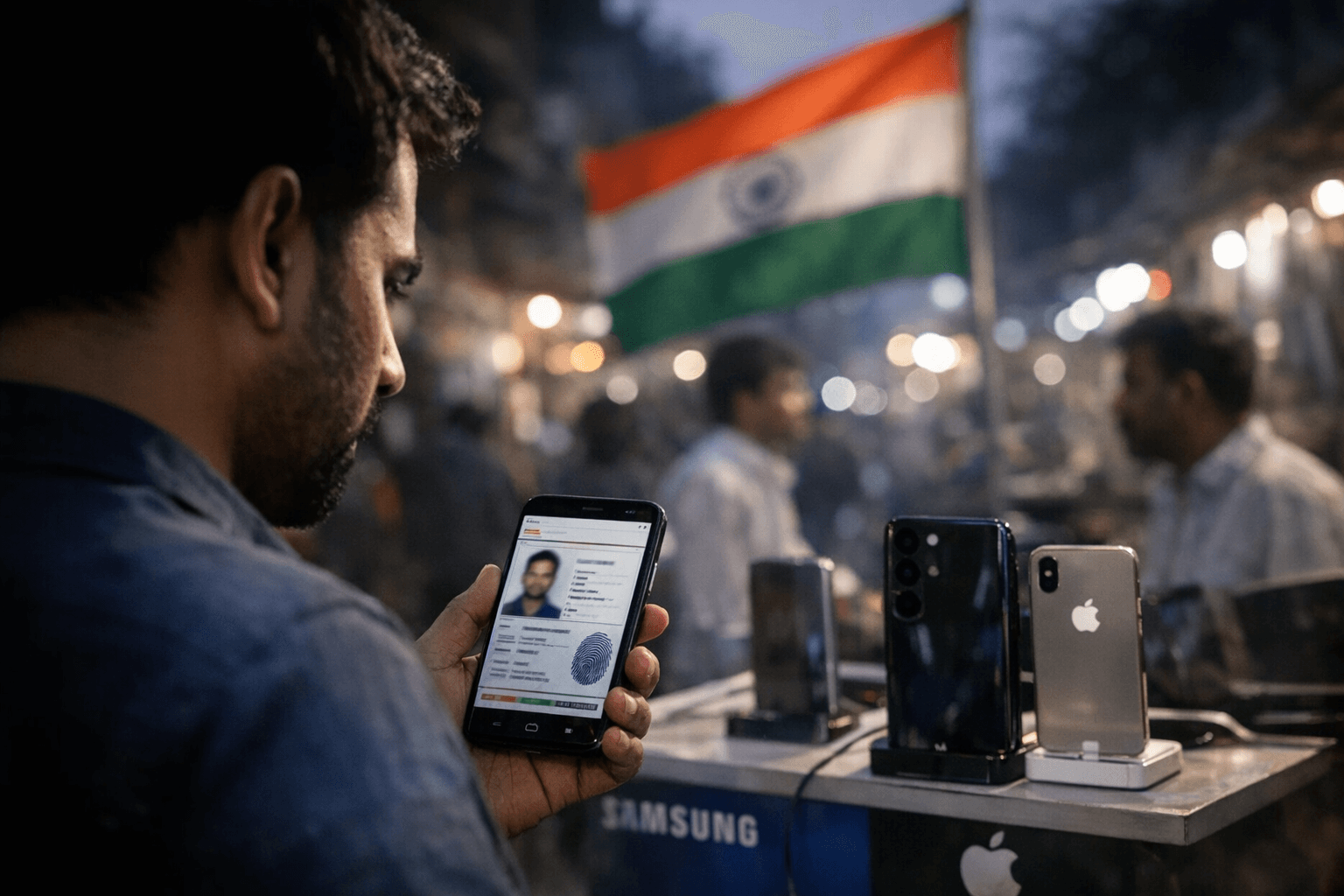
India has stepped back from a plan that would have put its national identity system inside the software of millions of smartphones, after major device makers pushed back on security, compatibility and cost.
The Unique Identification Authority of India said the Ministry of Electronics and Information Technology reviewed the proposal and was not in favor of mandating pre-installation of the Aadhaar app on smartphones. The agency said the ministry reached that decision after consulting stakeholders from the electronics industry, signaling that pressure from manufacturers helped stop the proposal before it became policy.
The retreat matters because Aadhaar is already one of the largest identity systems in the world, and any attempt to hardwire it into consumer devices would have expanded the state’s reach into private hardware. Phone makers had objected to the idea of India-specific builds that would have required separate production lines for domestic and export markets. Apple and Samsung in particular were said to have raised safety and security concerns, while the broader industry worried about compatibility problems and higher manufacturing costs.
The debate sharpened after UIDAI launched a new Aadhaar app on January 28, 2026, presenting it as a privacy-first way to carry and share digital identity. The app includes selective sharing, consent controls, face authentication, biometric lock and unlock, authentication history, QR-based sharing and support for up to five Aadhaar profiles on one device. That design points to a voluntary, user-controlled model rather than a compulsory preload imposed by phone makers.
The scale behind the policy fight is hard to miss. Aadhaar authentication crossed 150 billion transactions by April 2025, underscoring how deeply the system already runs through welfare delivery, verification and daily digital services in India. UIDAI has also promoted online and offline verification, virtual ID tools, biometric locking and paperless offline e-KYC through the myAadhaar portal, reinforcing the government’s push to widen Aadhaar’s digital footprint without forcing it onto every handset.
The reversal also shows the limits of digital-state power when it collides with market resistance. Reuters reported in March that India had privately proposed in January that companies including Apple, Samsung and Google consider pre-installing the Aadhaar app, and that it was the sixth such attempt in two years, with industry opposing all six. For now, New Delhi has chosen a softer route: Aadhaar will continue to expand through public systems and optional apps, but not through a mandate that turns private phones into compulsory distribution channels for state identity infrastructure.
This article was produced by Prism’s automated news system from verified source data, official records, and press releases, then run through automated quality and moderation checks before publishing. The system is built and supervised by the people who set the standards it runs under. Read our full AI policy.
Did this article answer your question?