India Post pilots free eye tests to close vision-care gap
In Assam, post office customers who struggle with fine print are being offered instant eye tests and free reading glasses. The pilot is testing whether India’s 150,000-post-office network can do last-mile vision care.
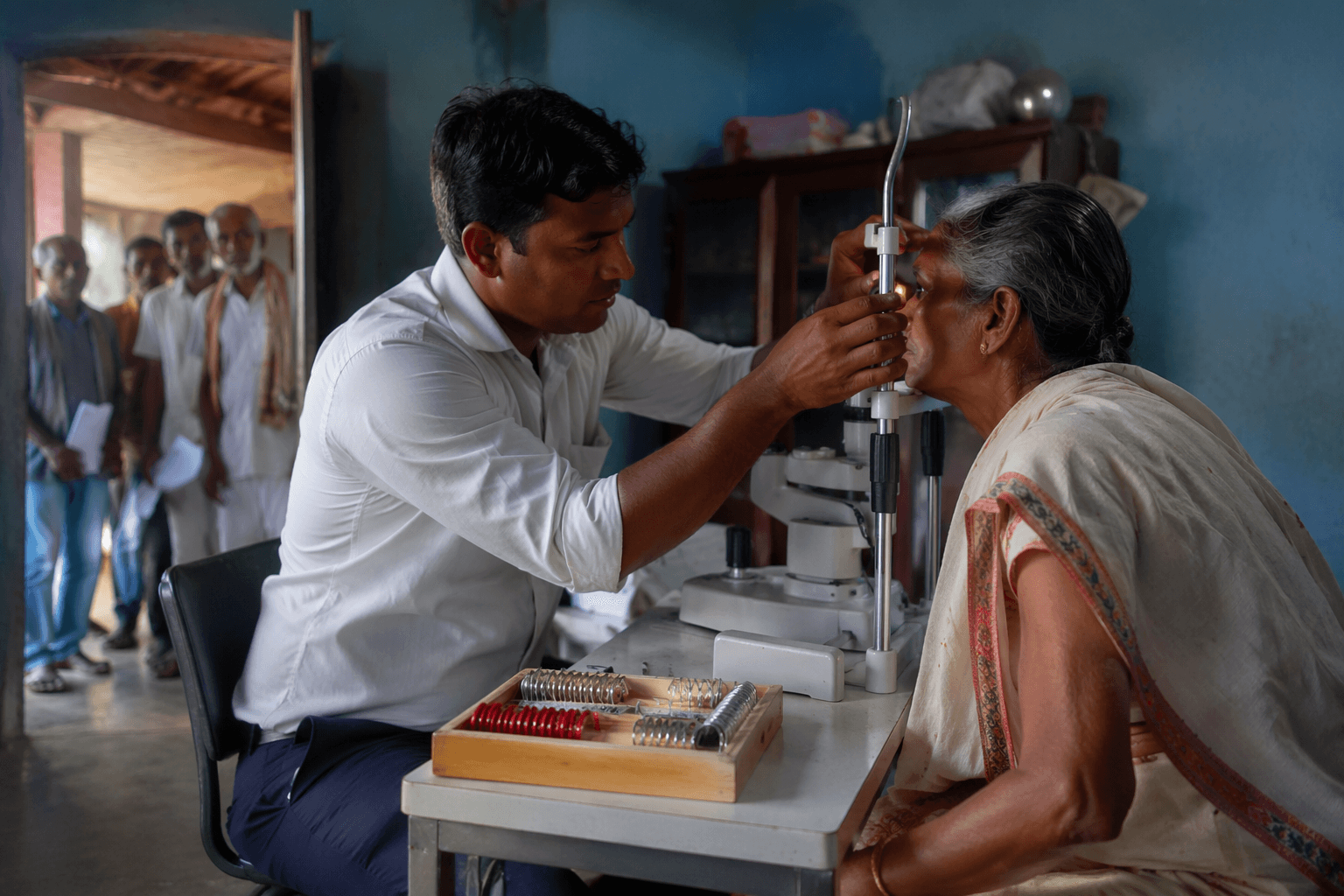
At some post offices in Assam, a customer squinting at a form may be asked a simple question: do you want an eye test? Workers for a nonprofit are offering quick screenings and, when needed, free reading glasses, turning India Post into a low-cost entry point for people who might otherwise never seek care.
The experiment is aimed at a large and stubborn gap. The World Health Organization says uncorrected refractive error is the leading cause of vision impairment in children and adults, and that in low-income countries two out of three people who need spectacles do not have them. In May 2025, the agency said millions still live with preventable vision loss that eyeglasses could address, and the World Health Assembly has set a 2030 goal of increasing effective coverage of refractive errors by 40 percentage points.
India’s need is especially stark. One widely cited estimate puts the number of Indians who need spectacles at about 100 million, while only about one-third have access to them. That leaves a huge population trying to read forms, labels and schoolwork with uncorrected sight problems, especially in rural and lower-income communities where a missed screening can mean lost work, weaker performance in school and everyday friction with small print.
The postal pilot is attractive because of reach. The United Nations initially floated the idea of using India Post’s roughly 150,000 offices as a distribution network for eyeglasses, a scale few health systems could match. The question now is whether the country’s post office network can do more than hand over parcels and pensions, and instead become a reliable last-mile channel for basic vision screening and glasses.
India already has other models to build on. The World Health Organization has highlighted an Assam program run by Sri Sankaradeva Nethralaya that brings doorstep screening to rural and remote areas, provides free spectacles and refers patients for treatment or surgery. India Vision Institute says its programs have helped more than 2 million people access vision screenings and corrective glasses, while Sightsavers India works with government partners on eye health services and disability rights, including vision centres and mobile services. The government’s National Programme for Control of Blindness and Visual Impairment remains the main official framework for reducing blindness and visual impairment.
WHO launched SPECS 2030 in 2024 to push countries toward timely, affordable, quality and people-centred access to spectacles. The postal pilot in Assam is now a practical test of that idea: whether trusted public infrastructure can move beyond novelty and deliver something as basic, and as measurable, as a pair of glasses.
This article was produced by Prism’s automated news system from verified source data, official records, and press releases, then run through automated quality and moderation checks before publishing. The system is built and supervised by the people who set the standards it runs under. Read our full AI policy.
Did this article answer your question?