India protests after U.S. disables tankers, 3 sailors killed
India lodged a strong protest after U.S. strikes off Oman killed three mariners aboard the Settebello, the first deaths tied to Washington’s blockade.

Three Indian mariners died after a U.S. military strike disabled the Palau-flagged tanker M/T Settebello in the Gulf of Oman, turning Washington’s enforcement campaign against Iran-linked shipping into a sharp diplomatic clash with New Delhi. India said it lodged a strong protest and summoned a senior U.S. diplomat after the attack, underscoring the strain the incident placed on a relationship Washington has worked to deepen across the Indo-Pacific.
Union Shipping Minister Sarbananda Sonowal identified the dead as deck cadet Aditya Sharma, engine fitter Shivanand Chaurasiya and chief engineer Patnala Suresh. The tanker had 28 people aboard, including 24 Indian nationals and four foreign nationals; 21 Indian crew members were rescued after the strike, while the three missing sailors were later confirmed dead.
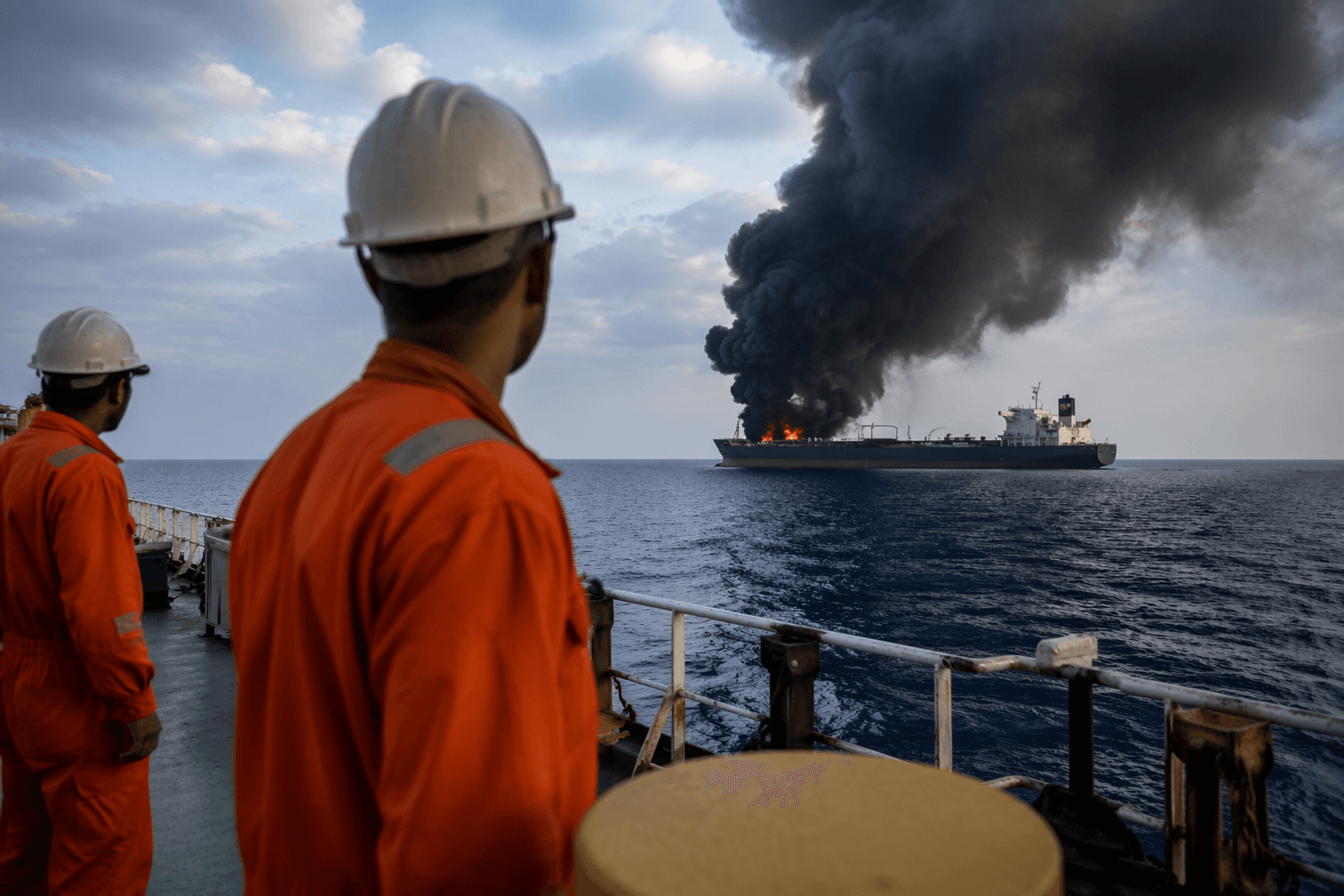
U.S. Central Command said the strike took place at 11:14 p.m. on June 9, when a U.S. aircraft fired precision munitions into the ship’s engine room after the crew repeatedly failed to comply with American directions. CENTCOM said the vessel violated the blockade by trying to transport oil from Iran. The command also said the blockade, launched on April 13, had by then disabled eight non-compliant vessels, redirected 134 ships that complied and allowed 42 vessels carrying humanitarian aid to pass.
The deaths were the first reported since the blockade began and deepened concern in India, which supplies a large share of the world’s seafarers and has a major stake in the safety of commercial shipping through the Gulf of Oman and the Strait of Hormuz. The pressure on New Delhi widened further when India said another tanker, the Jalveer, was hit off Oman on Thursday, though all 20 Indian crew members aboard were reported safe. For Washington, the incidents showed how quickly a campaign aimed at choking off Iranian oil flows could spill into a broader diplomatic problem when Indian nationals are caught in the crossfire.
This article was produced by Prism’s automated news system from verified source data, official records, and press releases, then run through automated quality and moderation checks before publishing. The system is built and supervised by the people who set the standards it runs under. Read our full AI policy.
Know something we missed? Have a correction or additional information?
Submit a Tip