India protests attack on two oil tankers in Strait of Hormuz
Two Indian-flagged crude tankers were fired on in the Strait of Hormuz, then turned back as traffic stalled and India summoned Iran’s envoy.
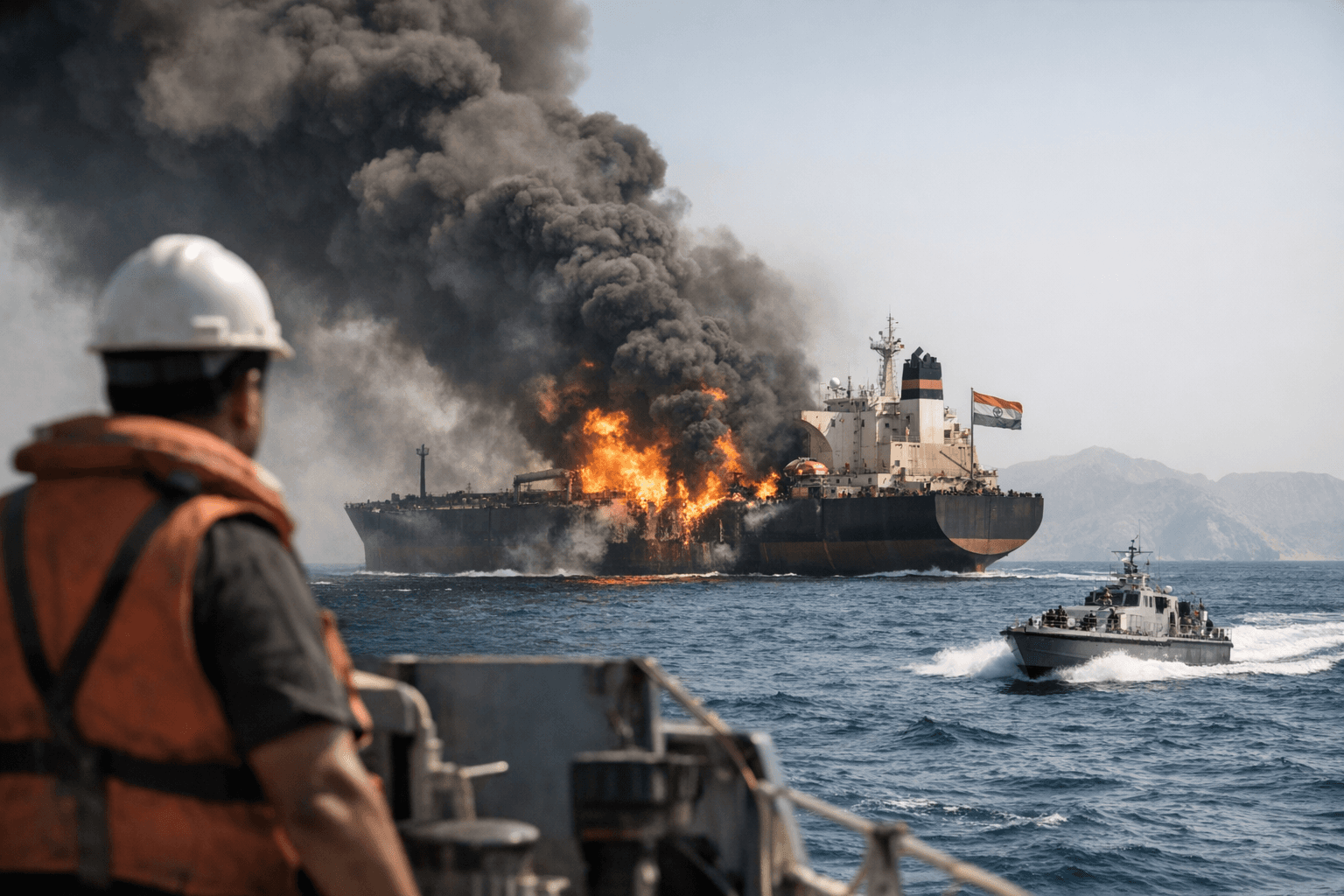
The Strait of Hormuz moved from a shipping lane to a chokepoint crisis as two Indian-flagged crude carriers came under fire while trying to cross the narrow passage, forcing both vessels to turn back and leaving commercial traffic at a virtual standstill. The ships and crew were reported safe, but the attack underscored how quickly a single incident can rattle one of the world’s most important oil corridors and expose sailors, cargoes and energy markets to immediate risk.
India responded by summoning Iran’s ambassador in New Delhi, Mohammad Fathali, after Foreign Secretary Vikram Misri conveyed “deep concern” over the shooting incident. India’s Ministry of External Affairs said the vessels were Indian-flagged crude carriers, and one was identified as the Sanmar Herald. The diplomatic protest signaled that the attack was not only a maritime security issue but also a direct test of regional restraint at a moment when shipping through the strait had already become volatile.
The danger was not isolated. The UK Maritime Trade Operations center said it had received 30 incident reports affecting vessels operating in and around the Arabian Gulf, the Strait of Hormuz and the Gulf of Oman between February 28 and April 14, including 18 attack reports and 12 suspicious-activity reports. That tally points to a persistent pattern of pressure on merchant shipping, with crews navigating an increasingly hostile corridor where the line between warning, harassment and attack has narrowed.
Traffic itself showed how unstable the situation had become. More than 20 vessels passed through the strait on Saturday, according to Kpler data, yet Bloomberg reported that commercial transits had come to a halt after a brief surge, leaving the waterway effectively frozen by Monday. The abrupt swing from movement to paralysis matters far beyond the Gulf: when tankers stop, oil flows tighten, freight schedules slip and insurers, traders and refiners begin pricing in the possibility of broader disruption.
The standoff also revived memories of the Tanker War during the Iran-Iraq war, when merchant shipping in the Persian Gulf and Strait of Hormuz was attacked from 1981 to 1988. The current confrontation carries the same strategic logic: control of a narrow maritime passage can project power far beyond the shoreline, shaping energy prices, diplomatic pressure and the security of crews who must keep sailing through it.
This article was produced by Prism’s automated news system from verified source data, official records, and press releases, then run through automated quality and moderation checks before publishing. The system is built and supervised by the people who set the standards it runs under. Read our full AI policy.
Did this article answer your question?


