Indonesia rights body condemns Papua raid after 12 civilians reported killed
Komnas HAM said at least 12 civilians, including women and children, died in a Papua raid, deepening scrutiny of the military’s tactics.
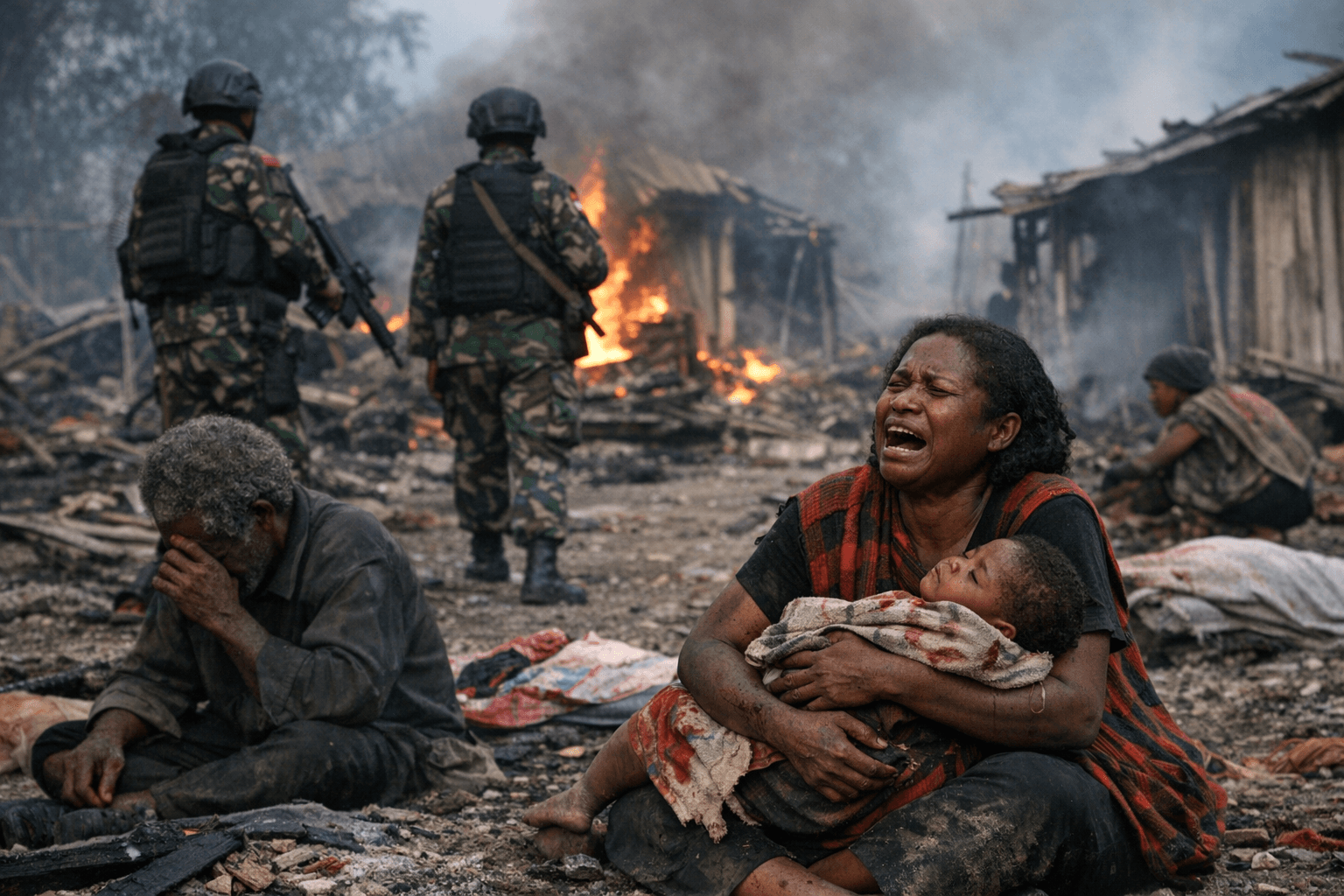
Indonesia’s National Human Rights Commission has sharply condemned a military operation in Central Papua after at least 12 civilians were reported killed in Kembru village, turning a local raid into a national test of accountability.
Komnas HAM said the deaths occurred on April 14 in Kembru District, Puncak Regency, during an operation by the Indonesian National Armed Forces against the TPNPB-OPM separatist group. The commission said the victims died from gunshot wounds and that several others were wounded, with women and children among those reported killed.
The military said it had no information confirming the deaths and argued that its Habema Task Force had moved in after civilians reported the presence of rebels in the village. It also said the deaths were either unrelated to the operation or happened in different places and at different times. That gap between the military’s account and the rights body’s findings has become central to the dispute.
Komnas HAM chair Anis Hidayah said the agency was still coordinating with multiple parties to verify what happened on the ground and assess responsibility. She said there was a strong suspicion that Indonesian soldiers were responsible, but the commission had not finalized its findings. The commission also urged the TNI commander to carry out a comprehensive evaluation of the Habema Task Force operation and called for maximum protection and recovery for the victims, including medical and psychological care, along with steps to prevent further displacement.
The episode has renewed attention on Papua’s wider conflict, where security operations, separatist violence and civilian harm have repeatedly collided. Komnas HAM’s Papua office said four major violent incidents in early 2026 had left about 14 people dead, 13 civilians tortured and dozens of residents forced from their villages. Puncak Regency has already been described in local reporting as being under a security emergency.
Papua’s unrest is rooted in a long-running self-determination dispute that dates to Indonesia’s 1969 takeover of West Papua. Rights groups say access for journalists and independent monitors remains restricted, making it difficult to verify claims quickly and consistently. That weakness in oversight has long fed distrust whenever troops move into highland communities.
The economic stakes are also high. Central Papua, created in 2022, contains the Grasberg mine, one of the world’s largest gold and copper deposits. That strategic value helps explain Jakarta’s determination to keep control, even as each disputed operation risks deepening the political and human costs of the conflict.
This article was produced by Prism’s automated news system from verified source data, official records, and press releases, then run through automated quality and moderation checks before publishing. The system is built and supervised by the people who set the standards it runs under. Read our full AI policy.
Did this article answer your question?