India wholesale inflation jumps to 8.3% as energy costs surge
India’s wholesale inflation surged to 8.3% in April, with fuel and power prices jumping 24.71% as Middle East tensions pushed energy costs higher.

India’s wholesale prices accelerated far more than expected in April, rising 8.3% from a year earlier and flashing a fresh warning that energy shocks are moving through the economy. The increase, up from 3.88% in March, was the fastest in three and a half years and the highest since October 2022, underscoring how quickly higher fuel costs can spread beyond the oil market.
The sharpest pressure came from the energy basket. Fuel and power inflation jumped to 24.71% in April from just 1.05% in March, while crude petroleum and natural gas prices rose 16.42%. That matters because wholesale prices sit early in the inflation chain: when transport fuel, feedstocks and industrial energy get more expensive, manufacturers and distributors face higher costs before those increases show up at the retail level. April’s reading came in well above the 4.4% forecast economists had expected, suggesting the shock was stronger than markets had anticipated.
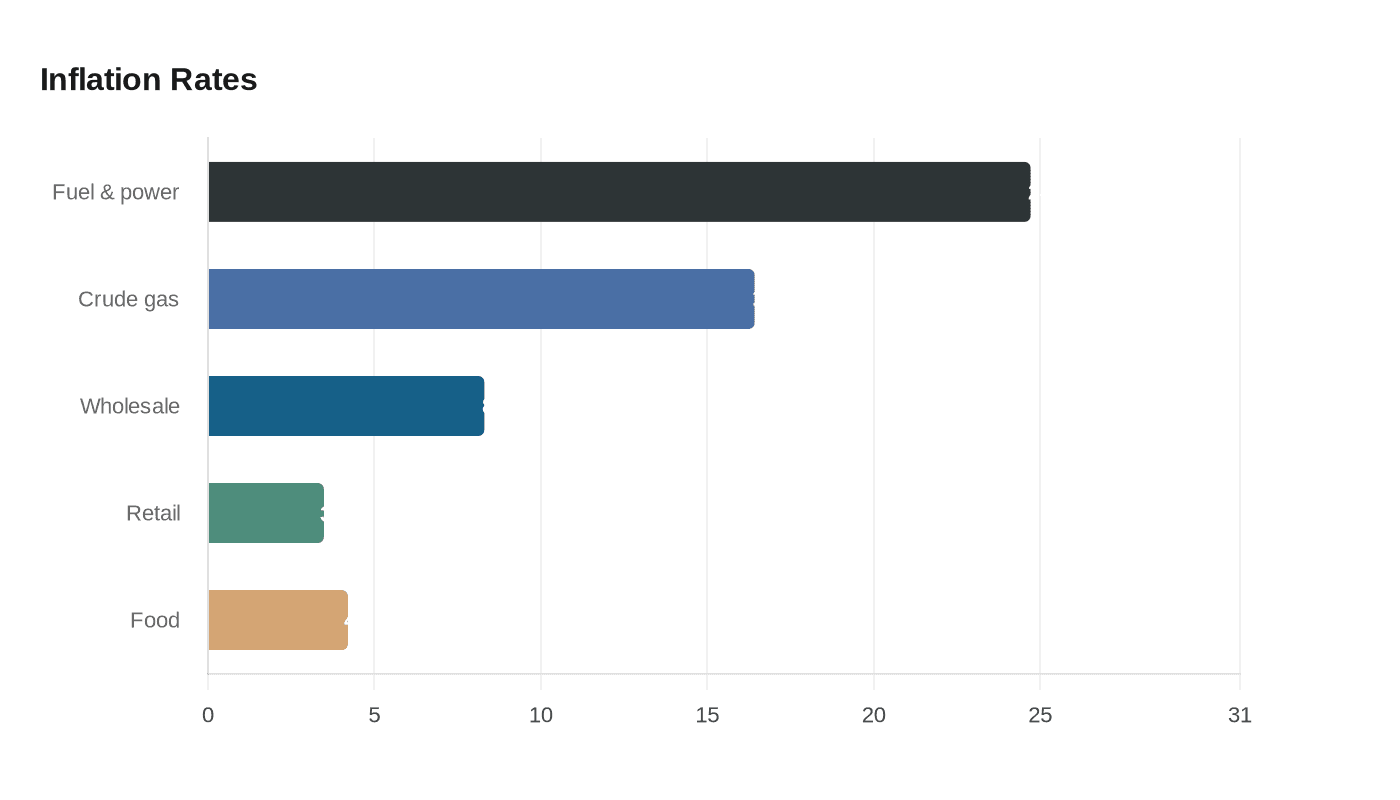
The timing raises the risk that a commodity spike triggered by Middle East tensions could filter into food, factory output and consumer prices in the months ahead. India’s retail inflation was 3.48% in April, while food inflation measured by the Consumer Food Price Index stood at 4.20%, giving households a softer immediate backdrop than the wholesale numbers suggest. But if fuel remains expensive, the pass-through into vegetable transport, fertilizer, packaging, and manufactured goods could still squeeze margins and eventually lift consumer bills.
For policymakers, the April wholesale print complicates the outlook for the Reserve Bank of India. The central bank has been watching whether inflationary pressure is broadening or staying contained in energy-linked categories. A 42-month high in wholesale inflation argues for caution, especially if oil and shipping costs remain elevated. At the same time, the gap between producer and consumer inflation shows the transmission is not yet complete, leaving room to watch whether firms absorb part of the shock or push more of it into final prices.
The data were released on May 14 by the Ministry of Commerce and Industry and the Department for Promotion of Industry and Internal Trade, following the Ministry of Statistics and Programme Implementation’s April consumer-price update on May 12. For now, the headline number points to a clear first-order effect from the Middle East conflict. The bigger question is whether India is looking at a temporary commodity jolt or the start of a wider inflation problem for industry, households and the central bank.
This article was produced by Prism’s automated news system from verified source data, official records, and press releases, then run through automated quality and moderation checks before publishing. The system is built and supervised by the people who set the standards it runs under. Read our full AI policy.
Did this article answer your question?
%3Amax_bytes(150000)%3Astrip_icc()%2FCertificate-of-deposit-2301f2164ceb4e91b100cb92aa6f868a.jpg&w=1920&q=75)