India’s drought-hardy custard apple gains with better shelf life
Drought-hardy trees are pushing custard apple into more orchards, but brittle fruit and a three-day shelf life still block export scale.
Climate resilience is making the crop harder to ignore
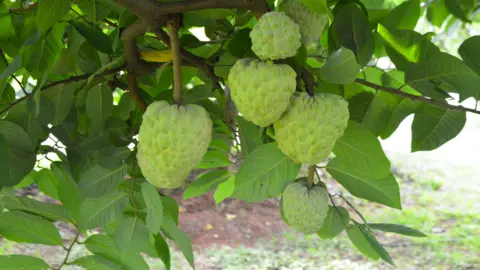
Custard apple is gaining ground because the tree can endure what many fruit crops cannot: heat, dry spells and, in some cases, months without watering. That makes it a logical bet in drought-prone farming belts, even though the fruit itself remains highly fragile once picked.
The appeal is especially clear in Kolar district in southern India, where farmer Ashoka Shivareddy said rainfall is only about 60 to 70 centimetres a year. He revived his family farm in 2018 after the family had left farming in 2005, and he described custard apple as a crop that could survive with very little water. His output has risen from about 20 tonnes last year to about 25 tonnes this year, a sign that the crop is not just surviving in tough conditions but starting to scale.
That combination matters for farm economics. In dry regions, a crop that can take heat, fit rainfall patterns and depend less on pesticides reduces some of the biggest cost pressures farmers face. Custard apple is not a miracle crop, but it does offer a practical hedge where irrigation is limited and farming choices are narrowing.
The fruit’s problem is not the orchard, it is everything after harvest
The supply-chain bottleneck begins the moment the fruit is picked. Traditional custard apple varieties may have excellent flavour, but they often come with low pulp content, a high seed count and a shelf life of only three or four days. That is enough time for local sales, but not enough for a mainstream export business built on long transit times, coordinated cold storage and predictable handling.
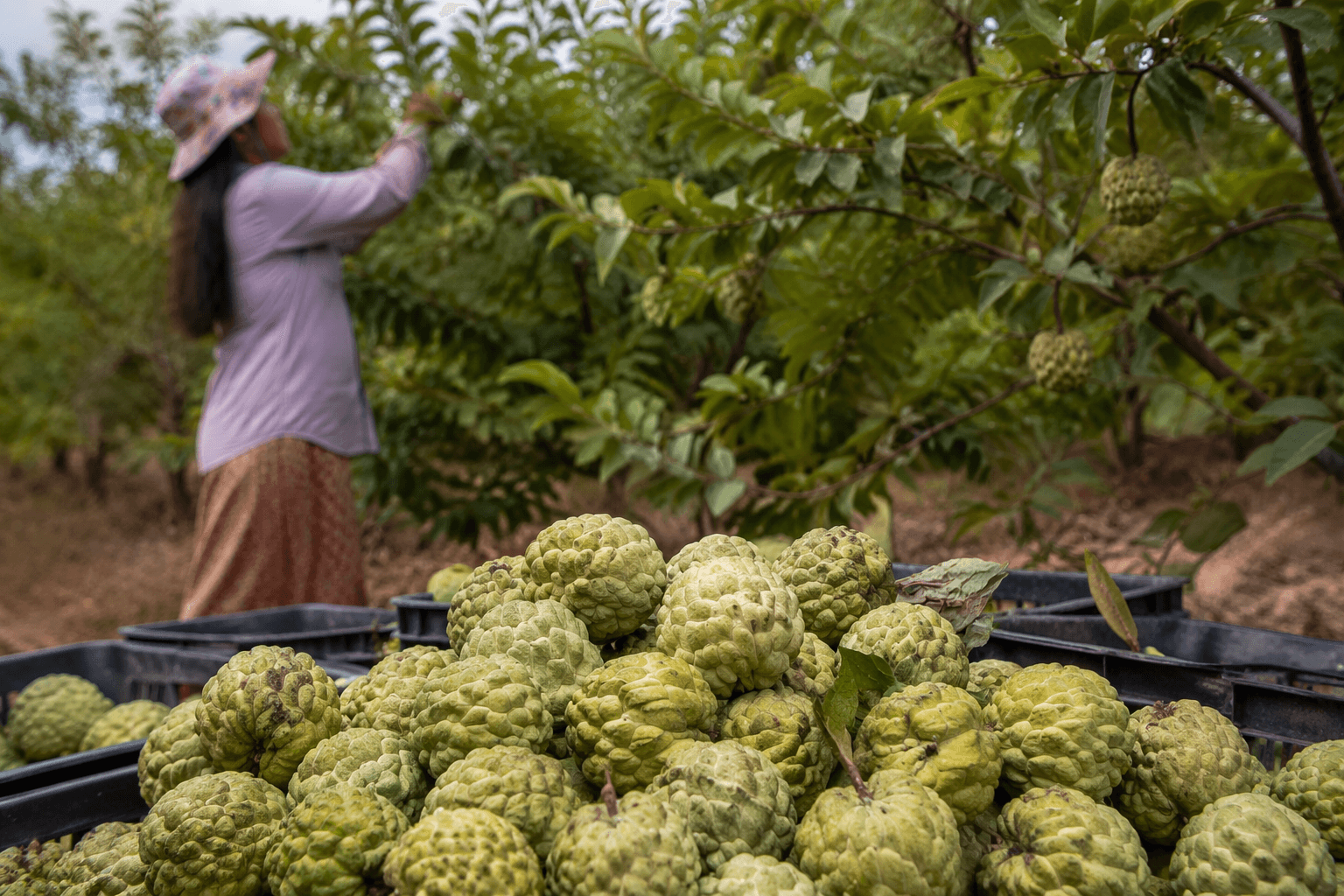
This is why the fruit’s rise should be read as an agriculture story, not just a taste trend. Consumers may want more of its creamy, sweet pulp, but producers still have to solve bruising, deterioration and inconsistency before the fruit can travel far. Without better postharvest systems, a crop can be climate-resilient in the field and commercially fragile in the market.
Breeding is extending the clock, one variety at a time
Plant scientists have been working to narrow that gap. Researchers at the Indian Institute of Horticulture Research in Bengaluru developed the hybrid Arka Sahan, which can last about a week at room temperature and has fewer seeds and more pulp. The institute says pulp recovery has improved from about 30% in wild varieties to about 70% in hybrids like Arka Sahan, a meaningful gain for processors and traders alike.
The same effort is visible in yield breeding. IIHR lists a clonal-selection variety with a yield potential of 69 fruits per plant and a shelf life of 5.5 days. That is still not a long window for distant shipping, but it is a material improvement over the most perishable traditional types. In a fruit category where even a single extra day can change how far it can travel, those gains matter.
Hort Innovation has also reported that a breeding project established over 2,000 hybrid progeny and evaluated about 1,800 hybrid seedlings, leading to more than 40 new selections for further evaluation. That kind of pipeline is a reminder that the industry is not waiting for one perfect cultivar. It is trying to build a wider toolkit of fruit types that can better match different growing zones, market channels and handling systems.
Demand is real, but it is still unevenly distributed
Trade and market data suggest the crop already has a meaningful commercial footprint. One trade dataset puts India’s fresh custard apple export value at USD 40.14 million in 2023, with total export volume of 26.66 thousand metric tons. Saudi Arabia was the largest importer, taking 29.38% of India’s exports, which shows that demand is already pulling fruit into international channels even before shelf-life constraints are fully solved.
Vietnam offers another useful signal. In Chi Lăng District, Lng Sơn province, custard apple orchards cover more than 2,200 hectares, and in September 2023 the fruit was selling wholesale for VNĐ35,000 to 50,000 per kilo. That pricing underscores a basic market truth: when the fruit reaches buyers in good condition, it can command strong value. The challenge is getting enough of it there intact.
Australia’s experience points to the same bottlenecks
The Australian industry has been wrestling with similar structural issues. Hort Innovation says custard apple demand there has grown steadily by 0.6% over the past decade, but growers still face pest and disease control problems as well as weak postharvest handling, storage and processing practices. The industry is also being pushed toward better management standards and better baseline data on growers, which suggests the bottleneck is not limited to orchard technique.
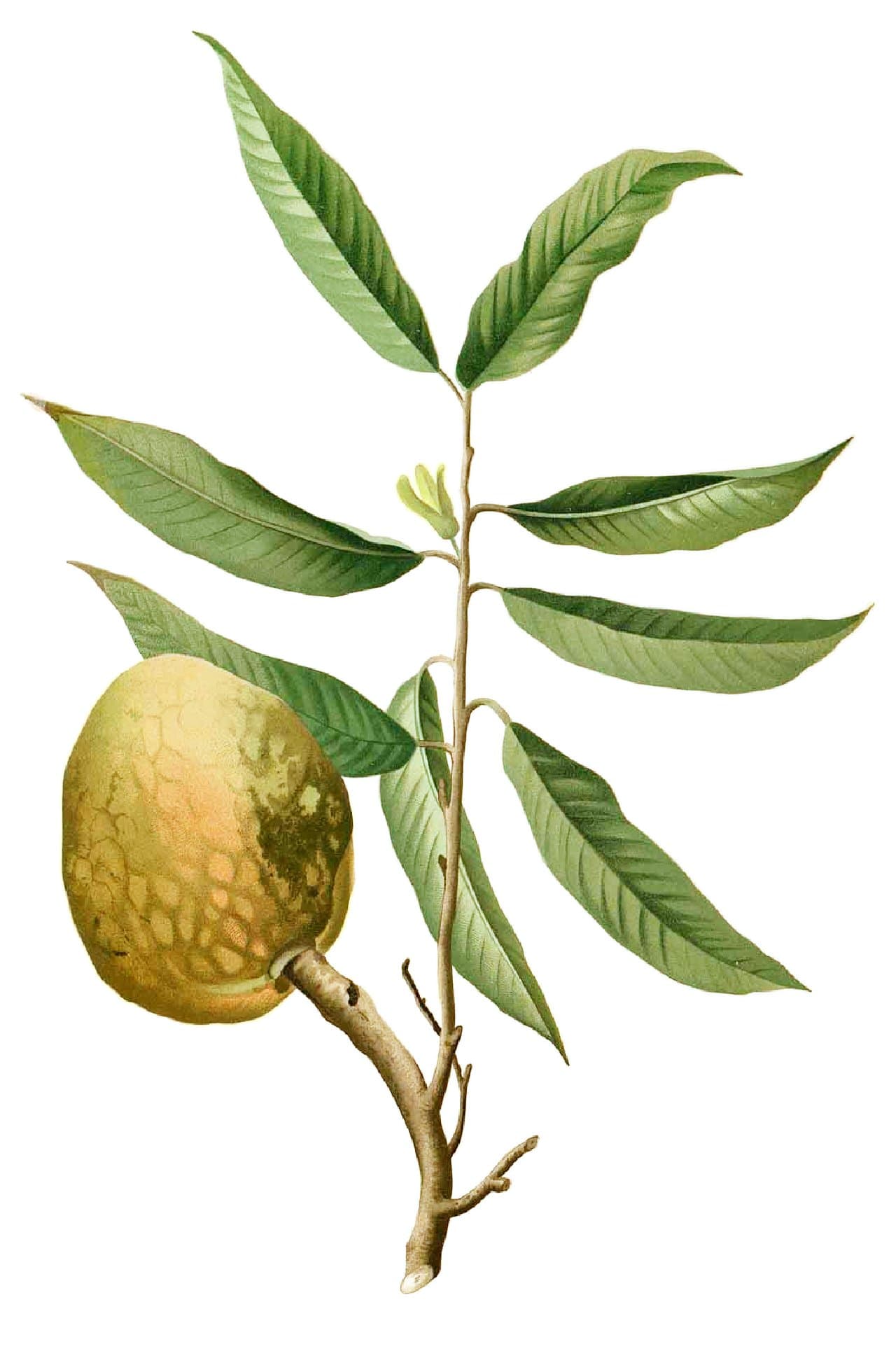
That matters because custard apple’s future depends on a chain of small improvements rather than one big breakthrough. Better varieties can buy a few more days of shelf life. Better handling can reduce losses. Better processing can turn fragile fruit into products that travel farther. But unless those pieces move together, the fruit will keep thriving in orchards faster than it can reach export shelves.
What the market is really telling producers
The economics of custard apple now point in two directions at once. On the farm, the crop fits hotter, drier conditions and can help farmers diversify away from water-hungry fruit. In the market, rising demand and export value show there is already money to be made. Yet the fragile flesh, short shelf life and weak logistics mean the fruit still behaves like a local specialty more than a global commodity.
That tension is likely to define the next phase of the industry. Custard apple is no longer just a hardy tree in a difficult climate. It is a test case for whether breeding, handling, storage and processing can catch up with consumer demand before the fruit spoils on the way out.
Know something we missed? Have a correction or additional information?
Submit a Tip