Indonesia plans AI push for free meals, state programs by 2029
Indonesia wants AI inside its free-meals program and other state services by 2029, even as the 60.24 million-beneficiary scheme faces corruption and food-safety scrutiny.

Indonesia is preparing to put artificial intelligence at the center of its free-meals drive and other priority state programs, a move that would bring algorithms into one of the country’s biggest and most politically sensitive welfare systems. The draft presidential regulation would run from 2026 through 2029 and would sit alongside a 2026 free nutritious meals budget of Rp335 trillion, or about US$20.7 billion, built around 82.9 million expected beneficiaries.
The proposal is unusually specific about what AI would do. It would help design region-specific menus, monitor kitchen hygiene, forecast food demand, detect irregularities and integrate health data for early warnings of emergencies. That makes the policy less about headline-grabbing technology and more about who controls the machinery of public spending, what data it uses and how Indonesia plans to prevent waste, bias and opaque failures inside a program that reaches millions of children and families.
The plan also points to a broader national strategy already under way. In June 2025, the Ministry of Communication and Digital Affairs said Indonesia’s national AI roadmap was being prepared with 39 ministries and agencies, along with academia, business and civil society. The government has identified five priority sectors for AI: health, digital talent education, bureaucracy reform, smart cities and food security. Officials have also argued that AI could lift GDP by 12% by 2030, a figure that would amount to roughly US$366 billion in some estimates.
Still, the scale of ambition is colliding with hard limits. Analysts say Indonesia lacks the chips, infrastructure and deep pool of AI-skilled workers needed to become a major developer of the technology. Derwin Suhartono of Bina Nusantara University said the country may remain a consumer of foreign-made tools and dismissed some government claims as “all rhetoric.” The draft was also shaped with input from companies including Meta, IBM and Microsoft through Wahyudi Djafar, a tech analyst and member of the AI government task force, raising questions about how much of the system will be built with domestic capacity and how much will depend on imported platforms.
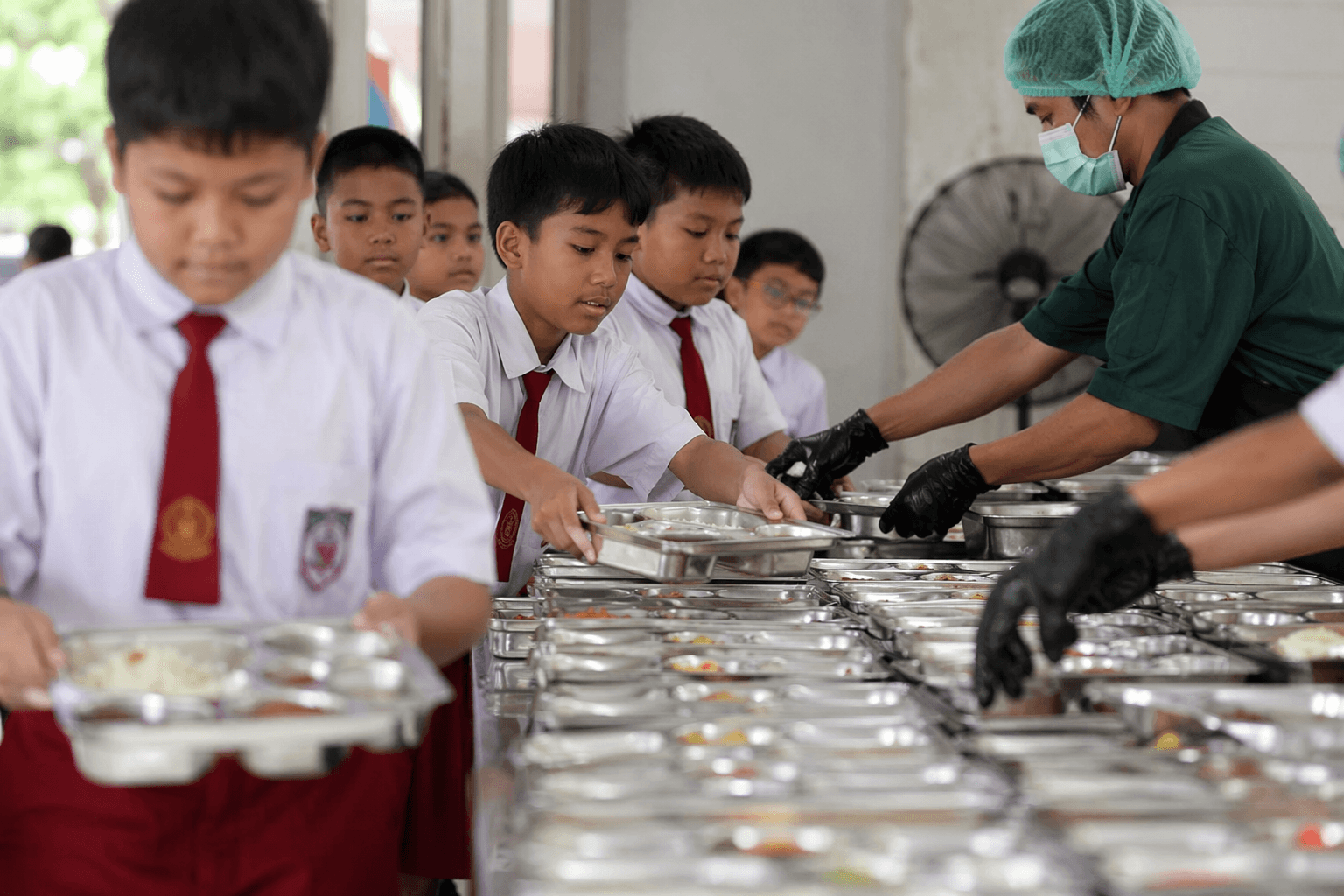
The free-meals program itself has become the clearest test case. By Feb. 21, 2026, it had reached 60.24 million beneficiaries through 23,678 kitchens, after President Prabowo Subianto said on Jan. 12 that it had already reached 58 million people. On Sept. 29, 2025, he said the program had reached nearly 30 million beneficiaries in 11 months, saved at least Rp300 trillion and could create 1.5 million jobs by the following January or February.
But the rollout has also drawn criticism over cost, food poisoning cases among schoolchildren and, most recently, corruption. On June 3, 2026, prosecutors arrested former National Nutrition Agency head Dadan Hindayana and two other officials in a case tied to the program. That mix of speed, scale and scandal is why the AI push matters: Indonesia is not just adding software to social policy, it is testing whether digital tools can make a vast welfare system more accountable before they become another layer of hidden risk.
This article was produced by Prism’s automated news system from verified source data, official records, and press releases, then run through automated quality and moderation checks before publishing. The system is built and supervised by the people who set the standards it runs under. Read our full AI policy.
Know something we missed? Have a correction or additional information?
Submit a Tip