Indonesia, U.S. discuss military aircraft access, no deal reached
Jakarta and Washington discussed U.S. military aircraft access to Indonesian skies, but officials said the draft was still preliminary and no deal had been reached.
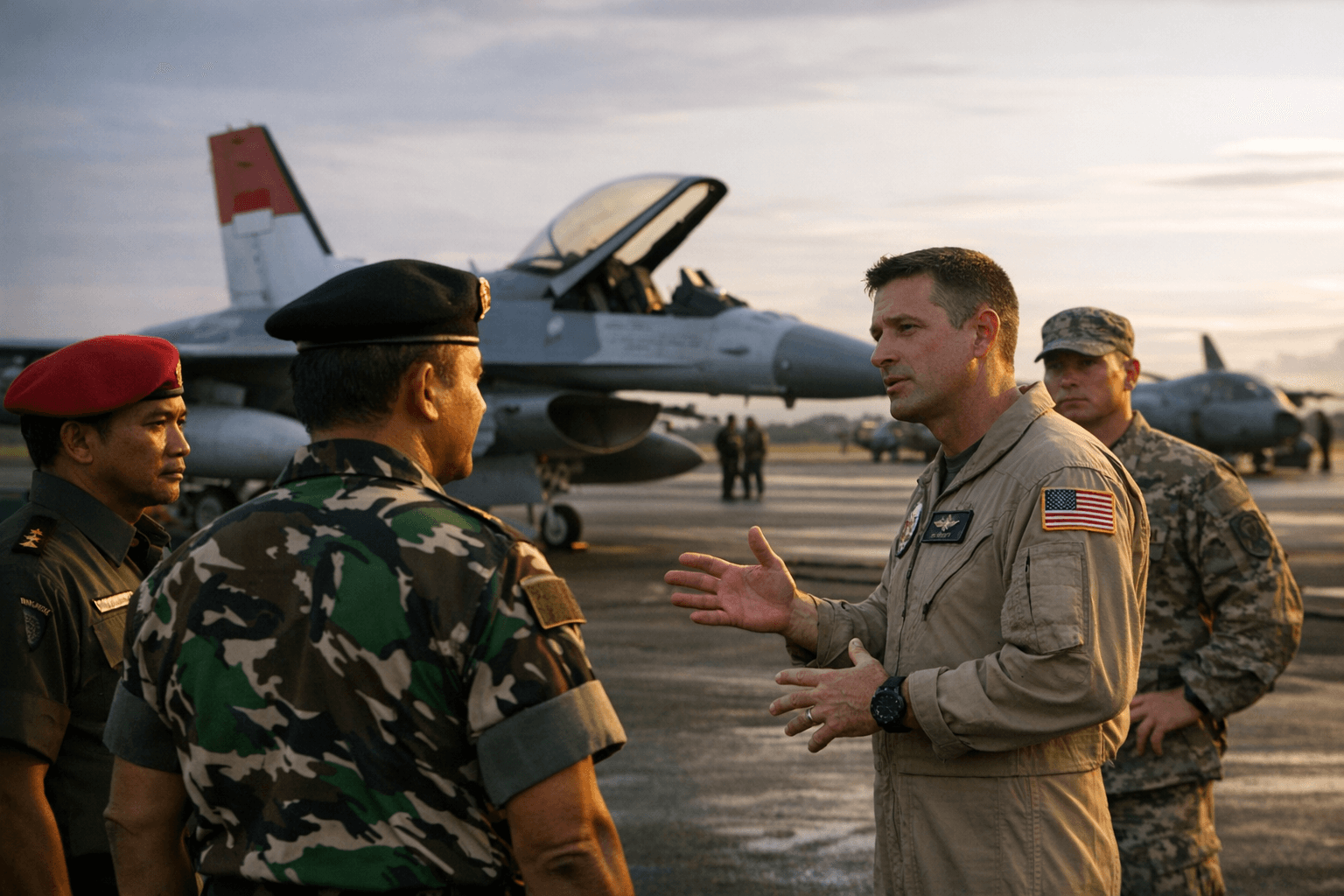
Indonesia and the United States are still discussing a proposal that would let U.S. military aircraft move through Indonesian airspace, but Jakarta said no agreement has been reached. Indonesia’s defence ministry said the draft is preliminary, not final and not binding, while U.S. Defense Secretary Pete Hegseth was scheduled to meet Indonesian Defence Minister Sjafrie Sjamsoeddin later Monday.
The talks matter because Indonesia sits astride some of the Indo-Pacific’s most important air and sea corridors, where access can shape how quickly forces move in a crisis. Overflight rights are more than a paperwork issue: they affect range, response time and the logistics of any U.S. military operation stretching from the South China Sea to the wider Pacific. Even discussing the question signals how intensely Washington is working to expand its operational options in Southeast Asia.
Jakarta has responded by drawing a hard line around sovereignty. Indonesia’s foreign ministry describes the country’s foreign policy as “independent and active,” meaning it does not side with world powers, and officials have stressed that control of Indonesian airspace belongs to Indonesia alone. They have also said any arrangement with another country must protect national interests and comply with Indonesian law. President Prabowo Subianto has recently reiterated that non-aligned stance, reinforcing the political sensitivity of anything that could look like open-ended access for a foreign military.
Domestic scrutiny has been just as sharp. Members of Indonesia’s House of Representatives have said there is no legal basis for free foreign access and that any arrangement should be discussed with lawmakers. That pressure lands against the backdrop of Indonesia’s 2025 Airspace Management law, which local reporting says governs permissions for foreign aircraft and ties airspace management directly to national sovereignty.
At the same time, the defense relationship between the two countries is already deepening. Super Garuda Shield 2025 ran from August 25 to September 4, 2025, bringing together Indonesia, the United States and 11 other troop-contributing nations. U.S. and Indonesian officials described the exercise as the largest yet, underscoring interoperability and multi-domain operations. The U.S. State Department says Indonesia has also concluded GSOMIA and CISMOA, foundational agreements that support information sharing and broader military cooperation.
The draft under discussion is said to cover emergency operations, crisis-response missions and jointly approved exercises, not simply routine transit. That narrower scope suggests both sides are testing how far cooperation can go without crossing Indonesia’s political and legal red lines. For Washington, broader access would improve mobility in a theater built around distance. For Jakarta, the central question remains whether deeper ties can be managed without appearing to cede control of sovereign territory.
This article was produced by Prism’s automated news system from verified source data, official records, and press releases, then run through automated quality and moderation checks before publishing. The system is built and supervised by the people who set the standards it runs under. Read our full AI policy.
Did this article answer your question?


