Institut Pasteur Warns H5 Bird Flu Could Spark Deadly Pandemic
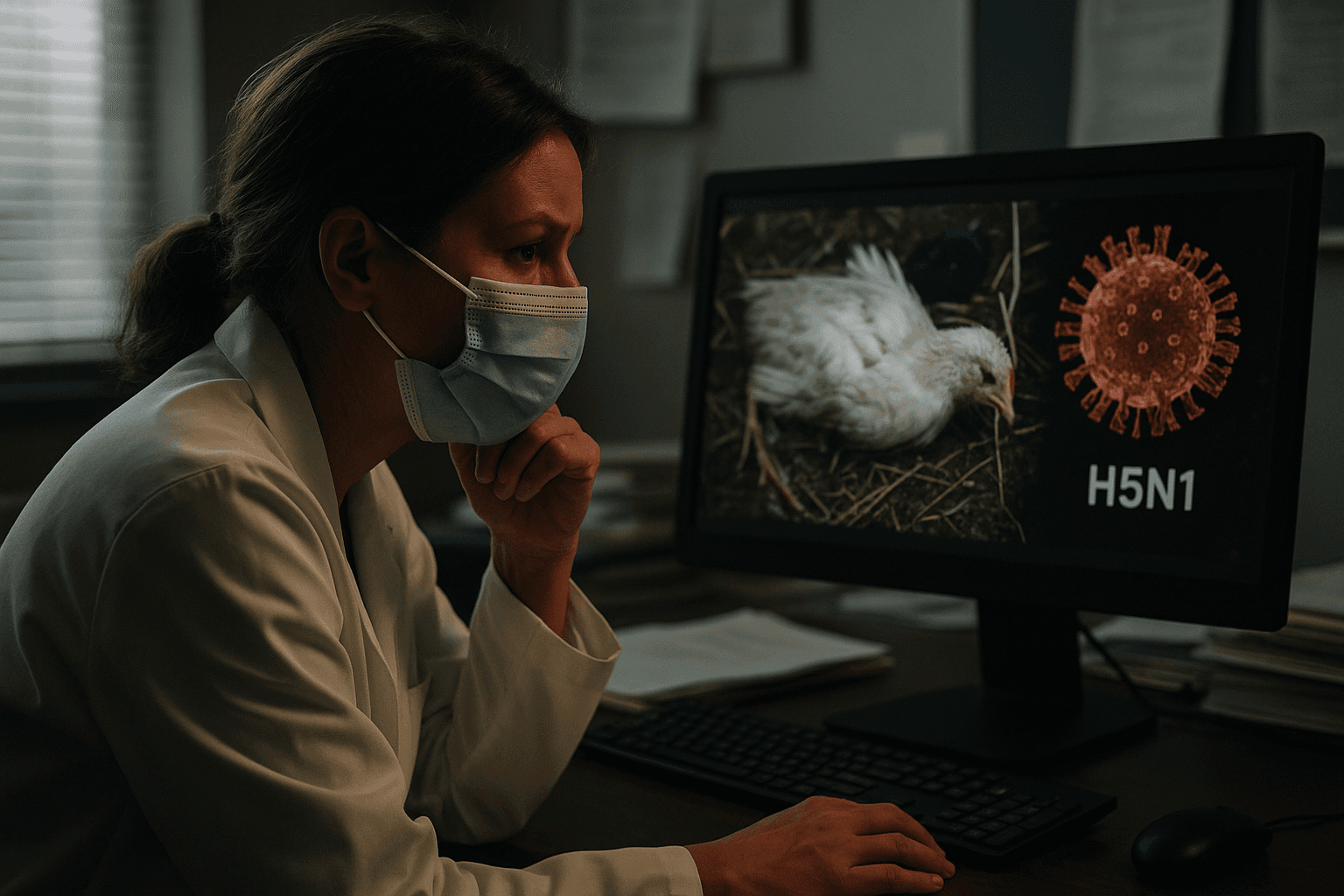
France’s Institut Pasteur cautioned that the H5 avian influenza currently spreading in birds and some mammals could, if it mutates to spread between humans, spark a pandemic potentially more severe than COVID 19. Public health authorities say the immediate probability remains low, but gaps in surveillance, vaccine access and worker protections make preparedness a matter of social equity and urgent policy action.

Marie-Anne Rameix-Welti, head of the respiratory infections centre at France’s Institut Pasteur, told Reuters that researchers are concerned the highly pathogenic H5 avian influenza now circulating in wild birds, poultry and some mammals could, if it mutates to allow sustained transmission between humans, cause a pandemic potentially more severe than COVID 19. She noted that people have little or no immunity to H5 strains and that, unlike the coronavirus responsible for the recent pandemic, influenza viruses can ravage otherwise healthy individuals.
The warning underscored a familiar public health paradox. Experts and the World Organisation for Animal Health told Reuters that the probability of an H5 driven human pandemic remains low for the moment, and that surveillance systems, candidate vaccines and antiviral stockpiles are already in place. Yet health officials and infectious disease researchers emphasize that low probability does not equal low consequence, and that planning must account for worst case scenarios as well as likely ones.
The alert follows confirmation this month of the first recorded U S human infection with H5N5 in Washington state, a case that has refocused attention on the virus’s capacity to cross species barriers. Human spillover events from avian influenza are not new, but sustained transmission between humans would mark a dramatic and dangerous change in the virus’s behavior and public health implications.
A pandemic driven by a novel H5 strain would present distinct clinical and operational challenges. Seasonal influenza strains circulate widely enough that some population immunity exists and vaccines can be adapted over time. By contrast, the general population lacks prior exposure to H5, meaning severe disease could occur more frequently and across age groups. Health systems that remain thinly resourced after the COVID 19 crisis would face intense pressure in acute care, intensive care capacity and supply chains for antivirals and oxygen.
Beyond clinical risks, the prospect of an H5 pandemic raises stark equity concerns. Poultry workers, people in rural farming communities and those living in regions with limited access to vaccines and antiviral medications would face disproportionate risk. Global candidate vaccines do exist, but manufacturing capacity and distribution have historically skewed toward wealthier nations during emergencies. Antiviral stockpiles also vary widely, leaving low income countries and marginalized communities exposed.
Public health specialists urge a One Health approach that integrates animal surveillance with human health monitoring, strengthens protections for agricultural workers, and invests in scalable vaccine production that prioritizes equitable access. Investments in genomic surveillance, rapid diagnostics and community based outreach can help detect dangerous mutations earlier, but require sustained funding and international coordination to be effective.
Policy choices now will determine whether the world treats the current H5 situation as a manageable animal health event or as a near miss that exposed deep systemic vulnerabilities. The Institut Pasteur’s warning is a call to action rooted in scientific caution and social responsibility, asking governments and global health institutions to shore up surveillance, expand vaccine equity and protect frontline workers before a rare mutation escalates into a global emergency. Full Reuters reporting by Sybille de La Hamaide and Lucien Libert, editing by Mark Heinrich.
This article was produced by Prism’s automated news system from verified source data, official records, and press releases, then run through automated quality and moderation checks before publishing. The system is built and supervised by the people who set the standards it runs under. Read our full AI policy.
Did this article answer your question?