Intensifying Heatwave Sends Victoria Into “Upper End of Extreme” Fire Danger
A widespread heatwave across southeastern Australia is pushing temperatures into the mid-40s, prompting emergency warnings and evacuation orders in Victoria as authorities warn of an elevated, multi-day bushfire threat. The unfolding event risks immediate harm to communities and utilities and echoes the scale of the Black Summer 2019-20 fires, with implications for insurers, energy markets and long-term climate resilience planning.
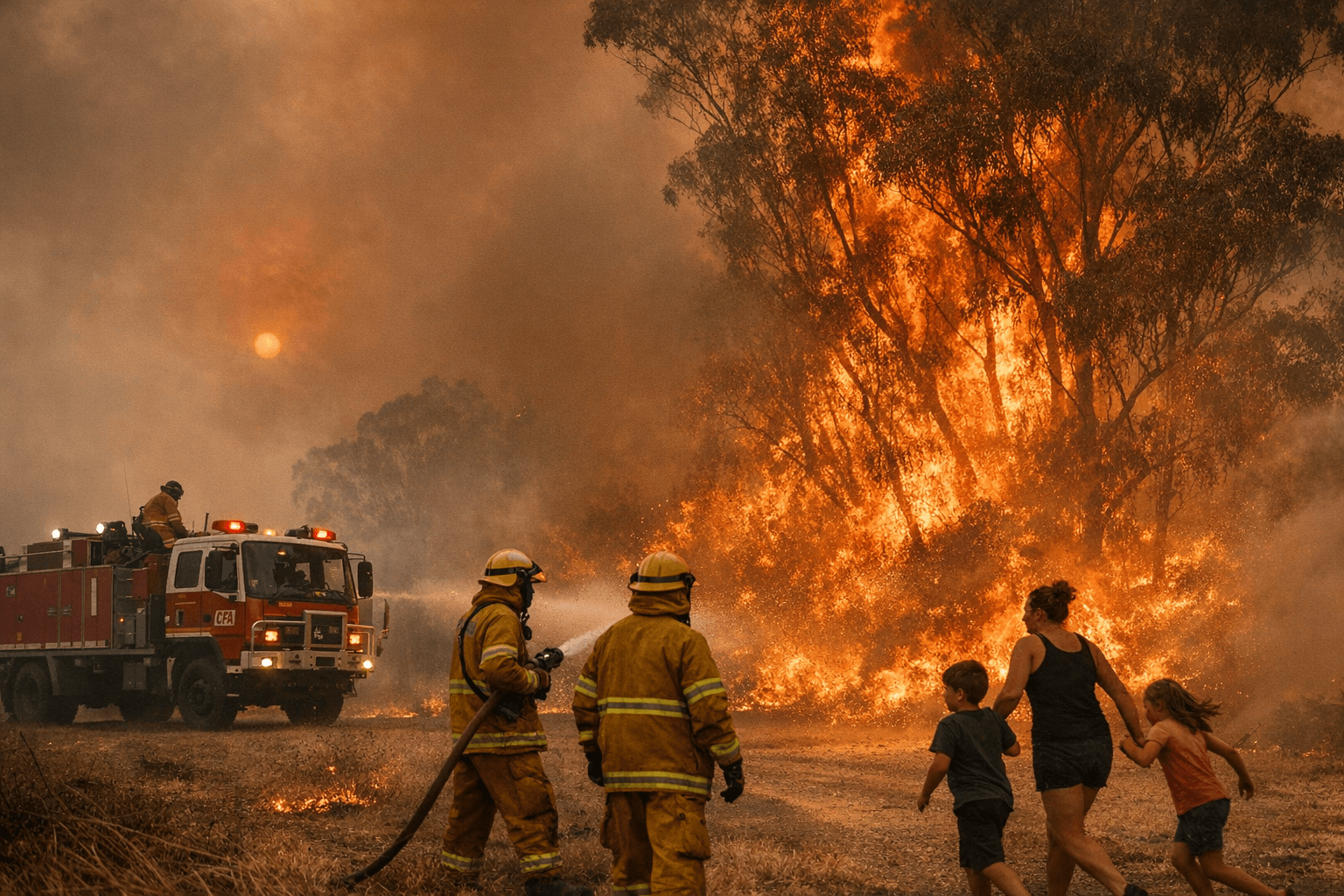
Officials across southeastern Australia are confronting an intensifying heatwave that the Bureau of Meteorology says will affect large parts of the continent through Saturday, with the most severe impacts centred on Victoria and the Murray River region. Temperatures are forecast into the mid-40s Celsius across inland southeastern areas, with some models indicating peaks of 45–46C and coastal population centres likely to reach the low 40s. Parts of the Murray River corridor could endure three consecutive days near 45C.
Emergency Management Victoria posted on January 7 that severe to extreme heatwave conditions would remain in place until Saturday, with temperatures broadly into the mid-40s and a peak expected on Friday. Victoria is already contending with three active bushfires, and emergency services have issued evacuation and “leave now” warnings for multiple communities. An emergency warning is current for a blaze in Mount Lawson State Park near Thologolong.
Fire agency leaders described the risk as extreme and fast-moving. Country Fire Authority chief officer and chief executive Jason Heffernan warned that “there aren’t many parts of the state immune to the fire conditions over the next 72 hours,” adding that “Fires under these conditions are uncontrollable. If a fire starts and take hold, it will spread very quickly.” Heffernan said the state was looking at “the upper end of extreme across the entire state for Friday,” and cautioned that such days could “lead to major home losses.”
Emergency Victoria’s commissioner Tim Wiebusch (also spelt Tim Weibusch in some official materials) described the outlook as “challenging extreme heatwave conditions ‘not seen since 2019/20’” and said the heightened bushfire risk would persist into the weekend. “This is mother nature saying that I’m going to do something that is beyond people’s capacity to stop those fires from spreading in the landscape,” he said. Another emergency official identified only as Hardman warned that fires on days like Friday “can be devastating, and they can cause terrible outcomes for communities” and can be “where we could see lots of assets lost.”
Meteorologists emphasise the geographic breadth and multi-day duration as key drivers of risk. Senior Bureau of Meteorology staff indicated most of southern Australia would register heat between Wednesday and Saturday, with major cities such as Adelaide and Melbourne likely to exceed 40C at times. Concurrently, northern Queensland faces a separate tropical cyclone threat, layering multiple hazards on emergency services.
Beyond immediate danger to life and property, the heatwave carries near-term economic consequences. Multi-day extreme heat strains electricity networks through sustained peak demand, raising the prospect of higher wholesale prices, operational stress for grid operators and potential outages in vulnerable regions. Agricultural producers face heat and water stress that can reduce yields and increase livestock losses, while prolific grass growth after recent good rains has created abundant fine fuels that elevate fire severity and, by extension, potential insured losses. The Black Summer fires of 2019-20, which killed more than 30 people, remain a benchmark for potential societal and market impacts.
Policy implications are clear: heightened emergency spending, faster claims on insurers and renewed pressure to invest in grid resilience and vegetation management. In the coming days authorities will need to confirm evacuation zones, update fire and weather forecasts, and publish precise shelter and relief arrangements as the situation evolves.
This article was produced by Prism’s automated news system from verified source data, official records, and press releases, then run through automated quality and moderation checks before publishing. The system is built and supervised by the people who set the standards it runs under. Read our full AI policy.
Did this article answer your question?


