International Criminal Court opens pre-trial on Duterte, citing 76 alleged murders
The International Criminal Court began a confirmation-of-charges hearing on 23 February 2026 as prosecutors presented evidence tied to at least 76 alleged killings in the Philippines.
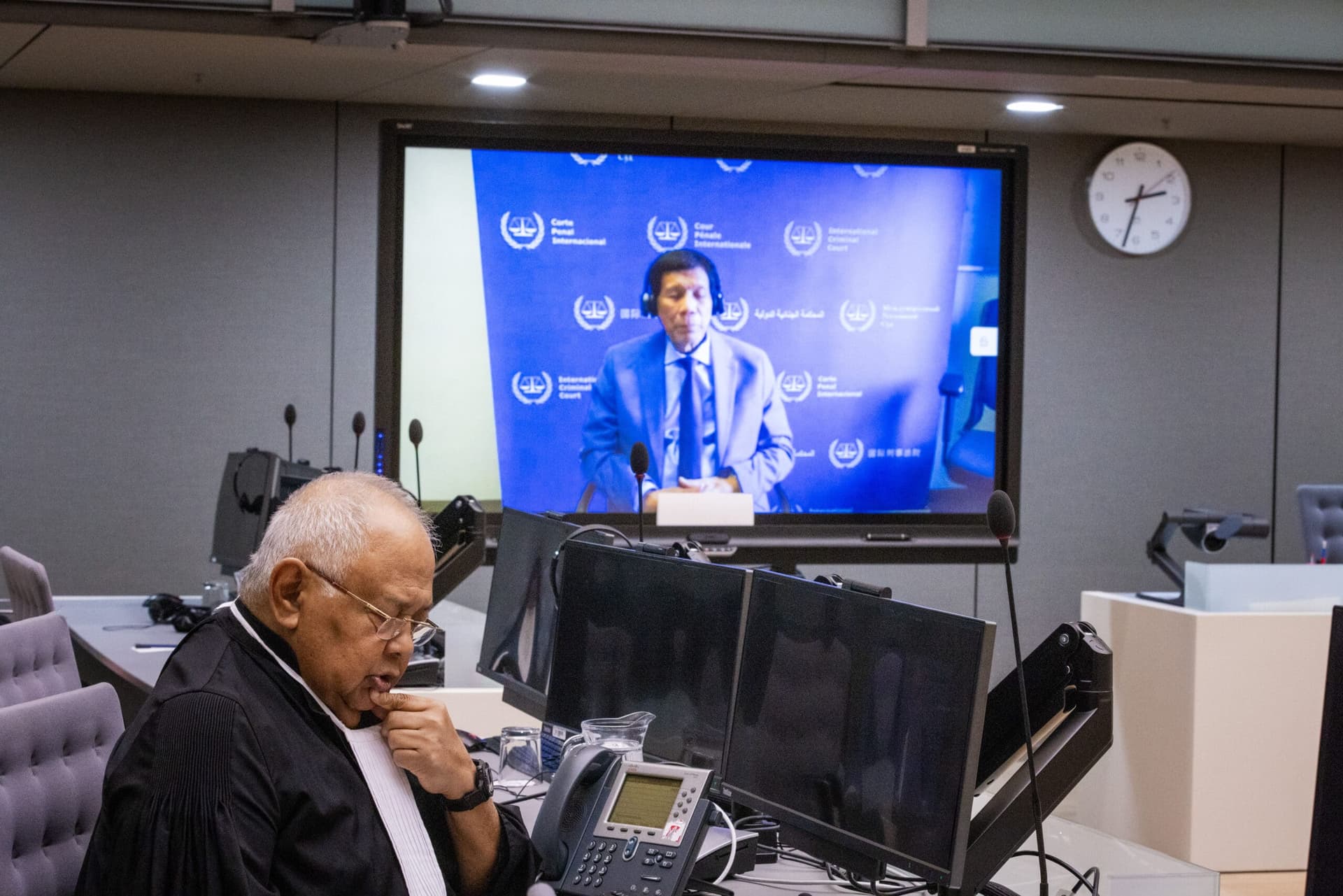
The International Criminal Court opened pre-trial hearings on 23 February 2026, and prosecutors began presenting evidence tied to at least 76 alleged murders they say are linked to Rodrigo Roa Duterte’s “war on drugs.” The four-day confirmation-of-charges hearing in Courtroom I will determine whether judges find sufficient evidence to commit the former Philippine president to trial.
Pre-Trial Chamber I, composed of Presiding Judge Iulia Antoanella Motoc and Judges Reine Adélaïde Sophie Alapini-Gansou and María del Socorro Flores Liera, set the hearing schedule for 23, 24, 26 and 27 February with sessions starting at 10:00 local time. The court’s order directs the Office of the Prosecutor, the Defence and the Legal Representatives of Victims to make oral submissions on the merits before the judges.
The charges filed by the prosecutor allege crimes against humanity of murder and attempted murder committed in the context of the Philippines’ anti-drug operations. The confirmation package presented to the chamber identifies three counts accounting for at least 76 deaths: 19 murders alleged from 2013 to 2016 linked to Duterte’s tenure as mayor of Davao City, 14 murders of so-called high-value targets in 2016 and 2017 when he was president, and 43 killings during nationwide “clearance” operations from 2016 to 2018. The ICC’s case materials set a broader temporal scope for suspected conduct from 1 November 2011 to 16 March 2019.
The 76 specific incidents the court is considering are distinct from wider estimates of the campaign’s toll. Rights groups and reporting have placed the broader number of deaths during Duterte’s drug campaign as high as 30,000, a figure outside the narrow counts now before the court but central to prosecutors’ and victims’ claims about scale and command responsibility.
Duterte, 80, surrendered to ICC custody in March 2025 after a warrant initially issued in secret on 7 March and reclassified public on 11 March. The court records state he was transferred to the ICC’s detention unit at Scheveningen Prison on 12 March and made an initial appearance on 14 March 2025. He later sought an adjournment on fitness grounds; Pre-Trial Chamber I postponed a previously scheduled confirmation hearing in September 2025 and found him fit to participate on 26 January 2026.
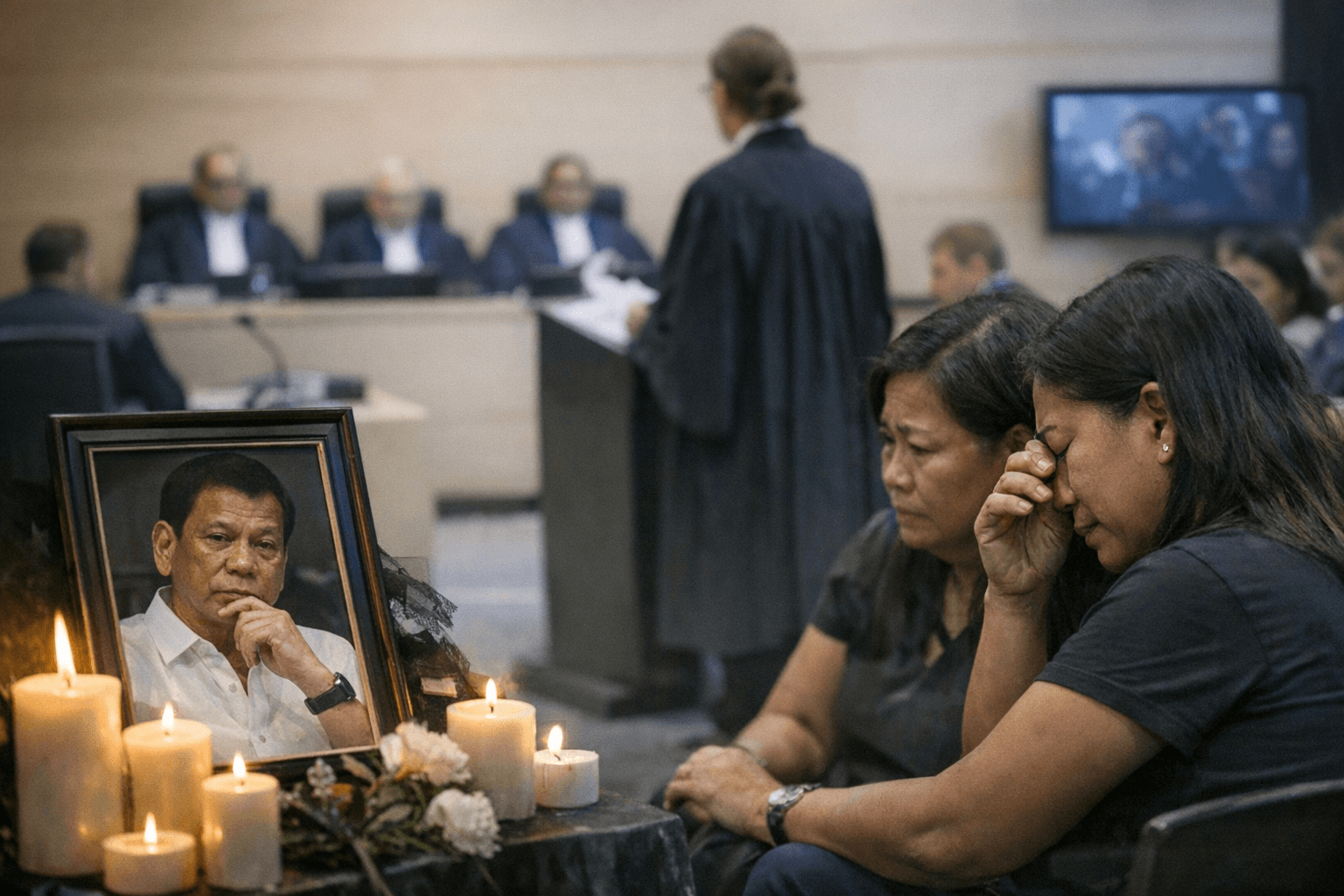
On the opening day of the hearing Duterte was not present in the Hague courtroom, having waived his right to appear as prosecutors began presenting evidence. His lawyer, Nicholas Kaufman, has told journalists that Duterte denies the charges. In a letter to the court sent during the hearing week, Duterte said he does “not recognise” the jurisdiction of the court and said he is “proud” of his legacy. AP reported that Duterte has described the charges as an “outrageous lie.” Al Jazeera earlier described his first videolink appearance after surrender as “dazed and frail and barely speaking.”
Victims’ lawyers who will address the chamber say a full trial could prompt many more families to come forward. Ahead of the hearing Sheerah Escudero, whose 18-year-old brother’s body was found in 2017, said she is worried about what could happen if another Duterte returns to power. An unnamed woman told Al Jazeera, “I hope other perpetrators will also be brought to justice.”
Dozens of activists protested outside the court on 23 February, illustrating the polarized public response at home and abroad. The confirmation hearing is procedural but consequential: if the chamber finds the prosecution has presented sufficient evidence, the case will advance to a full trial that could shape accountability mechanisms, civic engagement around human rights in the Philippines and the international community’s leverage over allegations of state-sanctioned violence.
This article was produced by Prism’s automated news system from verified source data, official records, and press releases, then run through automated quality and moderation checks before publishing. The system is built and supervised by the people who set the standards it runs under. Read our full AI policy.
Did this article answer your question?