Interoceanic Train Derails in Oaxaca, Thirteen Confirmed Dead
A passenger and cargo Interoceanic Train derailed near Nizanda in southern Oaxaca, killing 13 people and injuring about 98 of the roughly 250 people on board. The accident shuttered service on a key Isthmus corridor, prompted a federal investigation, and raised urgent questions about safety and oversight on Mexico’s flagship transport project.
%2Fconnect-gujarat-english%2Fmedia%2Fmedia_files%2F2025%2F12%2F29%2Funtitled-2025-12-29-12-38-15.png&w=1920&q=75)
A passenger and cargo Interoceanic Train partially derailed on Sunday as it rounded a curve near the town of Nizanda in the municipality of Asunción Ixtaltepec, Oaxaca, killing 13 people and injuring about 98, federal authorities said. The train had departed Salina Cruz bound for Coatzacoalcos in Veracruz and was carrying approximately 250 people in total, with one operational count distributing that total as 241 passengers and nine crew members.
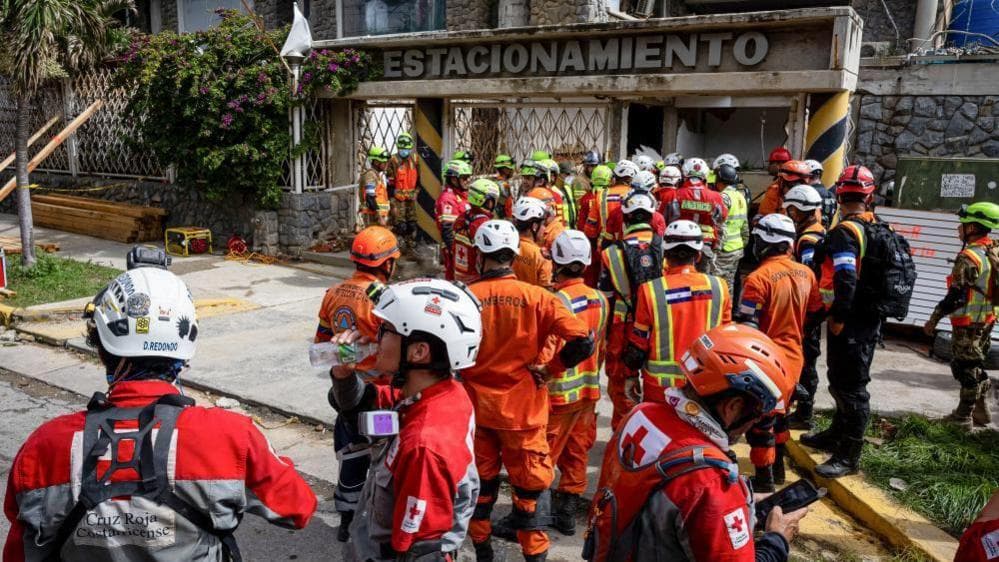
Local accounts and official reports describe the locomotive leaving the tracks and the front of at least one carriage plunging or tilting down an embankment, complicating rescue operations. Emergency teams from federal and local agencies, including units of the Secretariat of the Navy, arrived at the scene where access was difficult and rescuers worked to extract people trapped on a slope. Initial injury tallies were consistent at about 98, while hospitalizations varied among early counts, with reports of about 36 to 38 people admitted and five in serious condition.
President Claudia Sheinbaum confirmed the casualty numbers and said federal authorities were coordinating the response. The federal prosecutor’s office opened an investigation to determine the cause of the derailment. Authorities had not announced an official cause as of Sunday evening.
Beyond the immediate human toll, the derailment struck at the operational heart of the Isthmus of Tehuantepec corridor, the Interoceanic Train route that links Mexico’s Pacific and Gulf coasts. The corridor was developed as a major transport artery intended to move passengers and freight across the isthmus and to enhance logistical capacity between Salina Cruz and Coatzacoalcos. Services on the line are likely to face temporary suspension or restricted operations while investigators and railway operators secure the site and inspect track and rolling stock, with knock on effects for freight scheduling and port connections.
Market participants and logistics planners will watch closely for disruption to freight flows and any revision to operational rules. Even a temporary halt to service on this corridor can increase costs for shippers who rely on intermodal timing and port throughput schedules, impose additional insurance scrutiny on rail operations, and weigh on investor confidence in state led infrastructure ventures if safety concerns are not swiftly addressed.
Policy implications are immediate. A derailment of this scale typically triggers reviews of maintenance regimes, track geometry and speed controls on curves, crew training and emergency access to remote sections of line. The presence of federal investigators and naval units indicates a high level of government attention that could translate into new regulatory requirements or funding for infrastructure upgrades.
Longer term, the accident highlights a broader trade off facing fast expanding transport networks, where ambitions to boost connectivity and economic activity must be matched by sustained investment in safety, oversight and emergency preparedness. Authorities have pledged further information as the investigation proceeds and rescuers complete on site operations, and the coming days will show whether the Interoceanic corridor can restore reliable service while addressing the systemic concerns the tragedy has made visible.
This article was produced by Prism’s automated news system from verified source data, official records, and press releases, then run through automated quality and moderation checks before publishing. The system is built and supervised by the people who set the standards it runs under. Read our full AI policy.
Did this article answer your question?